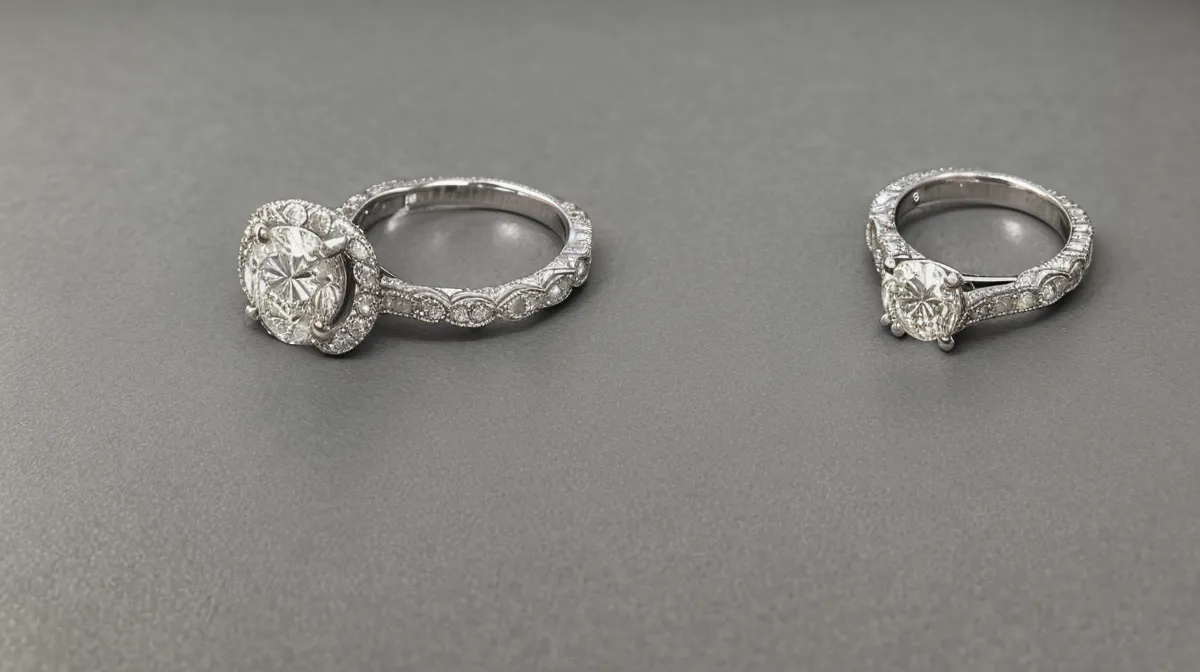
How do you actually know when a jeweler has stopped selling to you and started just talking to you? I don't have a clean test for it, but comparing Reeds Jewelers against the mall chains everyone already knows is the closest I've come, and it's why friends keep pulling me into their engagement ring shopping the moment it turns into a research project they didn't sign up for.
Quick disclosure up front: there are affiliate links in this piece, and if you click through and buy, I earn a commission at no extra cost to you. I only point people toward stores I've actually researched or sat across the counter from myself.
Most of what I know came from watching myself almost get talked into things, then figuring out afterward what actually mattered. Early on I thought the answer was a comparison brochure a different store had printed and handed across the counter — pages of specs with no way to check any of it against something outside their own building. It told me what they wanted me to conclude, not what was true of the stone in front of me. I got better at reading actual GIA reports instead, and at noticing when a salesperson's script was running on autopilot before they'd even finished a greeting. When people ask where to go for something closer to a normal conversation, I usually point them toward Reeds Jewelers.
Reeds Jewelers Doesn't Read Like Other Jewelry Store Reviews
Shelby called from a boat landing near Shem Creek, working up to a question he'd clearly been sitting on for a few days. He grew up two doors down from me, and when he started seriously looking at rings for a proposal he wasn't telling anyone else about yet, he came to me instead, mostly because he knew I'd already been through the whole mess once myself. His one rule was firm: a price ceiling he wasn't moving off of, no matter how good the pitch got.
If you've spent any time inside the big three mall stores (Kay, Jared, or Zales), the vibe is familiar. High-gloss, a little urgent, like buying a car off a lot that's chasing a monthly number. Most of those names sit under the same parent corporation. Reeds doesn't share that structure, family-owned since 1946, out of Wilmington, North Carolina, and standing at the counter, that distinction actually shows. The markup conversation at chains like Jared or Kay Jewelers is its own can of worms, tied to overhead I won't fully unpack here, but it's part of why a similar stone can cost meaningfully more under their roof. Sunita, who sat in the cubicle next to mine for three years and got engaged about six months after I did, is the one friend who wants the financing terms explained before she'll even look at the ring, and that instinct isn't wrong.
We walked in and I did what I always do: watched the staff before they watched us. There was no dart toward Shelby's watch to price him out, no immediate pivot to a financing pitch, no push toward the biggest stone in the case. The interaction lacked the usual urgency.
I'm the friend who reads return policies out loud before anyone else at the table's finished looking at the ring. Reeds sits in a strange middle ground because of it, enough scale to source solid stones, not so corporate that staff get penalized for telling you where you can actually save money.
What Does an Honest Diamond Buying Guide Even Look Like?
There's a specific sound a velvet tray makes hitting a glass counter when someone's trying to impress you with a high-carat solitaire — you've heard it if you've shopped at Jared or Kay before. It happened at Reeds too, but what followed stayed grounded in the 4 Cs (cut, color, clarity, carat), without turning into a script.
Shelby had already decided on an oval shape before we walked in, which comes with its own proportion questions that are really their own conversation. The one he was eyeing looked flat to my eye under the case lighting, more of a dullness you notice in person than you would in a photo. The Reeds consultant didn't tell him it was flawless. She suggested a smaller, better-cut stone instead, one that actually fit under his ceiling.
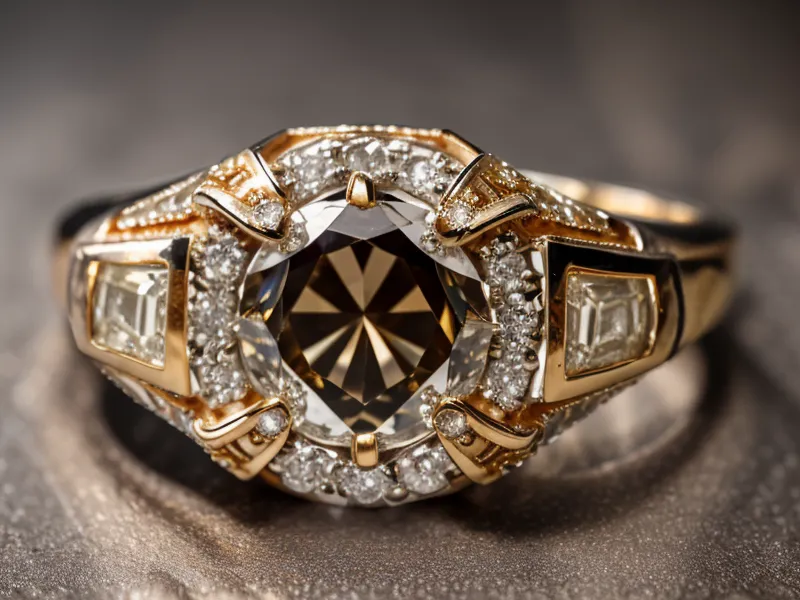
I watched Shelby's shoulders drop when she explained that a better cut earns back more than the difference in carat weight ever would, it's the reason two stones with the same specs on paper can look nothing alike side by side. That's the kind of exchange you're paying for at a store like this. Neither of us could read the actual GIA report cold when we started — that's a skill nobody really teaches you — but she walked us through what mattered on his without acting like we should already know it.
He'd also already worked out her ring size without her knowing, some trick of his own I never got the full details on, so at least sizing wasn't the thing holding him up. The setting question came down to how she actually lives day to day — desk job, gym a few times a week — more than what looked best under the case lights.
Theo Grace, and Why We Still Ended Up at Reeds
If you want something with a similarly personal feel but more of a boutique lean, Theo Grace is worth a look — smaller, design-forward, built for people who already know roughly what they want. But for a store you can actually walk into on a random Tuesday and talk to a person face to face, Reeds is hard to beat. I got into the finer points of how these two mid-size players actually compare in my Theo Grace vs Reeds Jewelers: My Deep Dive into Mid-Size Retailers After Months of Research, if you want the longer version.
Weighing the Inventory Trade-off
Here's the actual trade-off, as far as I can tell: a smaller family-owned chain like Reeds Jewelers gives you more accountability over time, but less immediate inventory than the national corporate players. If you need a specific setting in a specific size by tomorrow, a giant like Zales might already have it sitting in the back. Reeds is more likely to order it from a central hub and make you wait.
When you're buying something in 14k gold — mixed with other metals for durability, nothing exotic about it — you want the person across the counter to actually understand the piece, not just the number on the tag. Reeds will also build a setting from scratch if nothing in the case works, though that's a longer and pricier road than picking something already made. They run a trade-in program too, for people who want to upgrade the center stone years down the line — a different conversation than the one Shelby and I were having that afternoon.
In the big mall conglomerates, I've more than once known more about their Zales Online vs. In-Store inventory than whoever was working the floor that day. We spent close to an hour on settings at Reeds and never once felt managed. I've walked out of Jared showrooms before because the pitch felt so rehearsed it was like talking to a chatbot. Reeds feels like a local jeweler that happens to have more than one location.
Why Did the Return Policy Question Stop the Pitch Cold?
A return window you can actually use is leverage, not just fine print buried on a receipt, worth its own conversation, but the short version is: ask before you buy, not after. At the Reeds counter, I asked the consultant to read the return window out loud, the way I always do, word for word. She paused mid-sentence, like nobody had ever actually made her say it out loud before, then finished it anyway, clean and specific. By week four of going back and forth between Reeds and two mall stores with Shelby, I'd stopped scribbling notes as fast — I already knew which questions mattered and which ones were just noise.
Lab-Grown, Moissanite, and the GIA vs IGI Question
Just as the lab-grown conversation was picking up everywhere, I went back to look at what Reeds was doing with it. Some stores still treat lab-grown like a consolation prize. Reeds treats it as a real option on equal footing. If you're purely chasing the most stone for the least money and don't care about the in-store part, GOODSTONE is probably your best bet — a lab-grown specialist with lower overhead since they skip the mall real estate.
You can read the price gaps for yourself in my GOODSTONE vs. the Mall Chains notes. I brought up moissanite as a cheaper stand-in almost out of habit, and the consultant at Reeds treated it like a normal question instead of a detour, which told me more about the store than the stone did. The lab-grown-versus-mined trade-off isn't something I can settle in a paragraph. It depends on what you actually care about years down the line. Reeds was willing to talk through it instead of steering Shelby toward whichever option paid better that week.
They showed us the difference between GIA vs IGI certification on the lab-grown stones without any spin. Nobody pretended lab-grown resale sits at the same level as mined — they just laid out the facts and let Shelby decide for himself, which is a level of respect for someone's intelligence I wish showed up more often in this industry.
The Verdict on Reeds, After Enough Engagement Ring Shopping to Last a Lifetime
By late summer, Shelby finally landed on a hidden halo engagement ring from Reeds, right under his ceiling. Watching the whole thing from start to finish reminded me why I keep sending people there. They're not the cheapest option out there, an online-only wholesaler will usually beat their raw price, and they don't have the reach of a chain like Kay Jewelers, with well over a thousand stores to their name.
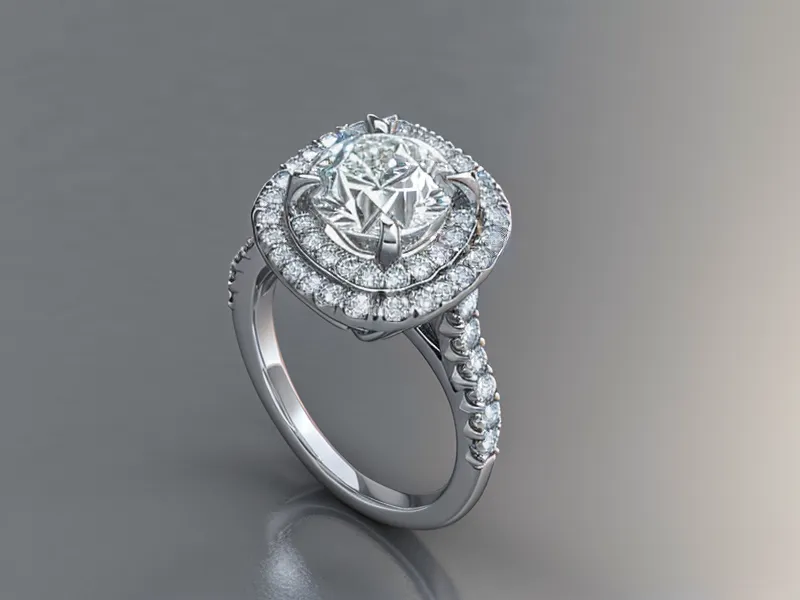
What they do have is something closer to a relationship than a transaction. No scripted upsell means the whole process feels like a negotiation between two adults instead of a fight against a sales machine. If you want a store where you can bring the ring back for a cleaning and someone might actually remember your name, Reeds is the one. Once it's actually on her hand, insuring it separately is its own errand, one more thing on the list that has nothing to do with which store sold it to you.
For a low-stress, in-person experience, treated like a person instead of a commission number, Reeds Jewelers is where I send people. GOODSTONE is where I send people who are strictly chasing the lowest price on a lab-grown stone and are fine buying without seeing it first. The one thing I told Shelby before he ever set foot in a showroom, and the thing I'd tell anyone starting this process: ask about the return policy before you ask about the ring. Everything a store is actually going to be like shows itself in how they answer that one question.
Reeds Jewelers
Pros
- ▸ Family-owned vibe with significantly less sales pressure
- ▸ Transparent talk about diamond quality and lab-grown options
- ▸ Accountability of a local jeweler with chain-level resources
- ▸ Excellent in-store service for maintenance and cleanings
Cons
- ○ Smaller immediate in-store inventory than mega-chains
- ○ Pricing is slightly higher than online-only direct sellers