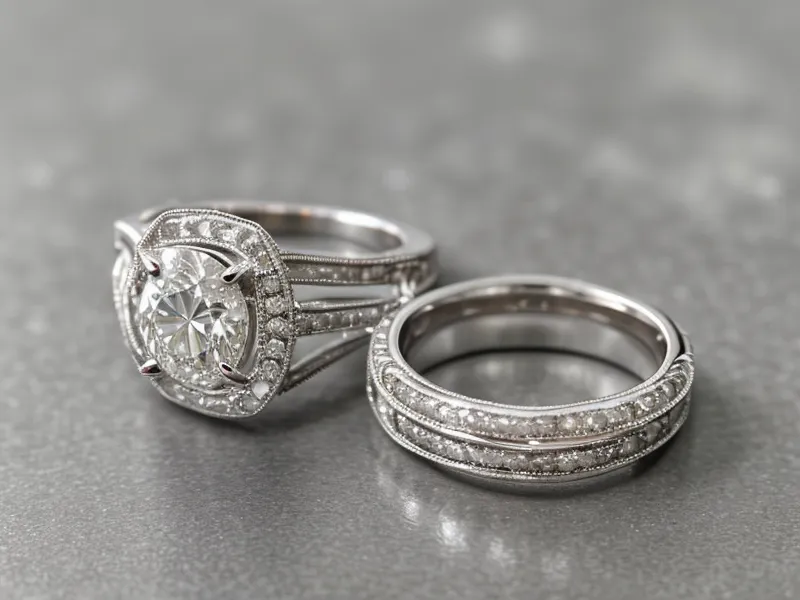
Judging a lab-grown diamond against a natural one by eye is a lot like judging a used car by the paint job; you're checking the wrong panel entirely. A stone that looks flawless under showroom lighting is telling you nothing about where its carbon came from, and nine visits out of ten, the salesperson selling it doesn't want you to know that either. Somewhere between my own ring search and the dozen engagement ring hunts I've been dragged into since, I stopped trying to eyeball the difference and started asking better questions instead. That shift changed how I shop for jewelry entirely, and it's the first thing I tell any friend who thinks she can spot a lab-grown diamond on sight.
My friend put that theory to the test on a patio one summer night, holding her hand out across the table until I had no choice but to play gemologist. She teaches spin classes at a boutique studio on King Street and doesn't do subtlety, so when she asked if her new ring was "real" or lab-grown, she wanted an answer, not a lecture on grading reports. I am not a gemologist. I don't have a GIA credential hanging anywhere. What I had was a phone flashlight, a loupe I keep buried in my bag for exactly this reason, and no way to tell her anything useful just by looking.
The Showroom Test vs. The Paper Trail
Here's the split every ring shopper eventually runs into: the showroom test versus the paper trail. Regulators settled the underlying question years back — the Federal Trade Commission stopped letting anyone define a diamond by its origin — and the two are close enough, chemically, that squinting at them under patio string lights was never going to settle anything on its own. Lab-grown and natural diamonds both max out the Mohs scale the exact same way, so neither one wears differently than the other over years on someone's hand. Hunting for a difference by eye, in other words, is hunting for a mismatch that isn't there.
The showroom test is the fog test, the water test, the theory that a lab stone will look "too clean" next to a natural one. None of it holds up, and most jewelers know it. The paper trail is slower and less fun at a party: a grading report, a laser inscription, a return policy you actually read before signing anything. One of those approaches gives you a story to tell at brunch. The other one actually protects the money you're spending.
Why 'Too Perfect' Doesn't Mean Lab-Grown
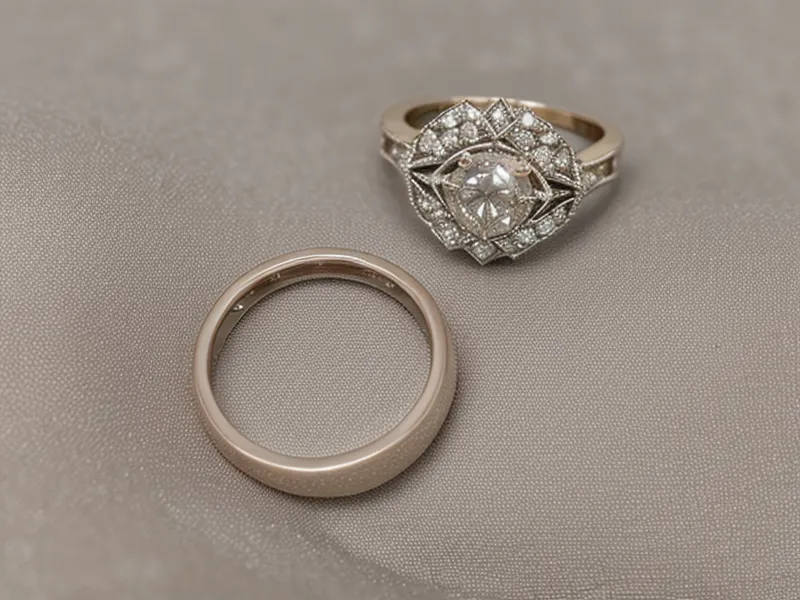
A coworker of mine was convinced he'd cracked the code once — lab diamonds look "too perfect," he said, because machines don't make mistakes the way the earth does. That's an old assumption doing a lot of work. Modern lab-grown stones, grown through processes with their own set of acronyms, come out with inclusions, feathers, and pinpoints just like mined ones do, because plenty of labs now engineer them that way on purpose. Spotting a tiny flaw under a loupe doesn't prove a stone came out of the ground any more than a clean one proves it didn't, and I've got a separate set of notes on choosing the best clarity for lab-grown diamonds without overpaying for anyone convinced that clarity alone settles the origin question.
I felt that assumption fall apart in real time at a showroom a while back, mid-sentence, watching a salesperson reach for the dimmer switch the second I pulled a loupe out of my bag. Lower the lights and every stone reads softer, warmer, harder to compare against its neighbor in the case. That's not a lighting choice. That's a script, and once you've seen a hand go for that switch, you can't unsee it at the next four stores you walk into.
What a YouTube Tutorial Won't Teach You
Before I trusted paperwork over my own eyes, I spent a weekend watching diamond-education videos made by jewelers themselves, hoping one of them would hand me a trick that actually worked. It didn't. Every video eventually circled back to a soft pitch for whichever inventory that particular jeweler happened to be selling that month, dressed up as neutral education. Useful information about tells and tricks, buried inside content built to sell you something, isn't neutral information at all. It's a showroom with better lighting and a comment section.
Compare that to what actually separates a mall chain from an online specialist from a small local jeweler, and the pattern jumps out fast: markup at the big chains tends to hide inside "exclusive" cuts you can't price-check anywhere else, while a smaller shop or a direct-to-consumer brand is usually working off a thinner margin they're more willing to explain if you ask.
Trusting the Report Over Your Eyes
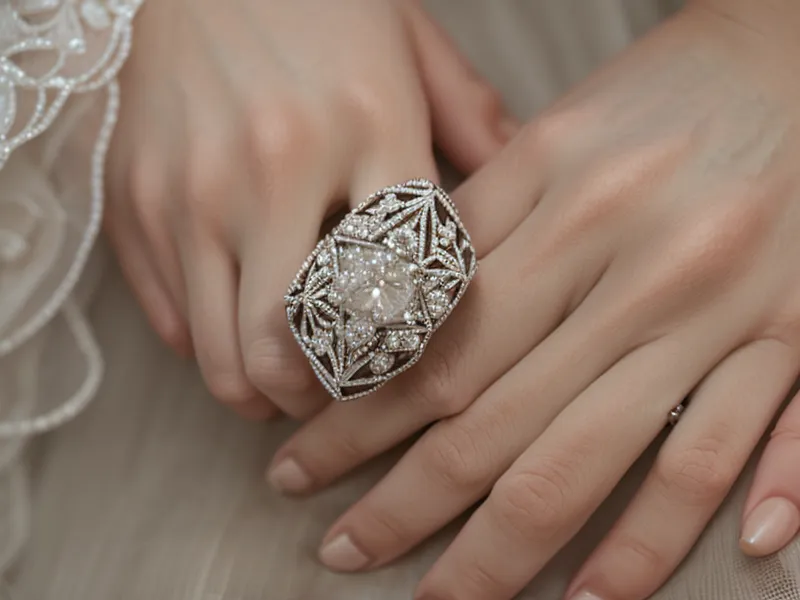
The one piece of physical evidence that actually means anything is a laser inscription cut into the girdle of the stone, a serial number too small to read without magnification, tying the diamond to its certificate. That certificate will sometimes flag a stone's classification too, things like whether it's graded as a Type IIa diamond, a label about chemical purity that shows up on lab-grown and natural certificates alike and tells you nothing you could eyeball. Learning to actually read the rest of that report is its own project — there's a real difference in how strict a GIA report reads compared to an IGI one, and that's worth understanding before you compare two stones side by side, not something I'll try to flatten into a single paragraph here.
Slide a ring on and give it thirty seconds; you'll feel it pull the warmth off your skin until the metal just disappears against your hand, which tells you nothing about carbon origin and everything about why people fall for the wrong tests. What the report and the receipt tell you that your hand never will: whether the return window is long enough to change your mind, whether the retailer's warranty actually covers inspection and not just cleaning, and whether the price gap between two similar stones reflects the setting, the cut, or just the name on the door. That's the trade-off nobody explains upfront — a lab-grown stone and a natural one can look and perform identically while landing in completely different price brackets, and neither the eye test nor the fog test will tell you which bracket you're standing in.
So Which Approach Actually Works?
Back on that patio, I had to tell my friend the truth, loupe still in hand: it looked like a well-cut, well-made diamond, and whether it came out of the ground or a lab was a question for her paperwork, not my eyes. She looked disappointed for about two seconds, then relieved, and we spent the rest of the night talking about the setting instead of interrogating the stone.
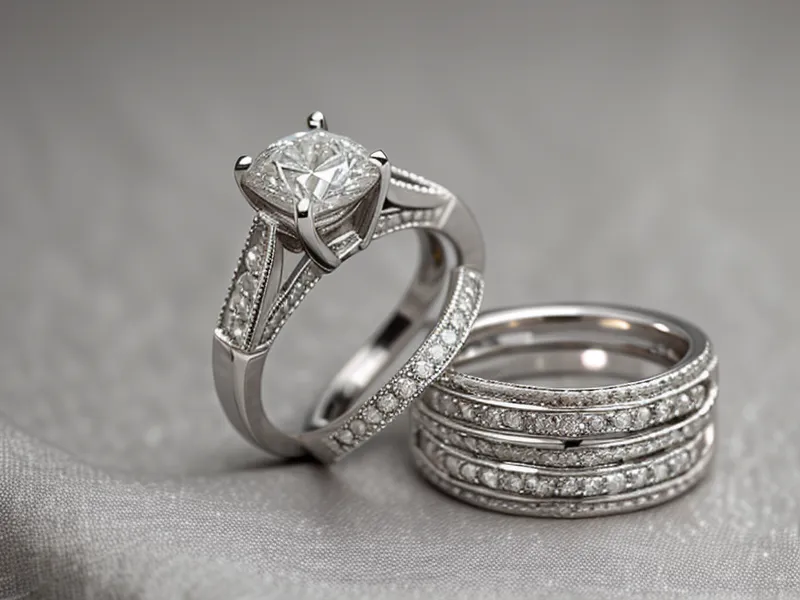
So here's the actual split, if you want one: use your eyes for the things eyes are good at — how a cut sits on your hand, whether a setting snags on sweaters, whether you'd wear it every day without thinking about it. Use the report and the return policy for everything else — origin, value, what happens if the ring needs resizing or the center stone needs replacing down the line. Skip the fog test and the water test entirely; they were never built for this question. The retailers who were actually straight with me about sourcing and margins are the ones that made it onto my lab-grown diamond shortlist, and that transparency told me more than any stone ever did. If a salesperson tells you they can spot the difference across the counter with their bare eyes, write that down as your reason to walk — the same way you'd walk from a mechanic who swears he can diagnose an engine by ear.