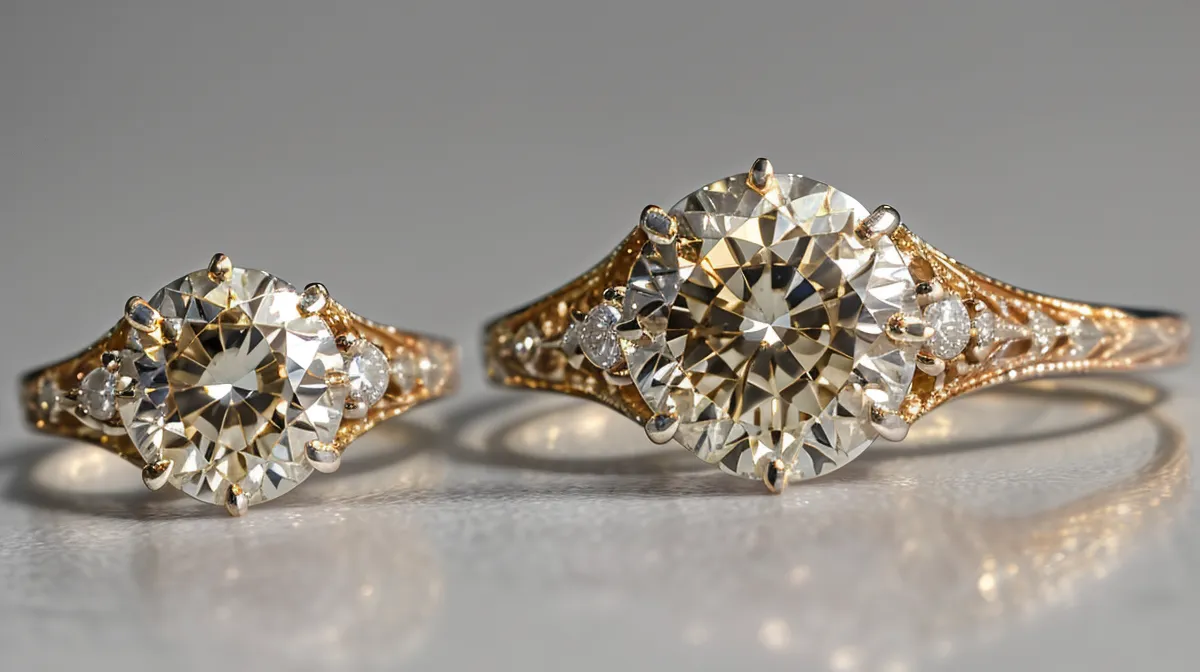
The exact same style of Zales engagement ring can look like two completely different purchases, depending on whether you found it scrolling their site at midnight or standing at the case under mall lighting. That gap is the whole story with this mall jeweler, and it's the piece most engagement ring shopping advice skips straight past.
Quick disclosure before anything else: I earn a commission if you click through and buy from a link on this page, at no extra cost to you. I only link to jewelers I've actually sat across a counter from or picked apart online, including the stretch I spent comparing Kay Jewelers stones for a cousin who couldn't tell one setting from another (the notes I keep for friends doing this are, objectively, excessive). I'm not a gemologist. I'm the friend who reads the return policy out loud until everyone at brunch regrets inviting me.
The Myth: "Online Exclusive" Doesn't Mean a Better Deal
Here's the misconception costing people the most money: shoppers assume Zales' "online exclusive" inventory is the identical ring you'd find in a store, just minus the mall overhead. It isn't. The online catalog and the case inventory are two different pools of stones, sourced and graded on different timelines, and a chunk of what shows up under that "exclusive" tag wouldn't clear a showroom's eye-clean standard if you held it up under the lights yourself.
Once, I figured I could just watch a jeweler's own YouTube walkthroughs and get close to the same read a showroom visit gives you. It didn't work. Those videos are shot to sell the ring, not to show you the flaw sitting slightly off-center in the stone, and it took actually standing over a case, watching what the lighting did, before I understood that the online price and the in-store price answer two different questions — not the same one at a markdown.
Think of it like shopping for a used car from two lots owned by the same dealer. The website photos are all taken at golden hour, same three angles every time. The lot itself has the dent, the smell, the stone with a fingerprint's worth of surface haze nobody bothered to buff out. Same brand, same paperwork, genuinely different product standing in front of you. That's the same shell game running under mall-chain pricing generally, with the sticker at the counter and what a specialist would charge for an identical spec rarely matching, and Zales isn't unique in playing it.
The Store Lighting Isn't Neutral, and Neither Is the Online Photo
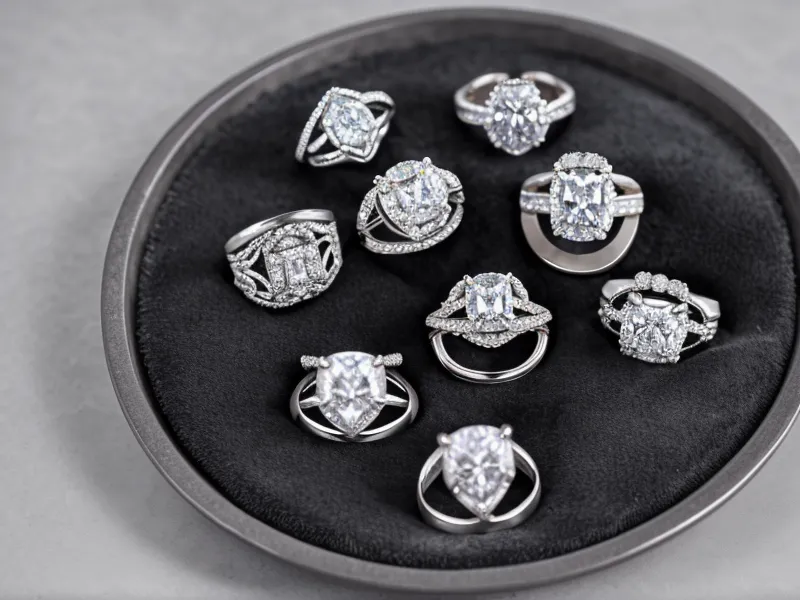
Second myth: that either environment gives you an honest read on a stone. In a showroom, the spotlighting runs warm and forgiving, calibrated to make color and clarity issues recede rather than stand out. A color grade like J, for instance, already sits toward the warmer end of the GIA color scale — that scale, the rest of the four Cs it belongs to, and how to actually read a lab report each deserve their own deep dive, and this isn't it, but the lighting trick is worth flagging on its own. Online, the same distortion runs the opposite direction: a good photographer and a bit of retouching can make an included stone look flawless on a screen.
Neither environment is lying to you outright. Both are just showing you the version of the stone built to sell.
Where the Real Upsell Happens
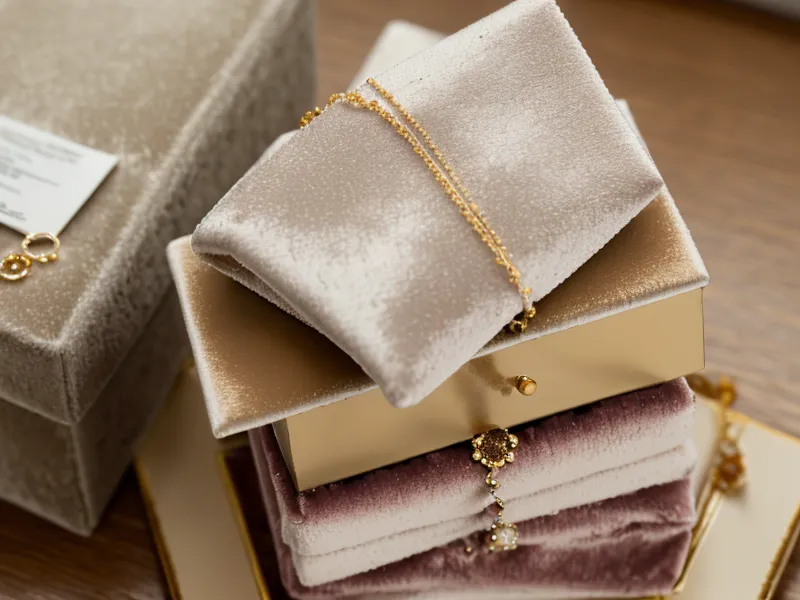
There's a specific sound that means the pitch is about to start: a velvet tray easing out from under the glass case, catching just slightly on the track before it slides free. A friend of mine, who teaches spin classes at a boutique studio nearby, forwarded me a phone photo of a price tag from a Zales case once, still creased from being folded into a coat pocket, and it took three text bubbles back and forth to walk through every line stacked into that single number — the base stone, the setting upcharge, an extended warranty that had already been added before anyone asked if she wanted it. That's the pattern. The in-store visit isn't really about you evaluating a stone. It's about a trained salesperson steering the conversation toward financing before you've decided anything else about the ring itself.
Whether that in-house financing is worth what it actually costs is its own rabbit hole — I've gone down it in more detail elsewhere — but the short version travels well: read the APR before you read the monthly number, and ask what the cash price is before anyone mentions a payment plan.
Zales vs. Jared: Same Parent, Different Sales Script
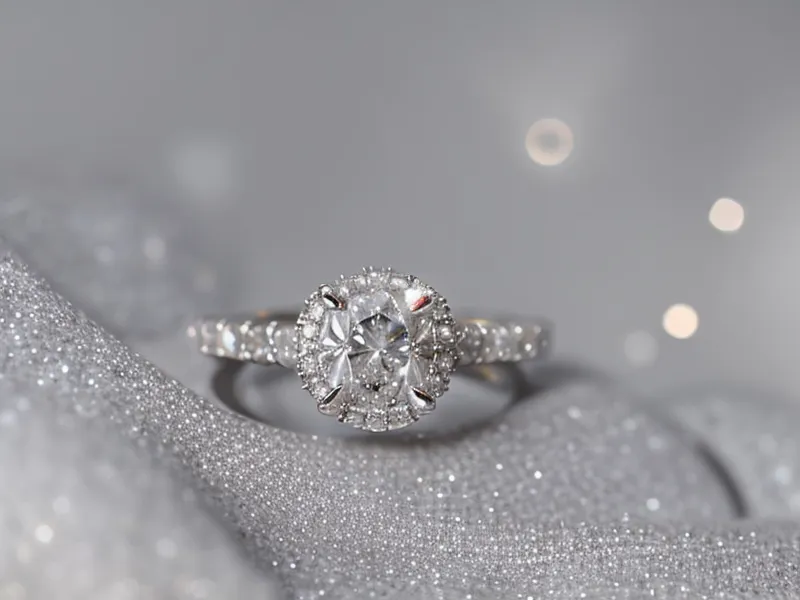
Comparing Zales to Jared is basically comparing two flavors from the same corporate parent. Zales runs the more promotional sibling — sales every other week, aggressive discounting, a strong push toward everyday gold alongside the engagement rings. Jared skews toward slightly higher-end shoppers and a wider selection of bigger solitaires, at prices that often land higher for a comparable spec. If you buy either one at full price, you've already lost the negotiation. Wait for the storewide event.
The One Place Zales Doesn't Cut Corners: Sourcing
Credit where it's due: Zales participates in the Kimberley Process, the multi-country framework meant to keep conflict diamonds out of the supply chain, currently covering 85 participating countries. That's more transparency than I've gotten from some of the small Etsy sellers I've vetted, who couldn't tell me where their gold came from, let alone their stones. And yes, diamonds sit at the very top of the Mohs scale for hardness — but I'd push back on anyone using that fact alone to justify the premium over a diamond simulant. Whether that hardness gap over an alternative like moissanite is worth the price difference is a separate question, one that comes down to how you want the stone to look and eventually resell, not just how it survives years of daily wear.
Picking Between Zales, GOODSTONE, Theo Grace, and Kay
If you want a traditional, mined diamond and need to physically see it before buying, Zales is a solid, middle-of-the-road pick — more aggressive with discounts than Jared, though their lower-end stones (the ones advertised heaviest on TV) often run a step below what a lab-grown specialist like GOODSTONE offers. That trade-off between a mined stone and a lab-grown one isn't really about which looks better under a loupe anymore. The honest answer comes down to budget, resale expectations, and how much the origin story matters to whoever's wearing it — a longer conversation than one paragraph can hold.
For the biggest stone at the fewest dollars, timed around a sale, Zales is the one to get. But for a high-quality lab-grown stone in a modern setting, Theo Grace makes more sense — no mall overhead means more of the budget goes into the stone itself rather than the HVAC bill and the spotlighting. And if what you actually want is the safety net of over a thousand physical locations for warranty visits down the line, Kay Jewelers offers a nearly identical experience with a slightly different design catalog.
Smaller Corrections Worth Knowing Before You Walk In
A few more myths worth clearing up quickly. The return policy isn't fine print to skim after you've already paid — treat it as leverage you can use mid-negotiation, and the conversation with a salesperson changes the moment you bring it up first. A report from IGI isn't interchangeable with one from GIA either; the two labs don't grade at identical strictness, and that gap is worth understanding in full elsewhere rather than a single line of caution here. Once you've actually bought the ring, whatever service plan the store sold you is not the same thing as real insurance — that's a separate decision made after the purchase, not a substitute for it.
Sizing trips people up too. You can get a workable read on ring size at home before you ever set foot in a store, which removes one more thing a salesperson can rush you through. If part of the plan is trading up to a bigger stone down the line, ask about those upgrade terms before you buy rather than after — the fine print on trade-in credit varies more than most people expect. And if nothing in the case matches what you actually pictured, a custom setting is a genuinely different path from picking off the display, with its own timeline and its own trade-offs. The setting matters as much as the stone, too: what holds up if you work with your hands all day looks nothing like what photographs best under a spotlight. Anyone eyeing a fancy shape instead of a round stone should know the proportions matter just as much — that's its own subject, worth researching before falling for one sitting in a case.
So, Is Zales Actually Worth It?
After helping enough friends navigate this exact inventory, here's my actual verdict: buy the everyday jewelry and the mid-tier engagement rings, skip the rock-bottom "online exclusive" solitaires. The real value at Zales sits in the mid-range lab-grown stones and the past-season clearance pieces you can actually inspect in person, not the aggressively marketed budget tier.
The usable rule, then: treat any online price as a starting point rather than a locked number, and never buy an I3-clarity stone — through any channel — without seeing it under a loupe first. If you can't make it into a store, stick to stones with a real GIA or IGI certificate and skip the uncertified "promotional" grades entirely. Ready to look? Check the current Zales promotions here and see what's actually on sale before you set foot in a mall.
Zales
Pros
- ▸ Most aggressive in-store promotions of the major chains
- ▸ Thousands of online options for every budget
- ▸ Convenient physical locations for warranty inspections
- ▸ Strong selection of everyday gold jewelry
Cons
- ○ Budget 'I3' stones often have visible inclusions
- ○ Warranty requires strict 6-month check-ins
- ○ Online-only deals can't be verified in person