Six line items. That's what Valentina Forde sent me one afternoon — a photo of a GOODSTONE price tag for a lab-grown diamond, itemized down to the setting and the shipping, with one question underneath: is this too good to be true? She'd heard through a coworker that I keep a running system for engagement ring shopping comparisons, and she messaged me the same day through our office Slack. Before I'd even opened the photo, she asked what the resale value looked like — that's always her first question, before cut or carat or anything else.
That question — is a big price gap a red flag — is the myth I want to clear up first, because it's the one that shows up in nearly every jewelry review comment section I've ever read. Quick note before I get into it: some of the links below are affiliate links, meaning I earn a small commission if you buy through them, at no extra cost to you. I only link jewelers I've personally researched or watched a friend go through, Valentina included.
Kay Jewelers and Zales were the two mall names I put side by side when I first built my own comparison spreadsheet, and the pattern held steady into every friend's search since: the sticker price at a mall counter mostly isn't paying for the diamond. It's paying for the building, the guy in the suit, and the financing pitch he's trained to deliver the second you linger too long at one case.
If you're already leaning lab-grown and just want to see the inventory, start your search at GOODSTONE before you set foot in a mall and get talked into a warranty you don't need.
Where the Markup Actually Hides
During a showroom visit at Jared with a different friend, the lighting did most of the selling before the salesperson said a word — halogens turned up so bright that every stone in the case looked better than it probably was. Within a minute of us stopping at one ring, he'd pivoted to financing points and monthly minimums instead of anything about the stone itself. It reminded me of buying a used car from someone who won't tell you the mileage.
GOODSTONE skips that whole setup. No storefront in most cities, no guy in a suit, just a website and a lab-grown specialty that the Federal Trade Commission settled the legal question on a while back — they're diamonds, not a knockoff, just grown differently than the ones pulled out of the ground. That's most of where the price gap comes from: overhead and sales theater, not a lesser stone.
Does a Lower Price Mean a Lower-Quality Stone?
Emmeline Prothero ordered a round solitaire from GOODSTONE, and I ended up looking at it under a loupe at my kitchen table with her leaning over my shoulder asking if it 'felt special' while I was busy checking the cut. She's never cared much for spreadsheet logic, and I mostly love her for it. Mall-grade stones usually show their flaws the second you zoom in — little dark flecks scattered through the stone. This one didn't. The cut looked deliberate, like whoever faceted it actually cared where the light went afterward.
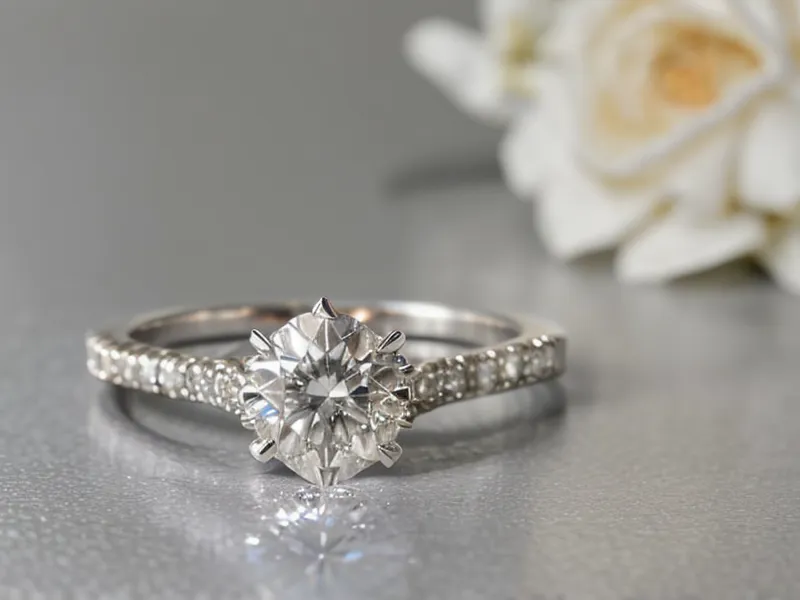
The physics behind why a cut stone throws light the way it does is well documented — you can read the refractive index breakdown if you want the technical version — but from where I was sitting, the difference came down to precision in the cutting, not the source of the carbon. If you want the fuller comparison between lab-grown and mined stones, I wrote up what stood out to me in Lab Grown vs Natural Diamonds: What I Noticed After Months of Research — this piece isn't the place to relitigate that whole debate.
Here's the thing I almost got wrong for a while: I used to judge a stone's color and cut by how it looked sitting in the case, under whatever bulbs the store had installed. It took embarrassingly long before I started asking to step over to a window instead. Case lighting is built to flatter. Natural light doesn't lie the same way, and once I made that one change, half my instincts about which stones looked better turned out to be about the lighting, not the diamond.
Back at my desk — IKEA, set against a south-facing window, a stack of spec sheets from half a dozen jewelers I'd printed out during my own search — I ran the math on what Valentina had sent me. A two-carat stone from a lab-grown specialist landed in roughly the same range her coworker had been quoted for something closer to half a carat at a chain. That's not a quality gap. That's just where the money goes when nobody's paying for a showroom lease.
The Fine Jewelry Comparison: GOODSTONE vs. Theo Grace vs. Kay
For anyone stuck deciding between a mall counter and an online specialist, here's how the three actually stack up when I lay them out side by side.
| Feature | GOODSTONE | Theo Grace | Kay Jewelers |
|---|---|---|---|
| Primary Focus | Lab-Grown Specialists | Modern Minimalist Boutique | Mass-Market National Chain |
| In-Person Try-On | Limited / Online Only | Online Only | 1,000+ Physical Stores |
| Diamond Source | Primarily Lab-Grown | Curated Lab & Mined | Heavy focus on Mined |
| Resale Perspective | Low (Lab-Grown Market) | Moderate (Boutique Value) | Moderate (Brand Recognition) |
Theo Grace lands somewhere in the middle — a smaller, boutique-feeling operation without GOODSTONE's volume of lab-grown options, but one that treats you like a person instead of a lead. Need to hold metal against your actual hand before committing? Kay Jewelers still wins on sheer accessibility — just walk in expecting the upsell script, because that part hasn't changed. I've broken down exactly how that mall pitch compares store to store in Jared vs. Kay, if you want the fuller markup picture.
Resale Is the Real Trade-Off, Not the Discount
Valentina's first question — resale — is actually the right one to ask, just not for the reason most people think. A diamond sits at the top of the Mohs scale for natural materials, so durability was never the issue. The issue is that the lab-grown resale market is still finding its footing. A two-carat lab stone bought today won't hold anywhere near its original value if you try to sell it down the line. You're buying this to wear, not to flip.
If upgrading down the road is even a possibility, mall chains sometimes offer a clearer trade-in path than a digital-only brand does, restrictive as those programs can be. Before anyone wires money to a jeweler — mall, boutique, or otherwise — I tell them to read the Hidden Jewelry Return Policy Secrets rundown first. Return policies matter more than people think, right up until they're the ones stuck with a ring that doesn't fit.
So, Is the Hype Actually Worth It?
Yes, the hype is real, especially for the price.
Unboxing a GOODSTONE order with another friend recently, a local jeweler had lent me a velvet-lined tray to set stones on for comparison, and the sound of it easing out of its case — soft, cushioned, nothing like the hollow plastic click of a bargain mall box — told me something about where a company spent its money.
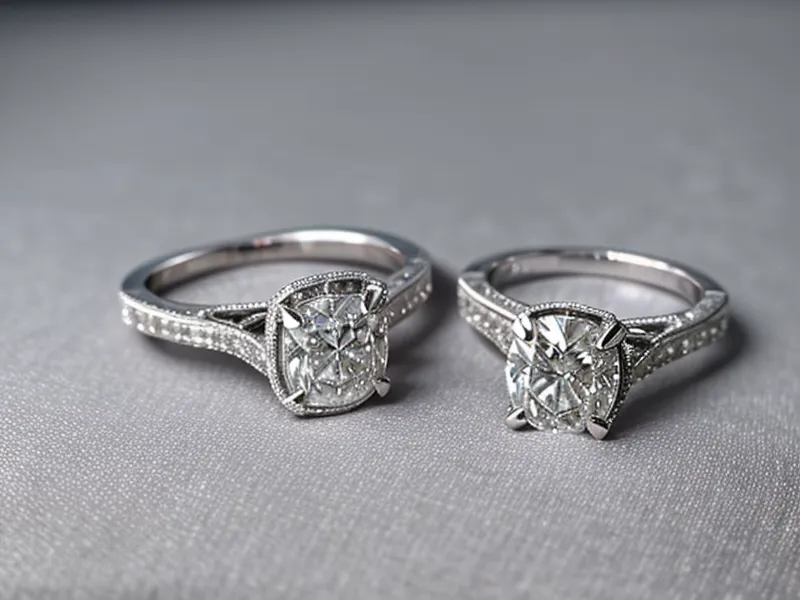
The honest version: GOODSTONE makes sense if you want the most stone for the money and you're comfortable being the person who reads a GIA report yourself instead of trusting a salesperson to interpret it for you — knowing how to read a clarity plot is its own skill, and I'd point you toward a proper breakdown of that rather than try to teach it here. It doesn't make sense if you need a showroom to physically try rings on, or if resale value matters more to you than what the stone looks like on the hand. Moissanite is worth a glance too if budget is the only variable that matters to you, though that's its own separate conversation.
Check the lighting in your own living room before you panic about a color tint — that one's saved me from a false alarm more than once. And if you're ready to see what a lab-grown solitaire actually looks like under real light instead of a showroom halogen, GOODSTONE's latest solitaire settings are worth a look before you set foot in a mall.