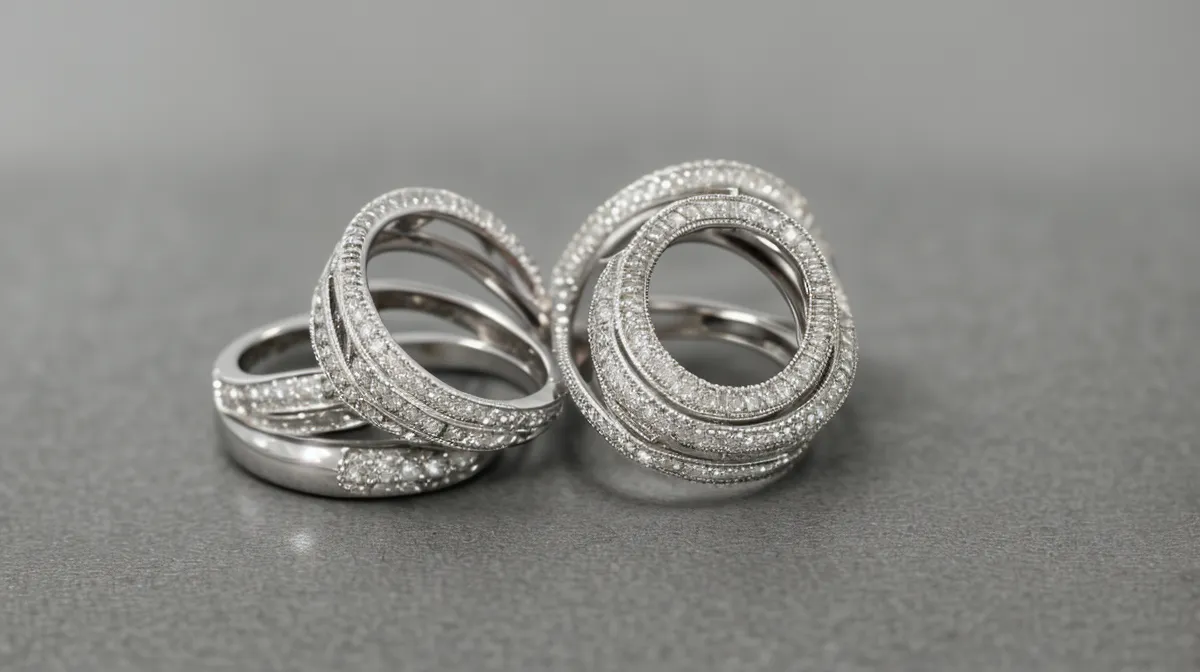
A lab-grown diamond and a mined diamond are made of the exact same thing (carbon, arranged into the same crystal structure) and yet one gets called "real" and the other gets treated like a knockoff. That gap between the chemistry and the reputation is the whole story behind every lab-grown vs natural diamond comparison I've been dragged into over the past couple of years, mine included.
Quick disclosure before anything else: a few links below are affiliate links, and if you buy through one I earn a small commission at no cost to you. I only link to jewelers whose spec sheets I've actually read, not ones I'm guessing about.
Most of these conversations start the same way — a text, or someone flagging me down on a bench in Hampton Park wanting a second opinion before any fine jewelry purchase, ring included.
The Diamond Industry's Favorite Myth
The misconception going around most showrooms is that lab-grown means "lesser": some kind of consolation stone for people who can't afford the real thing. It isn't true, and the physics settles it plainly: both are crystalline carbon, both get graded on the same clarity and cut criteria, and the only actual difference is where the crystal formed. One grows underground over millions of years. The other grows in a chamber over a matter of weeks. Everything else people argue about (prestige, resale, the emotional weight of "natural") is marketing sitting on top of identical chemistry.
What the Case Lighting Doesn't Tell You
Kay Jewelers alone runs something like 1,000 stores across the country, and walking into one of their showrooms (or browsing Kay Jewelers' catalog online, same script either way) is usually where I hear that myth recited word for word. The pitch leans hard on "investment" and "rarity," and it works partly because the case lighting is doing half the selling before the salesperson opens their mouth. I made that mistake myself early on: judging a stone's color and clarity under a showroom's case lights instead of asking to carry it over to a window, where daylight tends to expose exactly what the case was hiding. Ask for the window. Every time.
Reading the Certificate Instead of the Pitch
Hardness is identical too — both sit at the top of the Mohs scale, the same ranking jewelers cite when they tell you a diamond will outlast everything else in your jewelry box. None of that shows up on a sales floor, though. It shows up on paper. The first time a friend handed me an actual grading report and I found myself skipping the summary line entirely, going straight for the clarity plot in the corner like I already knew what I was looking for, that's when reading these things stopped feeling like homework. If you're not there yet, start with the GIA diamond grading scale before you ever set foot in a store — and know going in that GIA reports written for lab-grown stones use a different color-descriptor scale than the ones issued for natural stones, so a side-by-side glance can be misleading if you don't check which scale you're reading.
Is a Lab-Grown Stone Actually a Downgrade?
A coworker's girlfriend, Valentina, messaged me out of the blue on a shared Slack channel after word got around the office that I had a whole system for this. Her one non-negotiable: no mall jewelers, period. That ruled out a string of mall showroom visits before we'd even talked stones, so I sent her straight to GOODSTONE instead. They're a lab-grown specialist, and it's worth repeating here — that's not a downgrade, it's the same crystal grown on a different timeline. What actually shifts is overhead. Stacking GOODSTONE's pricing up against what I'd seen at Jared and Zales, the gap wasn't small — direct-to-consumer skips the cost of running a mall storefront, and that difference lands in the price tag, not in the stone. Valentina ended up laying the color grades side by side herself, which is exactly the right instinct: trust the report over whatever the case lighting is doing to the stone in front of you.
How I Actually Compare Two Stones Now
My own comparisons happen on a rented desk in North Central, not in a showroom — a flat-pack desk pushed against the one window that gets real afternoon light, six jewelers' worth of printed spec sheets stacked in binders taller than my monitor (my partner has opinions about that stack; I've stopped asking), and a velvet tray a jeweler once lent me, holding whatever stone I'm currently obsessing over. Sticky notes cover the wall next to it in two colors: one for questions I still need answered, the other for anything that felt off enough to flag before I forget why.
Emmeline, a friend from college who's sat through more of these conversations than she probably signed up for, is the reason I stopped being polite about that second pile. She looked at a GOODSTONE stone sitting on my desk once, checked every box on its report, and said flatly that it looked flat next to the one beside it. Somebody had to say it out loud, and it wasn't going to be the salesperson.
A friend I was walking through this recently also needed to measure her ring size at home without tipping off her partner, which is a good reminder that the comparison stage and the sizing stage tend to collide at the exact same time.
The One Rule I Give Anyone Starting This Search
One caveat, since I'd rather say it than have a salesperson use it against you later: if resale or a future upgrade genuinely matters to your plans, a mined stone tends to hold a slightly larger share of its value than a lab-grown one does. For most people getting married once, that's a theoretical concern, not a real one — but it's the one legitimate argument for "natural" that isn't just marketing dressed up as fact.
Here's the rule, stripped of all the showroom theater, for anyone deep in engagement ring shopping right now: if two stones carry the same clarity plot, the same color grade, and the same cut angles, the only real variable left is where the carbon crystallized, and that's a budget decision, not a quality one. Skip the financing offer with a countdown timer. Skip the "investment" talk unless you're actually buying at a scale where resale math applies to you, which most people planning a wedding aren't. Ask for the report before the pitch, and ask to see the stone somewhere the light isn't doing the salesperson's job for him. If you want a place to start that isn't a mall counter, GOODSTONE is where I point people first — not because it's flashy, but because the spec sheet holds up exactly as well as the story does.