Forty-two thousand times a second is roughly how fast a standard ultrasonic jewelry cleaner vibrates, and it's most of the reason mine sits unused in a drawer. Ross-Simons jewelry care isn't a single method, because a Ross-Simons collection isn't a single kind of jewelry: sterling silver, 14k gold, sapphires, opals, and emeralds don't respond to the same home cleaning routine, and gemstone safety depends on knowing which one you're holding before a brush ever touches it.
Every jeweler I sat across from during my ring search handed me a comparison brochure, printed that morning, glossy and stacked with specs. I read every page of those, back when I thought that's where the real answers lived. Not one ever mentioned how to look after fine jewelry once you actually own it; that part, apparently, you figure out later, on your own kitchen counter.
Is There Really Such a Thing as an All-Purpose Jewelry Cleaner?
Short answer: no. By the third store, I'd heard the same 'this is an investment' pitch enough times that I stopped believing anything with a price tag near a ring case, including the bright red jars labeled 'Universal Cleaner' at the register, which are the extended warranty of the jewelry aisle: technically available, rarely the right call. Most are loaded with ammonia, which a diamond shrugs off and a softer stone does not survive.
Sunita, the friend who had the cubicle next to mine for three years, nearly ruined her mother's vintage opal pendant with one of those dips over the holidays. She thought she was doing the stone a favor. Opals and pearls are organic and porous; they hold water inside them, and ammonia pulls that moisture out until the stone clouds over or cracks outright. Watching her panic over it sent me home to audit my own cleaning kit against everything Ross-Simons and every jeweler I'd sat across from had told me about their stones.
Why I Won't Put Ross-Simons Jewelry in an Ultrasonic Cleaner
Those countertop ultrasonic machines are everywhere on social media right now: little plastic pods that hum, vibrate, and show a satisfying plume of 'dirt smoke' drifting off a ring. It looks professional. It looks like something a jeweler would use. Most run at roughly the standard ultrasonic cleaner frequency of about 42,000 Hz, and that's exactly the problem for a pavé setting: dozens of tiny diamonds held in place by microscopic beads of metal, sitting in a bath shaking forty-two thousand times a second.
Pavé prongs fatigue under that kind of constant vibration. Enough stories exist of a ring pulled from the machine missing a side stone, gone somewhere in the cloudy water or down the drain, that I keep every Ross-Simons piece I own away from mine. A professional jeweler can check prong tightness under a loupe after a bath like that. Most of us can't, so skipping the machine entirely is the safer call.
Three Ingredients, One Soft Brush, Ten Minutes
The protocol I've landed on uses three things: warm water, not boiling, a few drops of mild dish soap (the blue kind) and a baby toothbrush, not a 'soft' adult one. Baby bristles are finer and softer, which matters once you're working around the delicate architecture of a complex engagement ring setting. Pavé and halo settings are the worst for this because all those extra prongs and tiny gaps trap more lotion and skin oil than a plain solitaire ever collects, so they need the brush more often than a simpler setting would.
Ten to fifteen minutes of soaking loosens that buildup before the brush touches anything, usually on a Saturday morning before I head to Marion Square Farmers Market. Most of this happens at the desk in my North Central apartment, the one that's more jeweler spec sheet than actual workspace these days: binders stacked over the monitor, a Post-it wall sorted by color for whatever question or red flag I'm chasing that week. The brush should meet a little resistance against a pavé setting; that resistance is how you find where the grime is hiding, not a cue to scrub like you're working grout.
Check the Mohs Scale Before You Scrub Anything
Hardness is the whole game before you get aggressive with a brush. A diamond sits at 10 on the Mohs scale, the hardest natural material there is, so scrubbing one is low-risk. Emeralds sit between 7.5 and 8, and they're also famous for inclusions: tiny internal fractures usually filled with oil to make the stone look clearer than it actually is.
Hot water or heavy pressure can drive that oil straight out of the fractures, leaving the stone cloudy or, in a bad case, split. Any emerald gets treated like it's made of glass: no long soaks, no hot water, no steam, just a quick cool-water dip and a gentle pat dry.
What a Bubble Under a Stone Is Trying to Tell You
A 14k gold band is 58.3% pure gold, the rest alloyed for strength, and I was mid-brush on one last month when a bubble formed near a delicate prong. I stopped immediately. Sometimes it's just trapped air. Sometimes it means water has worked its way underneath a stone that's shifted more than it should have.
If a stone clicks, or a bubble under it won't go away, stop there. Don't try to fix it yourself. That's the entire case for the best jewelry insurance for engagement rings being non-negotiable, even on a piece that felt affordable at checkout. A loose stone found by a jeweler beats one found in a vacuum bag three weeks later, every time.
Charleston Humidity and Sterling Silver Don't Mix
Sterling silver reacts with sulfur in the air, and Charleston humidity keeps that reaction running year-round; that black film on a silver piece is just chemistry doing what chemistry does. Silica gel packets saved from old shoeboxes, tucked into my jewelry box, keep the air around my pieces dry enough to slow it down. Once tarnish actually sets in, soap and water won't touch it; that calls for a dedicated silver polishing cloth.
Skip the baking soda and aluminum foil trick from Pinterest. It's an electrochemical reaction, and it's too aggressive for plated jewelry; if a Ross-Simons piece is vermeil, gold layered over sterling silver, that trick strips the gold right off. A dry polishing cloth and some elbow grease works slower, but it won't cost you the plating. It's the same principle you'll notice if you start comparing online lab grown diamond stores against local ones: the retailers that actually know what they're talking about push mechanical cleaning, a cloth and friction, over anything chemical.
Rinse in a Bowl, Not Under the Faucet
Close the drain before you rinse anything, every single time. Rinsing in a separate bowl of clean water instead of under a running tap removes the entire category of 'clink, drop, gone,' which has ended more than one Sunday night in a bad mood.
Paper towels are actually wood fiber, and they can leave microscopic scratches on a softer metal like 14k gold or silver, so a lint-free microfiber cloth does the drying instead. Air-drying on a clean towel for about an hour before anything goes back in a box matters too; wet jewelry sealed in the dark is an open invitation for tarnish and bacteria both.
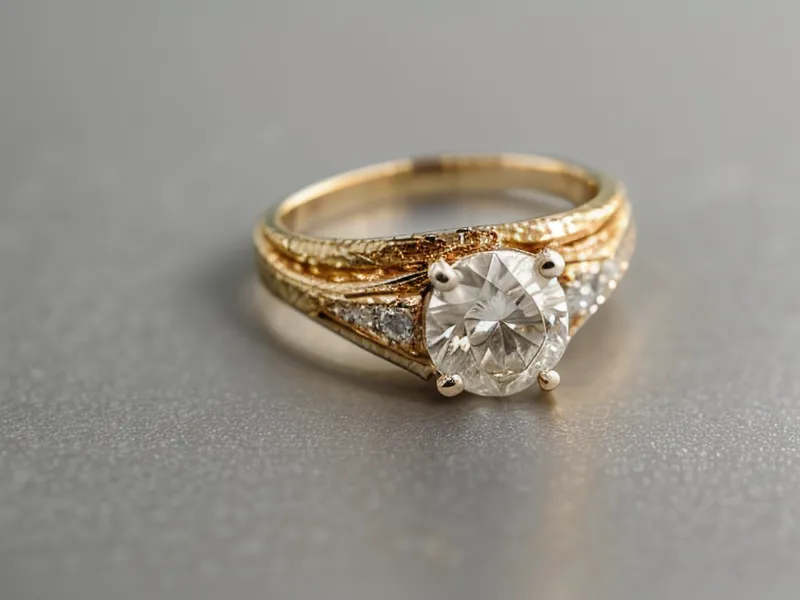
None of this requires a machine that shakes forty-two thousand times a second or a spray with a proprietary name on the bottle. It just takes knowing what you own: sterling versus vermeil, diamond versus emerald, and enough patience to go slow instead of reaching for the strongest thing under the sink. My sapphire ring doesn't look like frosted sea glass anymore. It looks like the day I bought it, and getting it there didn't cost a single prong.