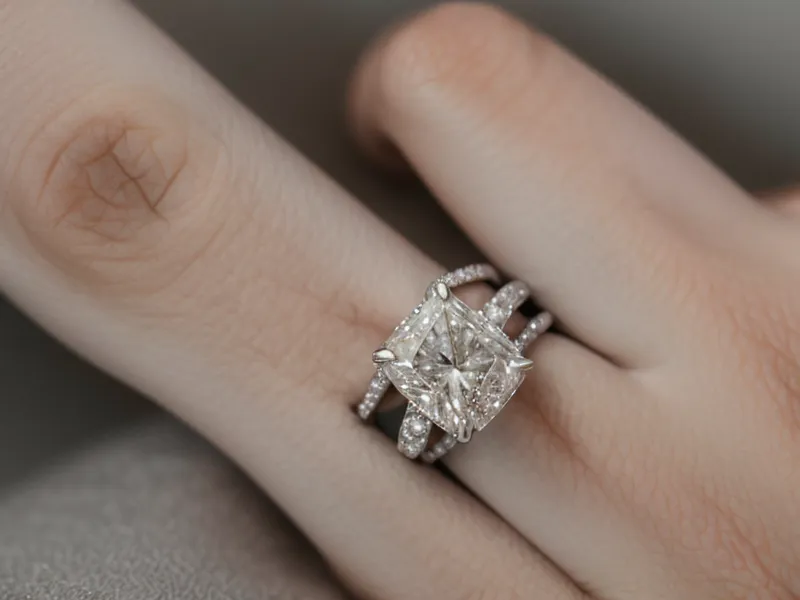
A ring caught on the fringe of a scarf halfway across the promenade at the Battery, and my friend's hand snapped back so fast the whole group stopped walking. Nobody said anything for a second. She checked her finger, found the stone still seated, and let out a breath.
Relief.
That reflex, the wince and the finger-check, is the whole engagement ring setting conversation compressed into one second. Nearly everyone shopping for a ring spends their energy on the stone: the cut, the color, whether it's lab-grown or mined, where it lands on the classic 4Cs breakdown, and what the GIA report actually says once someone finally walks you through it line by line. The setting gets picked last, almost as an afterthought, something to match a mood board. That's backwards; it treats a lifestyle decision like a styling one. The setting is the piece of engineering that decides whether you can reach into a coat pocket, wash a dish, or shake a stranger's hand without flinching, and a lifestyle mismatch there ruins even a flawless stone.
The Setting Is an Engineering Call, Not a Style Pick
Ask a jeweler what setting fits a specific life and most will steer you toward whatever's popular that season (ask me the same question and you'll get a spreadsheet, which is its own personality flaw). The assumption baked into most showroom pitches is that the setting is finishing work: pick the stone, then slot it into whatever mount looks good under the case lights. The reality: setting decisions should get made by how your hands spend a Tuesday, not by what photographs well.
Mall chains build their setting upsell margin in right alongside the stone markup, which is a separate question from where you actually buy. Online direct-to-consumer, a local independent jeweler, and the chain counter each change how much room you have to negotiate, sometimes by a meaningful amount.
Why High Settings Snag on Everything You Own
The "high-profile" setting is having a moment: the stone floated up on thin metal legs, dramatic in the box, right up until it meets a sweater sleeve. Emmeline, who's been my second opinion on rings since we were twenty, still texts me screenshots of these at eleven at night like she's spotted a rare bird. They do look dramatic. They also act like a hook for every cuff, mitten, and seatbelt you own, and every snag puts a little more stress on the metal holding the stone.
Four prongs let more light hit the stone. Six prongs cover more of the girdle edge and hold tighter if your hands take a beating. If you've ever heard that awful little clink of metal against a countertop reaching too fast for a coffee mug, that's your answer — more prongs, or better yet, a lower setting.
The 14k vs. 18k Argument, Settled
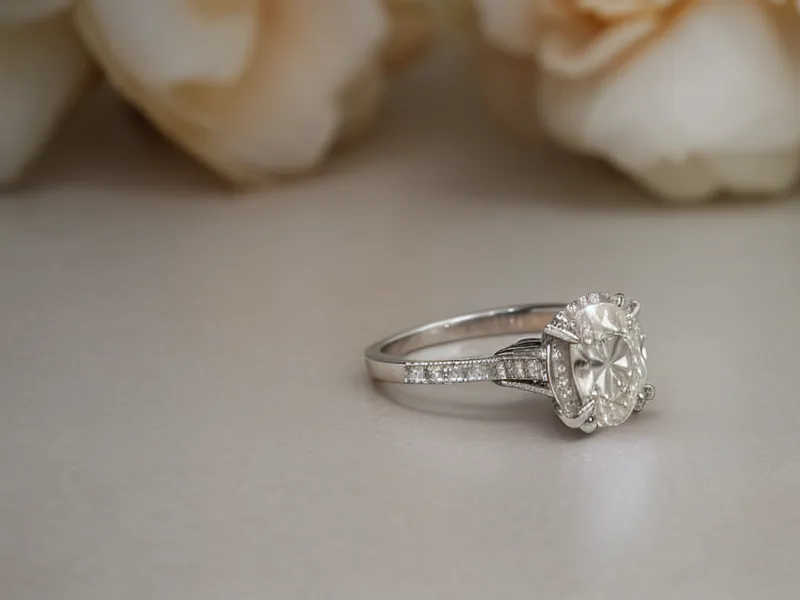
Somebody always insists 18k is the "better" metal because it costs more and carries more pure gold. That's true, and it's also missing the point. Gold on its own is soft — soft enough that the alloy mixed in to make it wearable is exactly what gives a band its structural backbone. Fourteen-karat carries more of that alloy. Eighteen-karat carries more pure gold and less of the metal doing the actual work of holding its shape.
A coworker found this out the hard way. No mountain trip required, just a weekend hike that ended with a bent prong on her 18k band, and she hadn't even hit it hard, just braced a hand against a rock to catch her balance. If your days involve gym equipment, gardening, or general clumsiness, that softer metal is a maintenance plan, not a bonus.
What a Bezel Actually Solves
Bezel settings wrap a thin rim of metal around the entire stone instead of pinning it with claws. Diamonds are hard enough that most people assume they're indestructible, but a hard enough knock at the wrong angle can still chip an edge. A bezel works like the rim around a watch face — nothing exposed, nothing to catch on anything.
I point friends who work with their hands toward bezels more than almost any other setting: healthcare workers, teachers, anyone pulling gloves on and off all day. No prongs to snag a glove or scratch a kid. The trade-off: the stone reads a touch smaller and more modern once the edges disappear under metal, so if you're set on a specific silhouette, see it in person before you commit to it.
Questions to Ask Before You Trust the Case Lighting
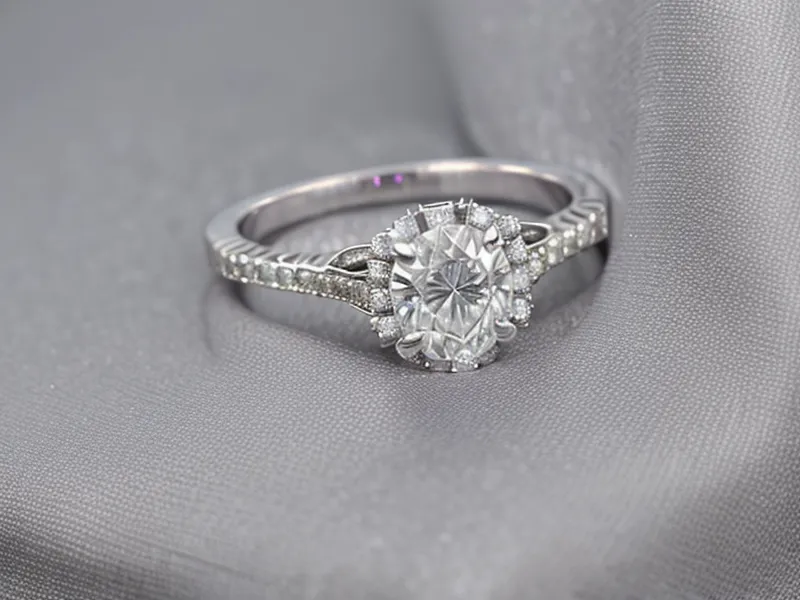
The one thing that's tanked more than one showroom visit for people I've helped: judging how a stone looked under the case lighting instead of asking to step over to a window. Jewelry case lights are warm and directional on purpose. Everything looks better under them. A stone that looks alive under halogen can go flat in daylight, and you won't know which one you're actually buying until you've seen both.
Before any of that, ask the boring questions: what the return window actually covers if a setting feels wrong after a week of wear, whether financing quietly changes what you're paying overall, and whether a standalone insurance policy beats whatever the counter is upselling. Measuring your own ring size ahead of time means a salesperson's tape isn't the only data point in the room.
Chain-versus-chain comparisons like Jared vs Reeds Jewelers: Which Chain Has Better Diamond Quality? usually stay focused on the stone and skip this maintenance layer entirely, which is exactly the gap that gets people in trouble two years in.
Low-profile settings get sold as the lifestyle-friendly option because they sit close to the finger and don't spin as easily on the hand. That part's true. What doesn't come up at the counter: a stone nested that close to skin traps lotion and soap residue with nowhere to drain, and within a few months it can look dull in a way that has nothing to do with the diamond itself. High-set stones are annoying for catching on fabric, but they're far easier to actually clean. A soft toothbrush reaches every angle. Low-profile means more discipline with that toothbrush, not less maintenance overall.
Matching the Setting to Your Actual Lifestyle
Valentina messaged me the same afternoon a coworker mentioned I had a whole system for this. A few showrooms in, she was circling a delicate, high-set cathedral mount because it photographed beautifully, and it took maybe ten minutes of questions to realize a low-set, no-prong setting would fit her days a lot better. She also swaps her preferred metal color close to weekly, so we picked a setting style that would hold up in both tones instead of chasing a decision she wasn't going to make in one visit. If the stone's shape is still an open question on top of all this, that's its own rabbit hole — Best Diamond Shapes for Small Hands for Your Engagement Ring Search gets into how shape and setting height play off each other.
I remember leaving a showroom empty-handed near the end of my own search and feeling nothing but relief: no guilt trailing me to the car the way it had after earlier visits, just the sense that I'd finally asked enough of the right questions to know I wasn't ready to decide yet.
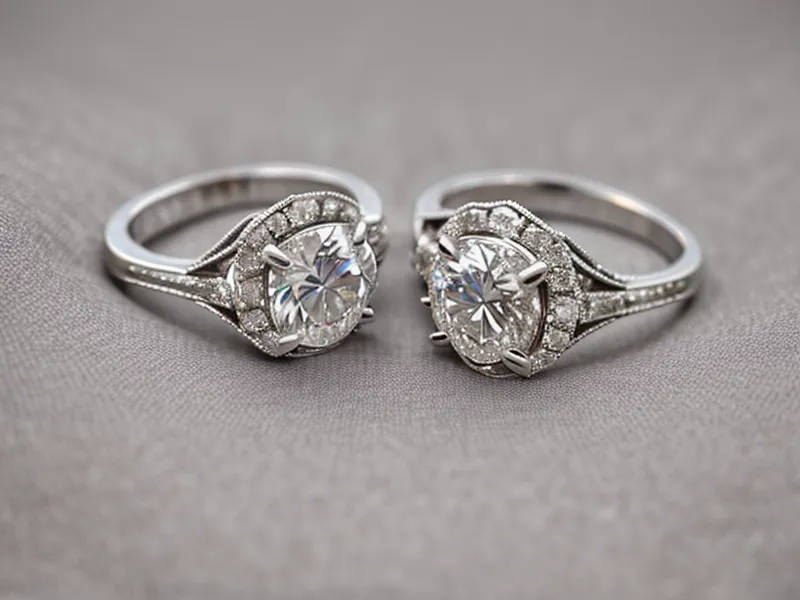
A few branches come up once people get this deep into it: whether a custom setting beats something ready-made off the case, whether IGI tends to grade a touch looser than GIA on an equivalent stone, whether moissanite solves the budget problem without the compromises people assume, and what trade-in terms actually look like if an upgrade happens down the road. Each of those is its own sit-down, not a footnote here.
The setting is hardware wearing an aesthetic costume. Before you fall for a mount because it looked stunning under the case lights, do this instead: picture one ordinary Tuesday with hands in dish soap, keys in a coat pocket, a bag over one shoulder, and pick the setting built for that day, not the version of you that only exists in soft photography. Whatever you land on, keep a soft toothbrush in the jewelry box. You'll use it more than you think.