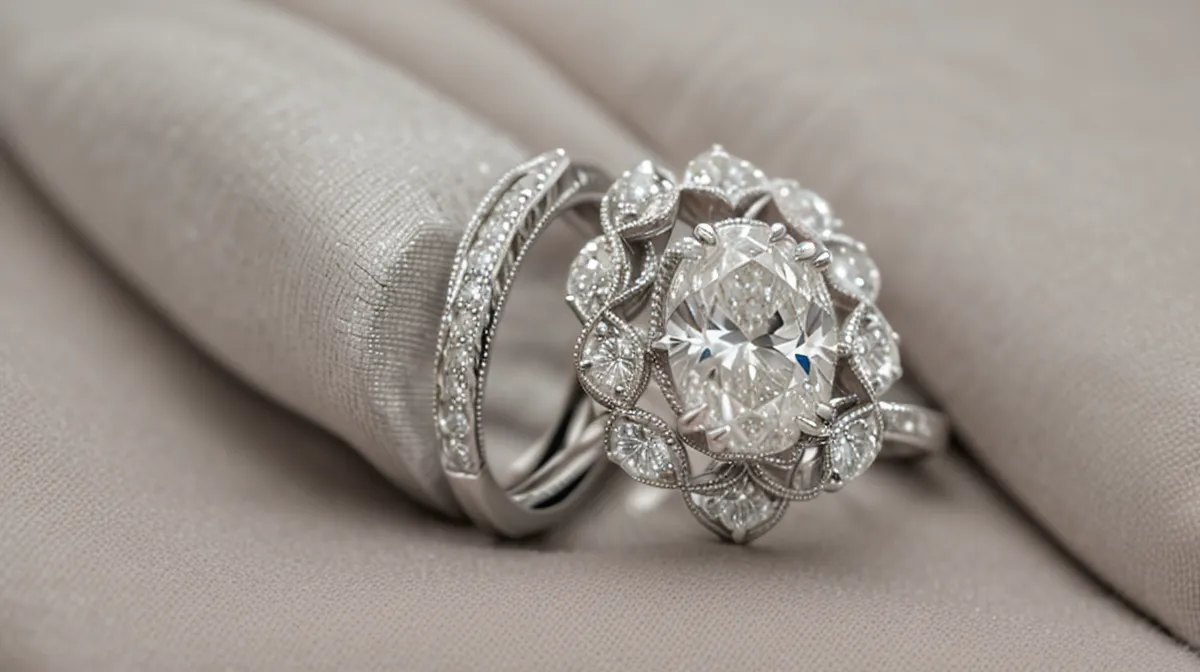
A one-carat round diamond on a size 4 finger reads about as large as a one-and-a-half-carat round on a size 7. That's proportion, not luck, and it's the detail that gets skipped every time an engagement ring guide tells someone with small hands which diamond shapes to chase and which ones to avoid.
Every list built for small-hands ring shopping tells you the same four shapes — oval, marquise, pear, and the occasional cushion — because they're supposed to elongate the finger and read as more carat than they are. Round gets a hard pass. So does anything with a halo, on the theory that either one will swallow a small hand. None of that is really about the shape. It's about how wide the setting sits around whatever shape you pick — and that part almost never makes the list.
Small Hands Don't Need Small-Looking Rings
That part isn't wrong, exactly. It's incomplete. Diamond shapes that run long instead of round do something real on a petite hand, and there's a reason every one of those lists leads with oval and marquise. What none of them explain is why the same oval can look perfect on one hand and clunky on another that's the same size.
Emmeline found that out the hard way, on a single Saturday when we hit three different mall chain showrooms back to back. By the last of the three, she'd tried on six variations of the exact "right" shapes — different ovals, a marquise, a pear — and left more confused about her own hand than when the day started.
What Actually Overwhelms a Small Finger
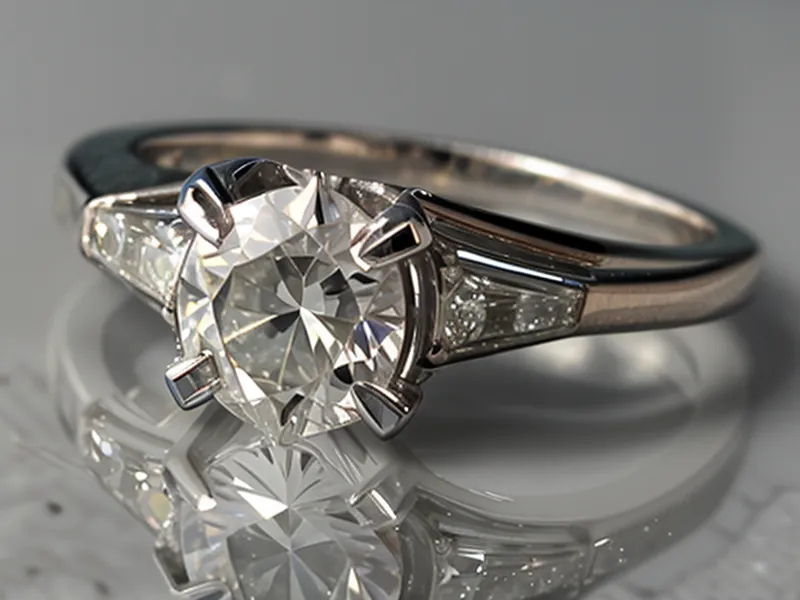
At Sullivan's Island, on the porch steps of a rental, Emmeline slid on a loaner oval and asked me straight — not "what do you think," but "does this actually look bad or are you just being nice." She's the one friend who won't let me soften it, and standing there I had to admit the ring did look bad. Not fine. Not close. Bad. The halo circling that oval spread wide enough on every side that the whole thing read as a round with corners, not an elongated stone at all.
The problem was never the oval. It was the setting wrapped around it, and that's what actually decides whether a diamond overwhelms a small hand, not the shape family, and not the carat weight.
The Elongated Diamond Shapes Rule, and Where It Breaks
Ovals, marquise, and pear are still worth defaulting to before anything else, because an elongated length-to-width ratio can genuinely read larger on a smaller finger without adding a single point of carat weight. That's the honest part of the advice, and it's the reason those diamond cut families keep showing up at the top of every petite-hands list.
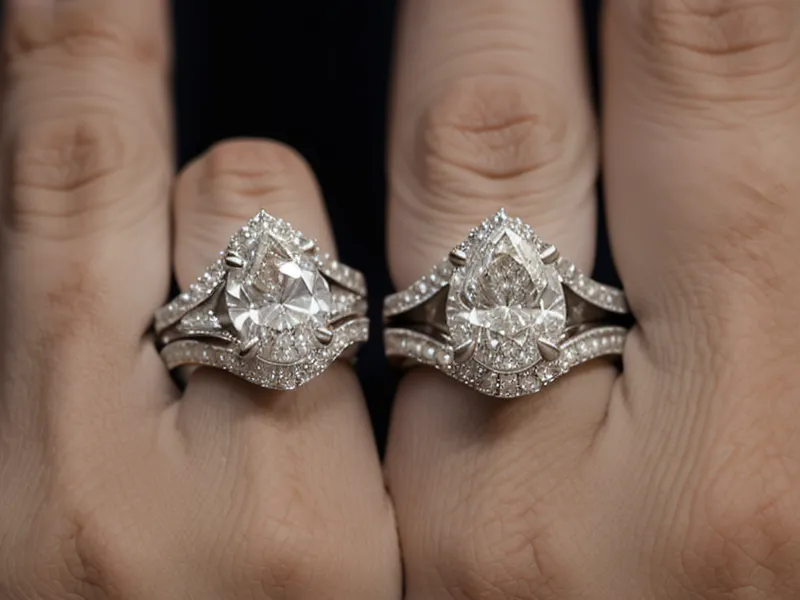
Where it breaks is the setting wrapped around that shape. A halo, a thick cathedral shank, even a wide split-shank can add back every bit of width the elongated outline was supposed to trade away, and on a size 4 or 4.5 finger, there's less room to hide that trade-off than there is on a 7.
I stopped trusting a single look under one light a while back. I'd held two stones up to a window at the same time and watched one of them read noticeably warmer than the other, something the case lighting overhead had flattened out completely. Settings hide the same way. You have to look at the whole ring outside the display case, not just the stone sitting in it.
Check the Setting Profile Before You Pick a Shape
Before locking in a shape because a list told you to, look at what's holding the stone up. Ask how far the halo extends past the center stone, if there is one, and whether the band stays thin all the way around or thickens toward the shoulders. If either answer sounds close to the width of your own finger, the shape underneath won't save it — you're better off going thinner and simpler, even in a shape the guides call less flattering.
That's where the numbers matter more than the marketing. Check the Diamond 4Cs Glossary before you fall for a specific ratio — a well-cut stone in a proportion that suits your hand will always beat a poorly cut one in whatever ratio a list happens to recommend, and a wider halo gets sold at a mall counter as more stone for the money rather than as a design choice that might not suit your hand at all.
Is a Bigger Round Stone Ever the Right Call?
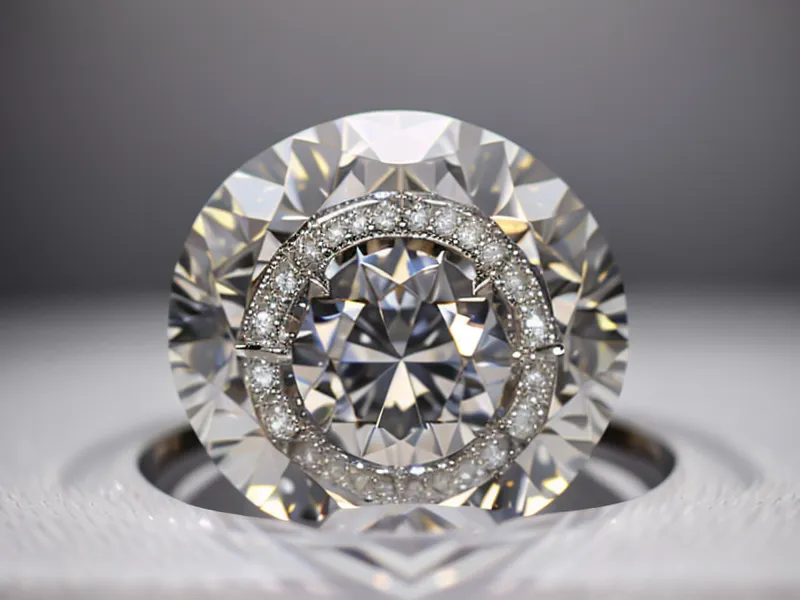
Sometimes the fix runs the other direction entirely. A coworker's girlfriend, Valentina Forde, messaged me after hearing I had a whole system for comparing rings — she won't set foot in a mall jeweler under any circumstances, which narrowed her options fast, but she was stuck on whether a round brilliant was automatically off the table for her size 4.5 hand. It wasn't. The round she ended up loving sat on a band thin enough that the stone did all the visual work by itself; a thicker band under the same stone would have made the metal the main event instead of the diamond.
The One Rule Worth Keeping
Back at my desk in North Central, every setting photo a store sent got logged on a single sheet, sorted with two highlighter colors: one for anything I still needed to ask about, one for anything I'd already ruled out. (My partner calls it the ring binder era. He's not wrong.)
None of that sorting was ever about finding the "right" shape. It's about matching a setting's actual proportions to your hand instead of trusting a shape checklist written for whatever sample size the showroom keeps on hand — the same kind of markup-driven pitch I ran into while comparing Zales vs Kay Jewelers policies for someone else's search. Ask to see the ring away from the case lighting once you've narrowed it down — on your hand, in your light, not the jeweler's.