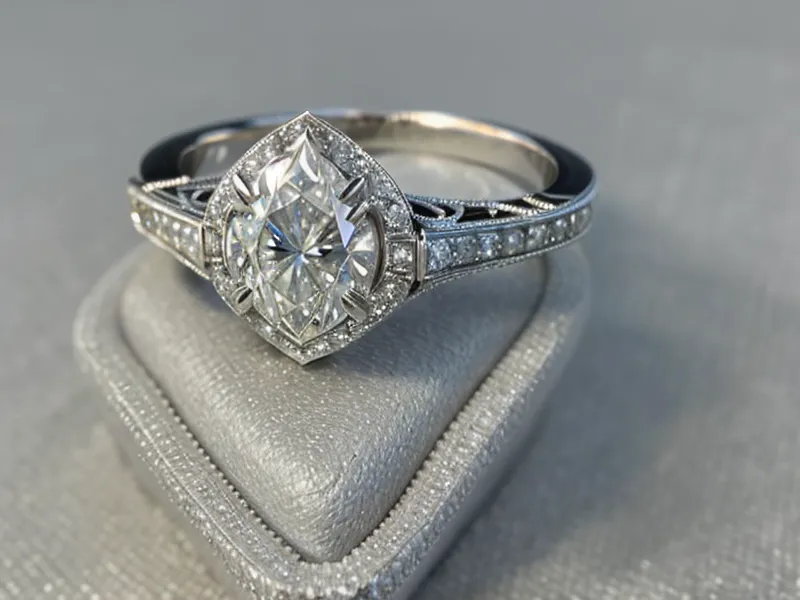
A salesperson's hand finds the dimmer switch the second a loupe comes out of someone's purse. I've watched it happen at three different counters now, helping a friend push through her own engagement ring search across mall chains and online lab-grown diamond stores alike — the friend who does improv most weeknights at Theatre 99 downtown and treats a decision this size like she's workshopping a scene, turning it over from every angle before she'll commit to anything.
Quick disclosure before I get into it: some of the links below are affiliate links, meaning I earn a small commission if you click through and buy — at no extra cost to you. I only link to jewelers I've personally researched, sat across a counter from, or picked apart in my own comparison notes. That's the deal, every time I write about this stuff.
I've been the one friends call for this since my own ring search — the one who asks about return windows while everyone else is looking at settings (my partner finds the whole comparison-notes habit a little much, and he's not wrong). Early on, I tried getting advice from a friend-of-a-friend who supposedly worked in fine jewelry, thinking that was a shortcut past the sales floor. Turned out she worked in jewelry sales, not gemology, and every recommendation she gave happened to be a store on her own commission sheet. Lesson learned early: ask what someone actually does before you ask what they think. Whether lab-grown or natural is the right call for you at all is its own separate conversation — for now, assume you've already landed on lab-grown, like most people who ask me lately, ever since the Federal Trade Commission folded lab-grown stones into its official diamond guidance and the old stigma mostly evaporated.
The Mall Pitch, Word for Word
My friend's search started at the mall, the way most people's do — you want to see how a stone actually looks before you trust a product photo. We walked into Kay Jewelers first, the biggest name in the room, with something like a thousand stores across the country. There's real comfort in that footprint. If a prong ever comes loose three years from now, you're rarely far from someone who can fix it under a lifetime warranty.
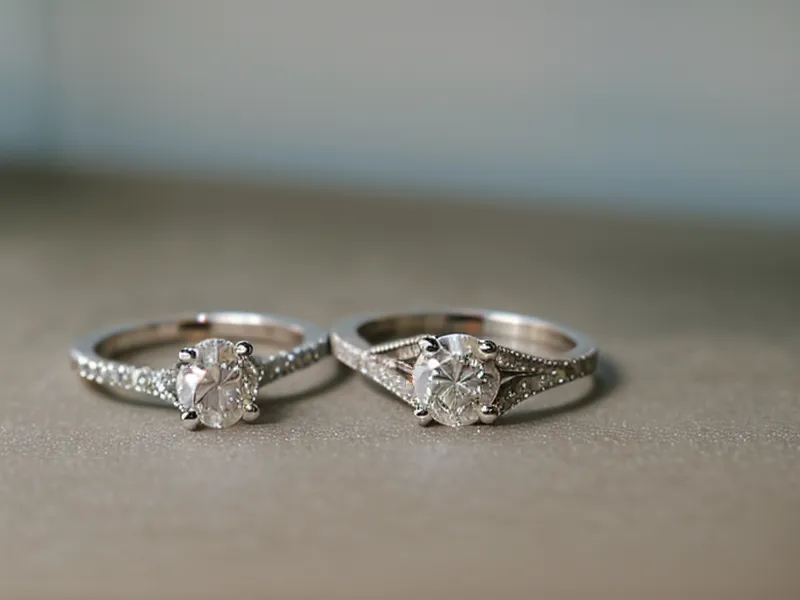
But the pitch is identical at every counter in that mall. I could recite it cold at this point. Financing gets pushed hard, and whether it's actually worth what it costs you is a separate math problem nobody at the counter is going to walk you through unprompted. I remember leaning both forearms on the glass case while my friend compared two settings, the surface cooler than I expected, and clocking that the lighting overhead was doing a lot of the stone's work for it, tuned bright enough that clarity issues that would be obvious in daylight just disappear under glass. More than once, staff steered us toward the house collections instead of the loose stones we'd actually come in to compare.
We saw the same energy at Zales and Jared. Jared leans a little more upscale, with a wider range of higher-carat solitaires, while Zales runs the most aggressive in-store promotions of the three. If you want a safe, recognizable name just to see different shapes on your hand, Zales is a decent place to start. Just keep your guard up, because pricing at the big chains tends to run higher than what the online specialists charge for a comparable stone.
Why the Online Lab-Grown Stores Felt Different
Once the mall started feeling like the same store three times over, we moved to the boutique online players — the ones without a thousand locations to maintain, so the money goes somewhere else. Theo Grace was the first one that stuck. I found them looking for a thin, minimalist band that didn't look mass-produced, and the customer service felt personal in a way the mall counters never managed. You're not customer number four thousand in a queue.
Their whole pitch is the stone, not the story around it — they're upfront that a lab-grown diamond is chemically identical to a mined one on the Mohs scale, not an imitation, and they skip the prestige pitch entirely and just show you the specs. I wrote up the full breakdown separately if you want the details on whether Theo Grace's lab-grown stones are worth the price.
Every online store hands you a grading report and just expects you to read it cold — cut, color, clarity, carat, the four-Cs shorthand nobody actually walks you through first. Which lab issued that report matters more than people think, too: the same color and clarity grade can price wildly differently between two online sellers once you check whether it's a GIA report or something less strict. And I'll say this once: if the whole diamond conversation exhausts you, moissanite is a real alternative some of my friends have chosen instead, though that's a different stone with a different set of tradeoffs entirely.
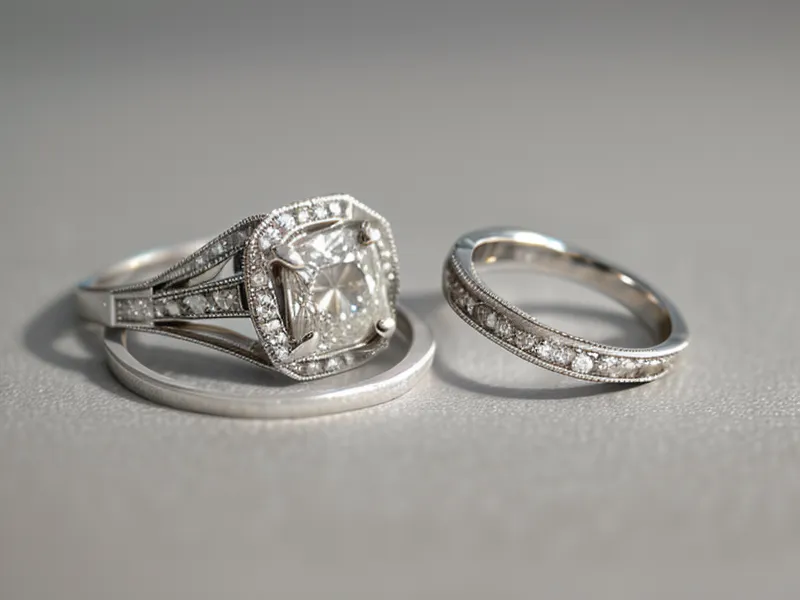
Then there's GOODSTONE, which skips the showroom argument entirely — no case to lean on, no salesperson, just high-resolution video and a return window you're responsible for tracking yourself. Online inventory works differently than a mall case, too: a site can list a stone that no physical showroom anywhere is actually holding, which is exactly how an online specialist keeps prices lower than a chain carrying real inventory across a thousand buildings. When we priced a comparable stone at GOODSTONE against one my friend liked at the mall, the gap was big enough to notice. Nowhere close to the same number.
Cheaper Now Doesn't Always Mean Cheaper Later
This is the part of the conversation where people usually go quiet: resale. I think about a ring the same way I think about a used car or an apartment lease — you want to know your exit before you sign anything. Online specialists get you a bigger, better stone for less money today. That part's not close.
The big mall chains, though, tend to have stronger buy-back and upgrade programs attached to their stones. If there's any chance you'll want to trade up to a bigger stone in a few years, a policy that credits you the full original price toward that upgrade is worth something real. It's worth reading the fine print on what actually counts as an upgrade before you assume you're covered. Lab-grown stones generally don't hold value on the resale market the way mined ones do, so buying from an online specialist means treating the purchase as spent money, not money you're parking for later. You're trading resale insurance for a lower number up front. Neither is wrong. It depends what you're actually optimizing for.
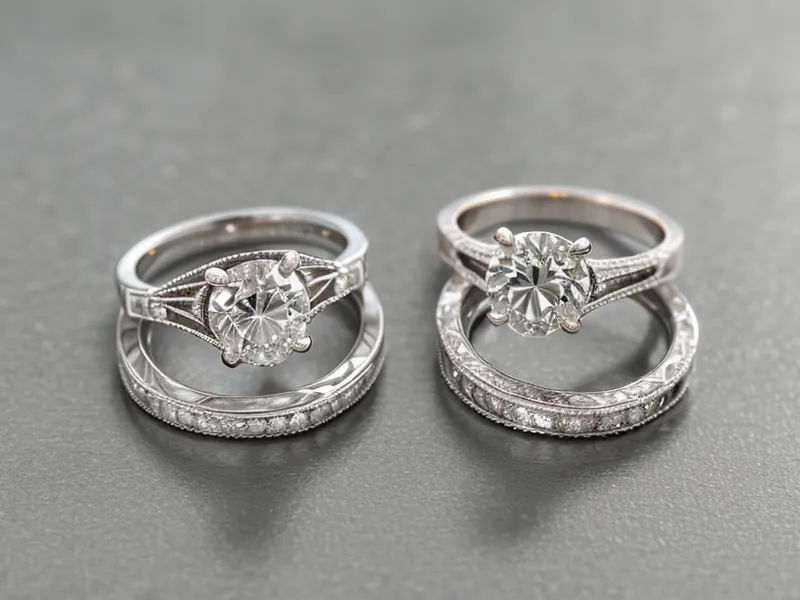
Metal matters more than people think going in. Most of these stores default to 14k or 18k gold, and I steer friends toward 14k for an everyday engagement ring. It holds up better against daily wear than 18k, which scratches and dents faster. If you're outside a lot, or your hands are never still, that difference shows up within a year or two, not decades.
The Small Questions I Ask Before Anyone Clicks Buy
A few other things I've started asking every friend before they get near a checkout button. Read the return policy before you fall for a stone, not after. Most of the leverage you have in this whole process disappears the second you've paid. Ring insurance is worth pricing out separately from whatever the store offers, because a standalone policy is usually broader than a store's in-house protection plan. If you're trying to figure out a size without tipping anyone off, there are ways to do it at home accurately enough to order with confidence. And if nothing in a catalog looks right, ask about a custom build before you settle for the closest ready-made option. It costs more, but it solves a different problem than picking off a shelf. Shape matters too: a round stone reads differently than an oval or a cushion cut at the same carat weight, and that's worth understanding before you fall for a number on a spec sheet instead of how a shape actually looks on a hand.
Choosing an Engagement Ring Store That Fits You
It took about eight weeks of this particular search before I stopped watching the stone a salesperson wanted me to watch and started watching their hands instead. The dimmer switch is the whole story, once you know to look for it. Where you end up shopping depends less on the stone and more on what kind of decision-maker you are.
If you want the security of a physical store and a real upgrade path, Kay Jewelers is still the name I point people toward first. Just compare their return and upgrade policies against Zales before you sign anything, because the two aren't identical even though they feel similar on the sales floor.
But if you're more like me, chasing a better price-to-carat ratio and a design that doesn't look like everyone else's and not caring about a mall warranty, the boutique route makes more sense. Theo Grace gives you a level of design and personal attention that makes the ring feel considered instead of mass-produced, and it's built for someone who already knows roughly what they want and isn't going to be talked out of it by a financing pitch.
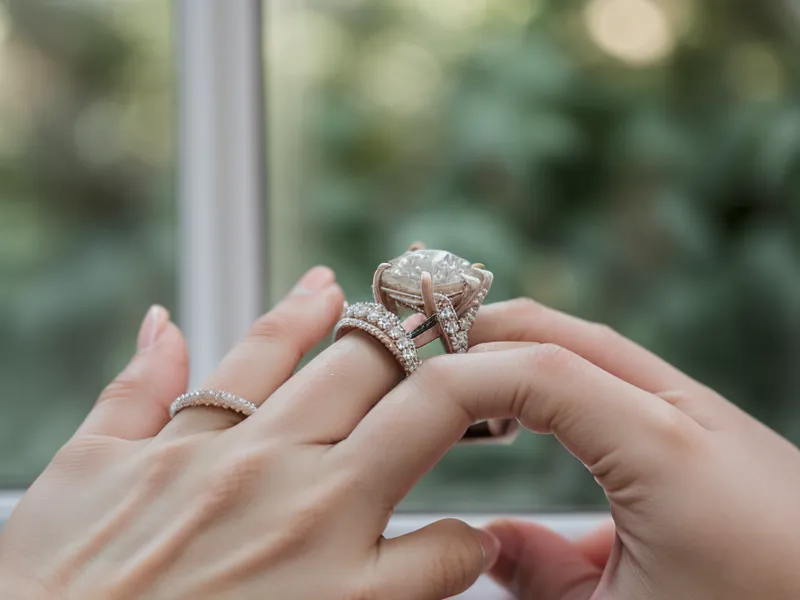
Whichever way you land, don't let forty open browser tabs make the decision for you. Pick your priority first: a thousand physical locations you could walk into, or the better number you get from a specialist that skips the overhead. The rest of the noise gets quieter once you know which one you're actually optimizing for. My friend picked hers a few days ago over coffee on King Street, and I'm mostly just relieved the spreadsheet finally gets to close. Every store I've mentioned here, including Kay, Zales, Jared, Theo Grace, and GOODSTONE, is linked above through the ones I've actually researched and would send a friend to, so if one of them fits what you're describing, that's your next click.
If you're still stuck on the details, I've got more on the best lab-grown diamonds for sustainability-minded shoppers, or on picking a setting that actually fits how you live day to day. It's worth a read if the setting question is where you're stuck, since the right setting depends more on your hands and your routine than on what's trending. Happy hunting.