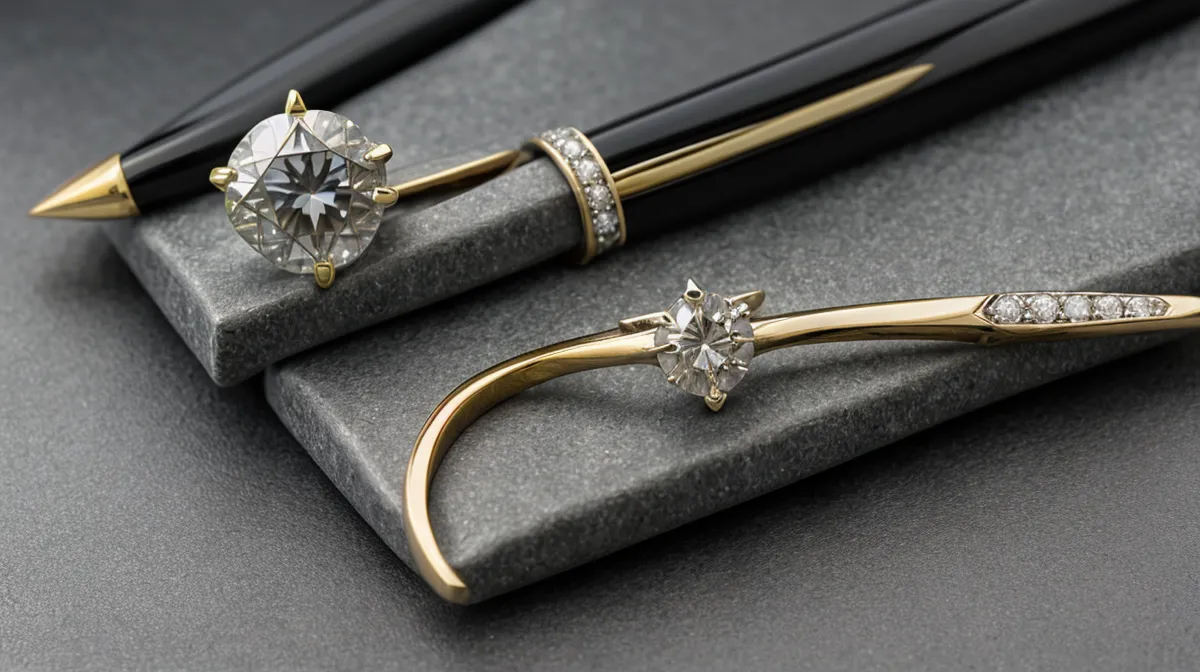
Would you spend twice what you already paid just to unlock the value sitting inside your old diamond? That's the real question behind Reeds Jewelers' diamond trade-in policy, and it rarely gets explained in plain language before someone's standing at the counter with their original ring in a box. Questions like this land in my inbox more than almost anything else in jewelry buying, usually from someone assuming an engagement ring upgrade works the same way trading in a car does. It doesn't, not exactly, and the gap between what people expect and what the fine print actually says is where this gets interesting.
Quick disclosure before we get into it: some of the links on this page are affiliate links, meaning I earn a small commission if you click through and buy, at no extra cost to you. I only link jewelers I've actually researched — sat through the pitch, read the fine print, asked the annoying questions. Full transparency policy is on the About page.
Two years out from my own ring search, this is still the question I hear most. Otis Burroughs, a neighbor down the street, called about it last week — he never texts about anything that actually matters, only calls. He's been saving for two years to buy his girlfriend a ring and wanted to know whether trade-in terms were even worth factoring in before he'd bought anything at all (I'm the friend everyone calls for this, the one who reads return policies out loud at brunch, so of course he called me first). We ended up hashing out the math in person, on a walk out on Sullivan's Island a few days later, because some of this is easier to explain standing still than typing it out.
The 2x Trade-In Rule Nobody Explains at the Counter
Reeds calls it the Lifetime Diamond Trade-In policy, and the mechanics come down to one multiplier: whatever you buy next has to total at least double the credited value of the diamond you're trading in. Not double what your receipt said in general — double the stone's credited value specifically, which is a smaller number once you subtract the setting, and that distinction trips up almost everyone who walks in assuming otherwise.
Say your original stone was credited at $2,000. Under this policy, that credit doesn't apply toward a ring that costs a little more — you need to be spending at least $4,000 before the trade-in value even activates. Below that number, the credit just sits there, attached to a ring you're not wearing anymore, doing nothing.
Steep, and it's meant to be. The whole structure is designed to make leaving expensive — not through a penalty, just through math that only works in one direction. If you already know you'll want to go bigger eventually, it pencils out fine. If you're not sure yet, that 2x floor is the number to sit with before anything else.
Does the Setting Count Toward Your Trade-In Value?
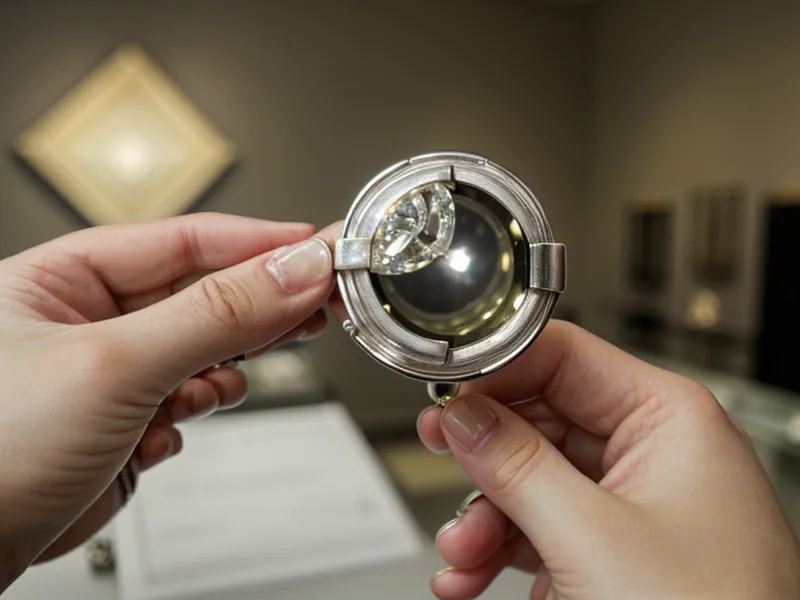
No, and this is the part that catches people off guard. The policy covers the center stone. The metal around it — gold, platinum, whatever designer band it's set in — is scrap value or yours to keep, but none of it counts toward the trade-in credit.
Run the numbers and it matters more than it sounds. Spend $5,000 on a ring where $1,200 of that is the setting, and your actual trade-in power is $3,800, not $5,000. The 2x multiplier applies to that smaller number, so your next stone needs to run at least $7,600 before the credit kicks in — a full $3,800 higher than what most people assume walking in.
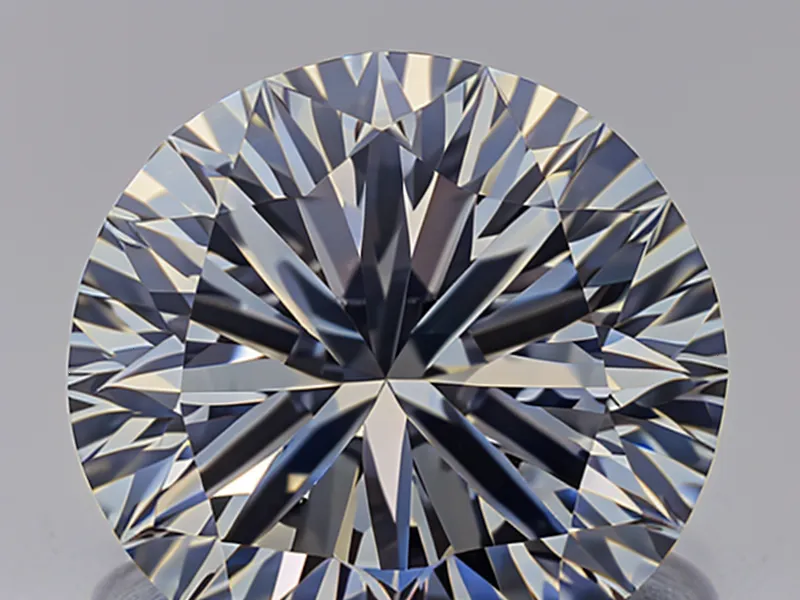
Keturah, my neighbor downstairs, was with me the day I finally understood this one — she notices packaging and presentation before anything else, and she was the one who pointed out the give of the velvet tray as it slid free of its case, that same soft resistance every time, like it's built to make you slow down and actually look at what's inside. What's inside, in this case, is a single center stone, cut a certain way — most of what Reeds pushes is a 58-facet round cut — and that stone, not the metal holding it, is the only thing being appraised for trade-in purposes.
Lab-Grown vs. Mined: Where the Trade-In Math Splits
Lab-grown stones complicate the trade-in math in a way mined diamonds don't. Reeds' trade-in terms are built around their traditionally sourced collection, and traditional retailers generally don't extend the same 2x guarantee to lab-grown stones, because resale value on lab-grown is still a moving target across the industry.
That changes the calculus if you're weighing lab-grown engagement rings against a mined stone specifically because you want future upgrade flexibility. Buy lab-grown at Reeds and you may be buying a stone with limited trade-in utility, not a stepping stone toward something bigger later. Some people I know skip the mined-versus-lab-grown debate entirely and go moissanite instead, which sidesteps the trade-in question altogether since it isn't a diamond at either store. If the upgrade path matters more to you than the upfront price, comparing online lab-grown retailers against Reeds directly is worth doing before you commit to either path.
Certificates matter here too — Reeds' lab-grown stones more often carry an IGI grade rather than GIA, and the two labs don't grade with quite the same strictness, which is worth knowing before assuming lab-grown paperwork carries the same trade-in weight as a GIA-graded mined stone.
What Happens If You Move Away From a Reeds Market?
Keeping trade-in eligibility active means bringing the piece back in for inspection, typically every six months to a year. Stay within driving distance of a Reeds store for the life of the ring, and that's a minor inconvenience. Move somewhere without one, and it becomes the reason the policy quietly lapses.
Military families and anyone who relocates for work run into this constantly. Reeds' footprint is regional — mostly the Southeast — so a transfer to a state without a store nearby can mean missing the inspection window entirely, and missing it is enough to void the trade-in credit you already paid for. If where you'll be living in three years is a genuine unknown, a chain with a bigger national footprint changes the calculation. Kay Jewelers operates over 1,000 stores nationwide, which makes hitting a mandatory check-in far easier regardless of where you end up stationed or transferred.
And if a physical store of any kind ends up out of reach, you're comparing something else entirely — an online-only retailer's return and inspection process against a local showroom's, which is its own decision with its own trade-offs, separate from the trade-in math altogether.
Reading the Paperwork Before You Walk In
Reeds needs the original GIA report to verify a stone before they'll even discuss a trade-in credit — matching the paperwork to the physical stone is non-negotiable, no exceptions for a good story about a lost certificate. Actually reading what's on that report line by line, not just the headline grade, isn't obvious the first time you see one.
Assuming two stones with the same clarity grade would cost close to the same was a mistake I made early on — they don't, not consistently, and nobody at the counter explains why until you push for it. The report covers all four Cs together, not clarity in isolation, and skipping past the other three is exactly how two similarly graded stones end up priced differently. I've held two stones up to the same window and watched one read visibly warmer than the other despite matching certificates — that gap in tone is usually where the price difference actually lives, not in some flaw you'd need a loupe to find.
Missing paperwork slows everything down, and a damaged stone kills the trade-in value outright — a crack or chip means no 2x credit no matter how solid your original certificate was. Getting the setting right matters here too, since a ring that doesn't fit daily life is more likely to get knocked or scratched into an unusable state. It's worth reading up on choosing a setting that fits your lifestyle before you buy, specifically because it protects trade-in value down the line, not just comfort now.
Is the Reeds Deal Worth It Next to the Big Mall Chains?
That depends on what you're optimizing for. Reeds' markup story reads differently than a big mall chain's — a family-owned regional operation doesn't carry the same overhead as a thousand-store national chain, and that gap shows up in both sticker price and how hard the upsell lands. It's not automatically cheaper, but the sales pressure is usually lighter.
None of that trade-in math matters much if you're financing the purchase — interest adds up faster than any future credit offsets it, so run that comparison before you sign anything. Return policy leverage deserves just as much attention as trade-in policy — arguably more: being able to walk something back in thirty days is worth more upfront than a theoretical upgrade five years out. And whatever you land on, get the piece insured before it leaves the store, not sometime after, because trade-in credit means nothing on a ring that's already lost or damaged.
If you're still deciding between a custom build and something off the case at Reeds in the first place, that's a separate decision with its own trade-offs — I've written separately about what to expect building a custom ring at Reeds. Buying online instead of in a showroom adds another layer, since figuring out ring size without ever stepping into a store is a skill of its own. And if you're leaning toward an oval or cushion cut instead of round, the trade-in math gets murkier still, because proportion drives price as much as carat does on a fancy shape.
None of that changes basic upkeep, either. Cleaning fine jewelry at home the right way keeps a stone in trade-in-ready condition between visits, which matters more than people think when an inspection is what keeps the whole policy alive.
Weighing the Trade-In Against Your Own Timeline
Reeds' trade-in policy isn't a scam. It's a specific financial tool that rewards staying put, buying mined over lab-grown, and keeping every piece of paperwork you've ever been handed. Know that going in, and the math can genuinely work in your favor if you're the kind of person who'll want to go bigger eventually.
Otis decided to hold off on worrying about trade-in terms until he's actually shopping for the ring itself — a fair call, since none of this matters until there's a stone to trade in the first place. If you want a jeweler with a wider footprint for those mandatory check-ins instead of a regional chain's tighter map, Kay Jewelers is worth comparing directly against Reeds before you commit to either one.