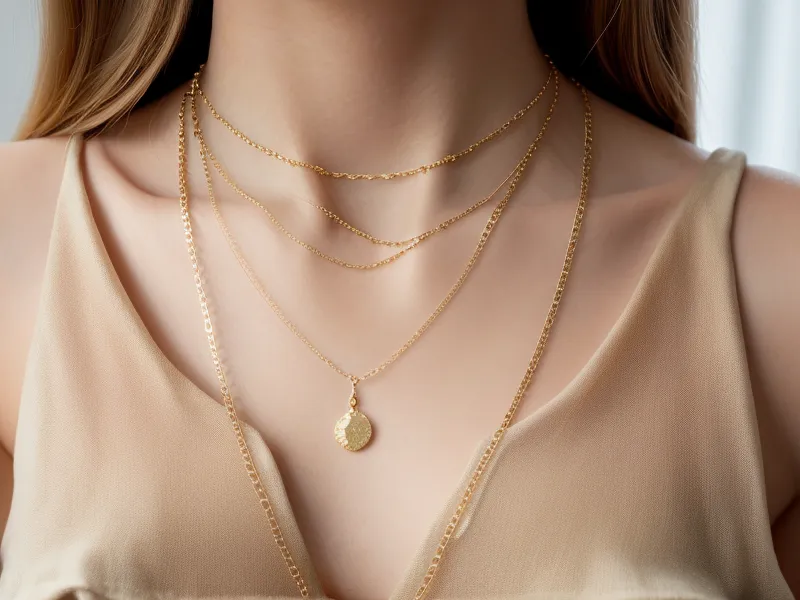
A hollow rope chain weighs almost nothing in your palm, thinner than the price tag would suggest for something marketed as solid gold. That gap between look and weight is the first thing you learn shopping gold chains for a minimalist jewelry stack, and it's the reason jewelry stacking has turned into its own small research project for anyone trying to do it without wrecking their skin or their budget.
Quick disclosure: this site runs on affiliate links, and if you click through and buy something, I earn a small commission at no extra cost to you. I only link stores I've actually researched or bought from myself, which is the same instinct that turned me into the friend everyone calls before they set foot in a mall jewelry store.
What 14k Actually Means for a Chain You Wear Every Day
Fourteen-karat gold is exactly 58.3% gold, alloy the rest of the way. That alloy is what keeps a chain from bending the first time it snags a sweater sleeve or gets grabbed by a toddler — gold on its own, at higher purity, is too soft to survive daily wear. Ten-karat runs more diluted still, which is part of why it costs less and often shrugs off scratches better, even though it reads as "less real" to people who don't know the math behind it. Piercing Pagoda, rebranded now as Banter, built its whole identity on accessibility, and that's worth respecting on its own terms. But the lightweight models deserve a second look before you buy. Some of the entry-level chains in that price range are hollow rather than solid — thick-looking, but structurally closer to a drinking straw than a rope. Ask directly whether a chain is hollow or solid before committing to wearing it around the clock. A salesperson who dodges that question has already told you something.
Kay, Zales, Jared, and Banter Are All the Same Company
Signet Jewelers is the largest diamond jewelry retailer in the world, running something like 2,800 stores globally, and it owns Kay, Zales, Jared, and Banter under one roof. Walk into a mall and you're usually choosing between siblings, not competitors — the kind of pattern you start noticing once you've sat through enough mall jewelry pitches to recognize the family resemblance in the sales scripts.
The targets differ by store, though. Banter runs as the fast, high-volume entry point. Kay Jewelers sits in the reliable middle, and it's where a more robust service plan tends to show up even on a basic chain. Break a chain from a budget kiosk and you're often just out whatever you paid for it. Buy a slightly more substantial piece somewhere with a lifetime service agreement, and they'll actually solder it back together instead of shrugging. It's the difference between a fast-fashion t-shirt and a pair of jeans that holds its shape wash after wash — you want the jeans holding up the rest of your stack.
How Long Should Your Foundation Chain Be?
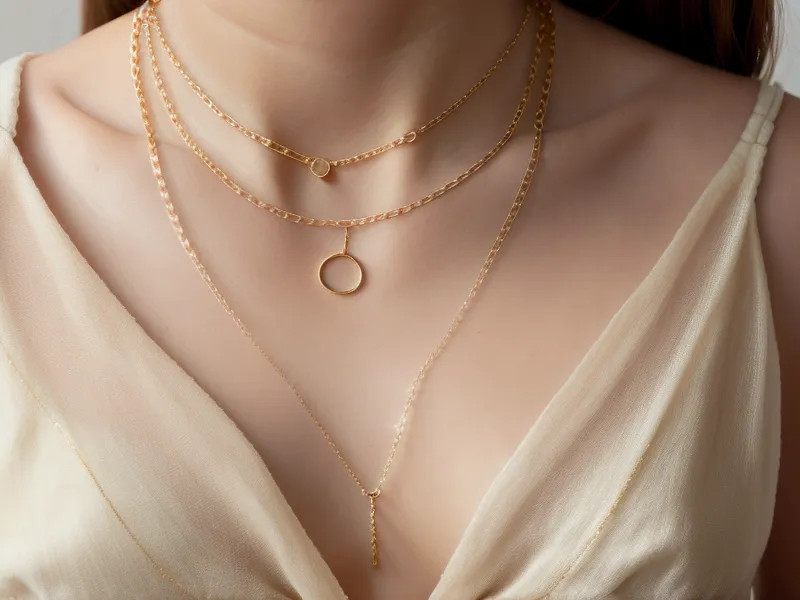
Most minimalist stacks start from three standard lengths, and the logic behind each one is worth knowing before you buy any of them. A 16-inch chain sits close, almost like a choker, and works best thin — a box or cable link rather than anything chunky. An 18-inch chain is the workhorse of the three; it's the length that can actually carry a small pendant without the proportions looking off. A 20-inch chain anchors the back of the stack and can handle a slightly heavier link, something like a Figaro or a rope, since it sits lower and won't compete visually with the shorter pieces above it.
Zales is worth checking for these basics simply because they run the most aggressive promotions of the group, rotating "gold event" sales often enough that timing a purchase around one saves real money. The trade-off is that their lower-end gold can feel slightly scratchy against skin compared to the others. Jared feels more premium in hand — the clasps close with a more satisfying click — but that's a mall-prestige premium you're paying for, not necessarily a purity or durability difference.

The Real Cost of a 'Cheap' Mall Chain
Here's the part where I turn into the skeptical friend at brunch: Piercing Pagoda-style chains often carry higher long-term costs than solid options from boutique shops, because the affordable price point gets built by making the links thinner, not by cutting the karat. I've watched friends buy a $100 chain only to have it stretch or snap within a few months, then pay $40 at a local jeweler to fix it. Do that twice, and you've spent more than a heavier, better-made chain from somewhere like Theo Grace or GOODSTONE would have cost up front.
Before you assume you can price-shop your way around this, a confession: I once leaned on a Reddit price-comparison spreadsheet a stranger had built years back, treating it like gospel for what a "fair" chain price should look like. It hadn't been touched in two years. Gold prices move, promotions rotate, and half the retailers on that sheet had restructured their pricing since it was made. It wasted more time than it saved. If you want to know how to keep whatever you land on looking good at home, I wrote up how to clean Ross Simons jewelry at home — the same care rules apply to mall gold. And the same logic I use fighting an apartment lease renewal applies here: a "cheaper" rate is only cheaper once you account for what it doesn't cover.
Stepping Outside the Mall: GOODSTONE and Theo Grace
GOODSTONE mostly gets attention for lab-grown diamonds, which is its own separate trade-off if you're weighing lab-grown against natural stones for a ring rather than a chain, but its metalwork is precise, and its direct-to-consumer pricing means you're not funding a mall food-court lease through your purchase. Theo Grace is where I'd send someone shopping for the flair piece of a stack: the design language is more modern and minimal, and it makes standard mall chains look a little dated by comparison. One thing to flag before ordering from either: boutique return policies tend to run stricter than a chain like Kay's, so read the fine print before you assume anything is returnable.
Comparing the Best Mall and Boutique Gold Chain Options
Here's how these four options stack up once you separate the marketing from what you're actually getting for the money.
| Retailer | Best For | Durability Rating | Policy Vibe |
|---|---|---|---|
| Kay Jewelers | The Foundation (Solid 14k) | High | Great warranties, annoying upsells |
| Banter (Piercing Pagoda) | Trend pieces / 10k gold | Medium-Low | Fast-fashion of jewelry |
| Theo Grace | The 'Style' Piece | High | Boutique feel, limited returns |
| GOODSTONE | Ethical/Modern Base | High | Direct-to-consumer value |
The Warranty Matters More Than the Price Tag
Kay Jewelers frequently offers a stronger warranty on the same basic chain style that Piercing Pagoda sells for less, and that gap is where I've watched people get burned. A friend once tried returning a broken hollow rope chain to a mall kiosk and was told flatly it was "wear and tear" — no coverage, no fix, done. Buy that same chain style at Kay, and a snapped link usually gets repaired instead of written off.
Sunita — a friend who asks the most practical financial questions of anyone I know — went straight for the math when she was chain shopping: is the plan worth the markup, or is that markup just profit dressed up as peace of mind? For something you're wearing while you sleep, shower, and work out, my answer is that it's worth it, closer to buying insurance for a ring than an optional add-on. If you want to see that same reasoning applied to a bigger purchase, I broke down what I learned about the Reeds Jewelers trade-in policy separately, and a lot of it carries over.

Where to Spend, Where to Save on Your Stack
If you're only going to spend real money in one place, put it toward a single, solid 14k chain from somewhere reliable, like Kay Jewelers or a boutique such as Theo Grace. That's your base layer, the one staying on your neck for years, so it earns the extra cost up front. Save Piercing Pagoda or Zales for the layers you'll swap out anyway: the 10k charms, the ultra-thin whisper chains you'll probably replace within a year or two no matter how well they're made.
Shelby, a friend who came to me budget-first and wouldn't move off the ceiling he'd set for himself, is proof the approach holds even on a tight number: he put almost everything into one solid piece and treated the rest as optional. That's the mix worth aiming for — reliability where it matters structurally, mall-kiosk speed for the flair pieces. Before handing over a card anywhere, get a straight answer on the return and repair policy, and if a chain feels lighter than a paperclip for what you're being asked to pay, that's reason enough to walk.