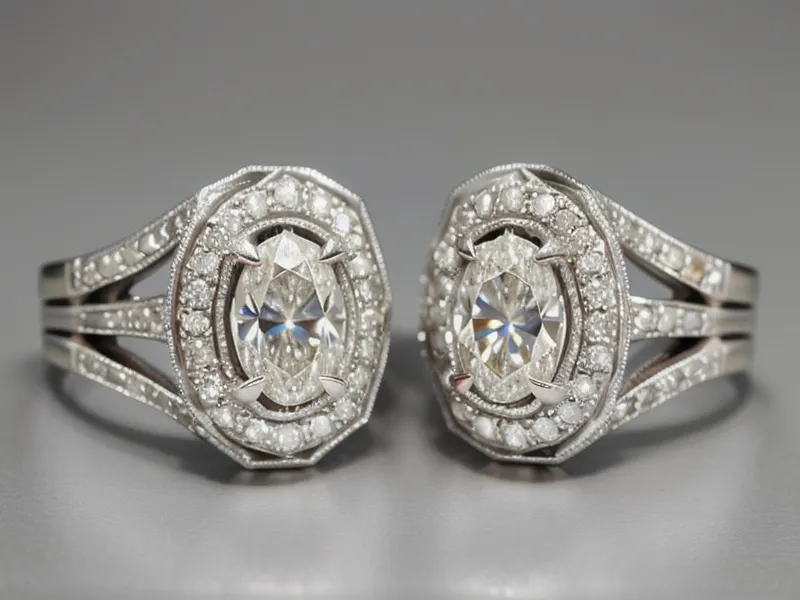
Keturah's got the loupe two inches from her face, squinting at a 1.5-carat round the salesperson just called a steal because of its color grade. Something about the stone looks off to me before she even lowers the loupe — a faint milky cast under the halogens that most people doing engagement ring shopping walk right past without a second look. I already know what it is. Diamond fluorescence, and in a mall jewelry store, nobody behind the counter brings it up unless you make them.
Here's the short version, before we get into GIA scales and UV lights: on a top color grade, strong fluorescence is something to walk away from. On a lower color grade, it can work in your favor. Everything else below is just learning to tell the difference while you're standing at the counter.
The Diamond Fluorescence Line Mall Stores Hope You Skip
Fluorescence is a diamond's tendency to glow, faintly, under ultraviolet light. Most stones do it so little you'd never notice in daylight. Somewhere between a quarter and a third of gem-quality diamonds carry some degree of it, and the GIA logs it on every report as an identifying characteristic — not one of the 4Cs, which is exactly why it gets skipped over so easily at the counter.
I used to assume two GIA-graded stones at the same clarity grade should land at about the same price. That assumption cost me a negotiation once, before I learned that a Strong or Very Strong fluorescence rating on a high color grade can knock a meaningful chunk off a stone's wholesale value — and that mall stores don't always pass that discount along.
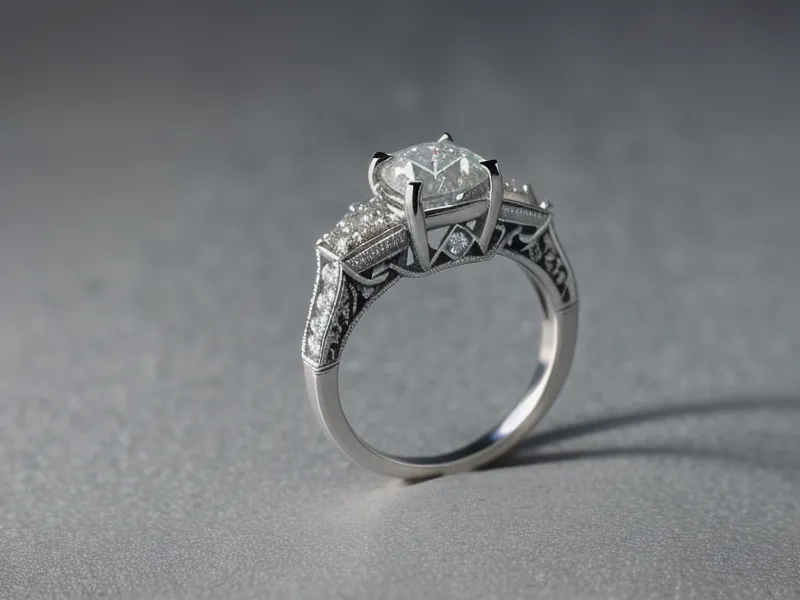
How GIA Grades Fluorescence, and Why It's Not One of the 4Cs
Ask for the GIA report before anything else. If a salesperson won't produce it, that's the whole conversation right there — walk. Once you've got it, the fluorescence line runs through five stops: None, Faint, Medium, Strong, and Very Strong. None is the standard for a high color grade, the box you want checked if you're paying a premium for something colorless. A report from IGI grades the same category, but IGI and GIA don't always land in the same place on a borderline call, so it matters which lab issued the paper in front of you.
A salesperson tried this on a friend of mine a few months back, waving off a Strong Blue rating on an E-color stone by calling it "unique." That's sales language for a stone he needed off the shelf. In high color grades, strong fluorescence usually reads as haze, a kind of structural fog that cuts into how much light comes back out of the stone. You don't pay a premium for colorless just to end up with foggy.
Inventory quality on this front varies a lot by which buyer was stocking a particular store that month — something that showed up clearly when I compared Theo Grace vs Reeds Jewelers: My Deep Dive into Mid-Size Retailers After Months of Research, where two locations of the same tier carried noticeably different fluorescence rates case to case.
Showroom Lighting Is Built to Hide It
Mall jewelry store lighting has one job: maximize fire and scintillation, the flash and movement you see when a stone tips under the light. That same lighting is also very good at covering up the oily, hazy look that shows up in high color grades with strong fluorescence. It's not an accident. It's closer to how a used car lot times a test drive for golden hour.
Near the back wall, where the display cases run their brightest rigs, the air gets thick and a little stale — you don't clock it until you step toward the doors and breathe easier. That's usually where I ask to move a stone somewhere else. Not to the little desk lamp marketed as a "daylight simulator." An actual window, with real sun coming through it.
Take the Stone to a Window
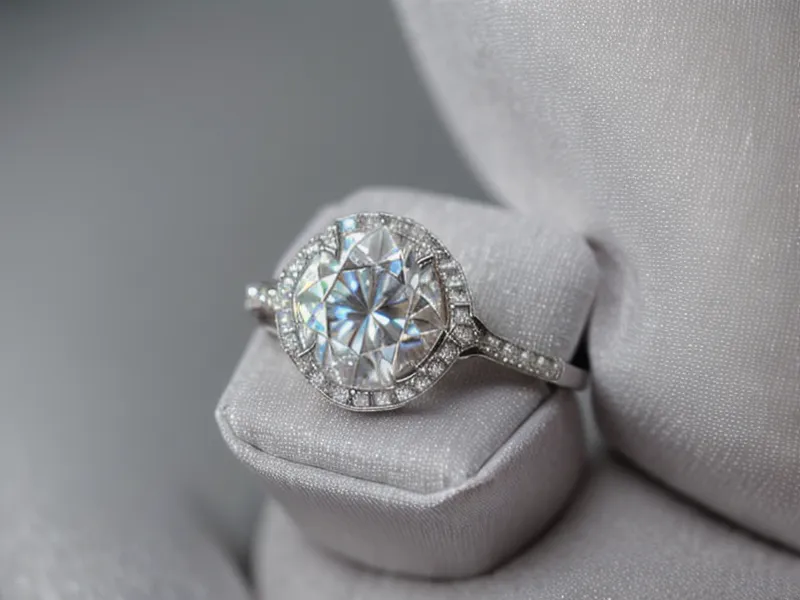
Under direct sun, a stone with strong fluorescence often changes right in front of you. The crisp look it had under the halogens goes soft, almost like it fogged over and didn't clear. Set next to a stone graded None, the difference isn't subtle — it looks like it belongs in a different price bracket entirely.
If a mall store keeps a UV light in the back for grading (most do, whether or not they offer to bring it out), ask for it. The standard testing wavelength is 365 nanometers. Hold the stone under it: if it glows like a poster under blacklight and then turns milky the second it's back in daylight, you're holding a stone that grades well on paper and underperforms everywhere else.
It's the same lesson I took from Round vs Princess Cut Diamonds: What I Noticed During My Ring Search — the spec sheet is a starting point, not a verdict. How a stone behaves in daylight, in motion, under the exact lighting it'll actually live under, is what shows up on a hand. The report can't tell you that part.
When a 'Flaw' Makes a Diamond Look Better
Everything above is about protecting a high color grade from looking foggy. Lower down the scale, the math flips entirely. A J, K, or L color diamond carries a slight warm tint, and blue sits opposite yellow on the color wheel, so a Medium or Strong Blue fluorescence rating in one of these stones can cancel that tint out in daylight — sometimes enough to make it read a full grade or two whiter than the report technically says.
That's the version of this worth remembering: paying a lower color grade's price and getting a stone that presents closer to a higher one, because of a trait most shoppers are told to run from on sight. It only works in this direction. It won't rescue a stone with clarity problems, and it's a separate question from whether a stone reads eye-clean in the first place. None of it changes if you're weighing lab-grown against natural, either. That's its own comparison with its own trade-offs, and fluorescence rarely decides it. If the budget question matters more than whether the stone is mined or grown at all, moissanite bends light differently enough that this whole conversation stops applying.
I watched this exact trick show up while comparing Kay Jewelers Custom Engagement Rings Online vs In-Store Shopping — some of the in-store "deals" were J and K color stones whose Strong Blue rating was quietly doing a lot of the work to make them look better than their grade on paper.
Use the Grade to Negotiate the Price
Wholesale, diamonds with strong fluorescence in high color grades can run something like ten to twenty-five percent under their None-fluorescence counterparts. If a mall store prices a Strong Blue stone the same as a comparable None stone, they're planning to keep that entire spread as margin.
So say it plainly. I've told a salesperson, flat out, that the report in front of us shows Strong Blue, that the market already discounts for it, and asked how the number on the counter accounts for that. A "firm" price tends to soften fast once someone realizes you're not reacting to how the stone flashes under the case lights — you're pricing the report itself, the way you'd price a used car against its title history.
This is worth raising before the return-policy conversation, not after — a discount negotiated up front is worth more than a refund fought for later. And if a chain's whole pitch leans on "complimentary" warranties and upgrade credits down the line, remember that discount and those extras come out of the same pool of markup.
Is Fluorescence a Dealbreaker?
No, not on its own. Fluorescence is a tool, not a verdict. In a D-color stone, strong fluorescence is a fog you're paying extra to avoid. In a K-color stone, it's a whitening effect you got for free. Mall stores count on shoppers not knowing which situation is in front of them.
Keturah didn't buy that day. She keeps a running list, in her head, of stores she's never setting foot in again, and this one made the cut before we reached the parking lot.
We ended up walking it off along The Battery, watching the harbor turn the color of weak tea, no bag in either of our hands. For the first time in this whole saga, I didn't feel that tug of guilt that usually trails me out of a jewelry store — just relief that we hadn't paid full price for a stone that would've gone cloudy the first time she caught it in real daylight.
None of this makes fluorescence good or bad by default. Check the report. Ask for the window. Ask for the UV light if they've got one, and match what you're seeing against the color grade printed on the paper. That's the whole test — not whether a stone looks impressive under the case lights, but whether it holds up once it's out from under them.