A browser tab full of ring settings and a showroom appointment are not the same decision, even though Kay Jewelers wants every custom jewelry shopper to believe the two paths land you in the same place. One lets you test fifty combinations before lunch. The other puts an actual person across the counter, watching your face for the moment you fall for a particular stone. I've been through both processes enough times — for my own engagement ring, then for a growing list of neighbors and coworkers — that I no longer feel odd walking into a jewelry shopping trip with a list of blunt questions about return windows. Here's the plain breakdown of what Kay's online ring builder gets right, where the in-store visit still wins for custom engagement rings, and how to use both without getting steered somewhere you didn't ask to go.
Quick disclosure before any of that: some of the links below are affiliate links, and if you click through and buy, I earn a small commission at no extra cost to you. I don't link to a jeweler I haven't personally researched, compared against its competitors, or sent a friend to go visit.
Most people start their engagement ring shopping at Kay Jewelers, and that's not surprising — with over 1,000 physical stores, there's probably one within a short drive of wherever you live. But "custom" means something different depending on whether you build the ring through a browser or across a sales counter, and the gap between those two experiences is bigger than most shoppers expect going in.
Kay's Custom Engagement Ring Builder: What It Gets Right
Kay's online customizer works the way a good configurator should. Pick your metal, pick your setting, filter down to a shape and carat range, and you can compare several rings before your coffee gets cold. For anyone trying to decide between a custom-built ring and one of the pre-set styles already sitting in a case, this is the fastest way to rule things out. The custom-versus-ready-made question mostly answers itself once you see how much a small setting change shifts the whole look. Every retailer handles the online-to-in-store handoff a little differently, and Kay's version leans more toward research tool than final decision-maker.
Where it gets genuinely useful is for standard swaps: round to oval, white gold to platinum, a plainer band to a pavé one. You're not waiting on someone else's schedule, and there's no pitch layered on top of the browsing.
A render is not a stone, though, and that gap matters more than the tool lets on. Diamonds photograph well in CAD regardless of how the actual proportions perform once cut and set. A stone can look flat or cloudy under the wrong cut angles, and neither shows up in a digital preview. I've watched online custom orders arrive with a prong height so tall the stone catches on every sweater sleeve within a week. If you're doing anything beyond a simple swap, treat the online tool as a starting sketch, not a finished plan.
Does the Showroom Visit Actually Change Anything?
Walking into a mall location is a different experience than the online tool prepares you for. Showroom lighting is bright and warm by design, built to flatter every stone in the case, which also means it's good at smoothing over clarity issues that would show up under flatter light. Consultants vary a lot. Some genuinely want to help you land on the right ring; others are working from a script built around financing plans and lifetime upgrade programs, and you'll hear that pitch whether you ask for it or not.
Here's the mistake I made early on and still see other people make: assuming two GIA-graded stones at the same clarity grade would cost about the same. They don't, not even close, because clarity is one line on a report next to cut, color, carat, and a handful of other factors that move price independently of each other. The first time I actually opened a GIA report and went straight to the clarity plot instead of skimming the summary number, I realized how much guessing I'd been doing. Learning to actually read one of those reports is worth its own deep dive rather than a paragraph here, and getting the 4Cs fundamentals straight (how cut, color, clarity, and carat interact) matters more than memorizing any single grade.
What the showroom does better than any dropdown menu is nuance. You can point at an actual ring and say you want that band with this head, dropped by a couple millimeters, and a jeweler can tell you on the spot whether that's realistic. That's especially true for fancy shapes, since an oval or a cushion cut behaves differently depending on its proportions in a way that's hard to judge from a photo. If the technical side feels overwhelming, I've written up choosing an engagement ring setting based on lifestyle, which covers what most consultants skip while they're steering you toward the case with the biggest markup.
The financing pitch alone probably deserves its own accounting. Whether an in-house payment plan actually saves you money once you add up the terms is a completely separate question from whether the ring itself is a fair deal.
The Return Window Is Shorter Than It Feels
Kay runs a standard 30-day return window, which is typical for a mall chain but starts to feel tight once you've ordered something built around your exact specs. Go the online route and you should mark that date the moment the box lands on your porch, because the clock doesn't pause while you think it over.
My neighbor Keturah is usually the first person to ask about the return policy whenever I'm mid-review of some jeweler's process, and she's right to lead with it — that kind of return-policy leverage matters more before you buy than after, since once a custom ring is sized and set, your options shrink fast. In-store, returning is technically simpler because you can walk into nearly any of those locations, but a heavily customized design can complicate that if you've gone far off the standard template.
Ask the plain question before you swipe a card: if the ring looks different in daylight than it did under the case lighting, how much of your money actually comes back? Slide it onto your finger and give it a minute, too — most people don't notice the metal warming against skin until the ring's already stopped feeling like new hardware, and by then you're judging the piece, not the moment. Ring insurance is the other line item nobody brings up at the counter, and it's worth pricing out on its own instead of taking whatever protection plan the store bundles in.
Kay Doesn't Stand Alone in This Comparison
Kay doesn't stand alone in this comparison, and it helps to know where the others land before you commit to a store. Jared is the same parent company dressed up a notch — the showrooms feel less mass-market and the stone selection skews toward higher carat weight. Zales usually runs the most aggressive in-store promotions of the three, and it can win on price for a simpler gold band or gemstone ring, though the lower tier of their diamond selection sometimes has inclusions even good lighting can't fully hide.
For shoppers who've made peace with lab-grown, my deep dive on GOODSTONE gets referenced constantly, and GOODSTONE is the reason: a lab-grown stone gets you the same durability and optical performance as a mined one without a mall lease baked into the price. The trade-off shows up at resale: lab-grown value tends to drop faster, which is worth weighing against the wider lab-versus-natural debate before you decide either way. Moissanite comes up in the same conversations as a cheaper alternative with its own look and wear profile, though it's different enough from diamond that it deserves its own comparison rather than a side note here. And if you're deep enough into certifications to be comparing IGI grading against GIA, that's a rabbit hole with real stakes — the two labs aren't equally strict, and it changes what a stated grade actually means.
Theo Grace is the boutique option — no chain script, no mall pressure, and a design catalog that leans modern and minimal instead of trying to be everything to everyone. I put them head to head with a family-owned regional chain in my Theo Grace vs Reeds Jewelers breakdown for a friend torn between a physical showroom and a smaller online name, and it's worth reading if a future trade-in matters to you — that's one spot where the bigger chains still have an edge over boutique jewelers, since trading up a diamond years later usually needs a store with the volume to make the offer worthwhile.
Matching the Ring to How You Actually Live
A ring that looks right in a photo can still be wrong for someone's actual hands. My neighbor Otis spent close to eight months going back and forth between Kay's online tool and their showroom before he ordered anything for his girlfriend, and he was the most patient researcher I've walked through this process with — he kept circling back to how a setting would hold up against her daily routine, not just how it looked under glass. That's the right instinct. A low-profile setting matters more for someone who works with their hands than carat weight ever will, and it's worth working through how setting choice should follow lifestyle before you fall for a design that snags on everything you own.
Sizing is the other piece people rush. Getting an accurate size without tipping off your partner is its own small project, and guessing wrong costs you a resize appointment either way — measuring properly at home before you ever set foot in a store saves a trip. For shoppers chasing the strongest stone-for-what-you-spend ratio, the online-first names — GOODSTONE or Theo Grace — usually come out ahead, since neither one is paying for a thousand mall leases the way Kay or Jared are.
Online, In-Store, or Both: The Final Call
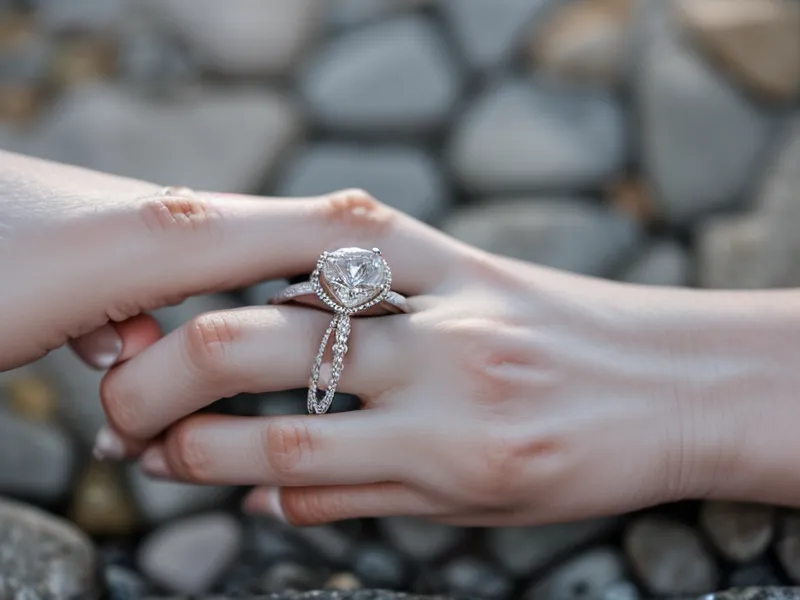
The hybrid approach wins for most people I've walked through this. Use the Kay Jewelers Custom Tool first to narrow your must-haves — shape, metal, general setting style — then bring those notes into a showroom to finalize prong height and band width in person. Walking in with a plan already cuts down how much room there is for a consultant to steer you somewhere you didn't ask to go.
Start with Kay Jewelers if the nationwide network and in-person warranty service matter to you, or look at Theo Grace if you'd rather skip the mall entirely for a smaller, design-forward catalog. Either way, ask about the return policy before you get attached to any single ring — it tells you more about a retailer than anything printed on their website.
| Product | Rating | |
|---|---|---|
| Kay Jewelers Top Pick | 8.4 | Read More → |
| GOODSTONE | 8.3 | Read More → |
| Theo Grace | 8.2 | Read More → |
| Jared | 8.1 | Read More → |
| Zales | 7.9 | Read More → |
Kay Jewelers
Pros
- ▸ Massive network of 1,000+ stores for easy maintenance
- ▸ Solid 30-day return policy and lifetime warranty options
- ▸ Accessible custom tool for beginners to experiment with designs
Cons
- ○ In-store lighting can mask diamond clarity issues
- ○ Sales scripts often lean heavily into upselling and financing