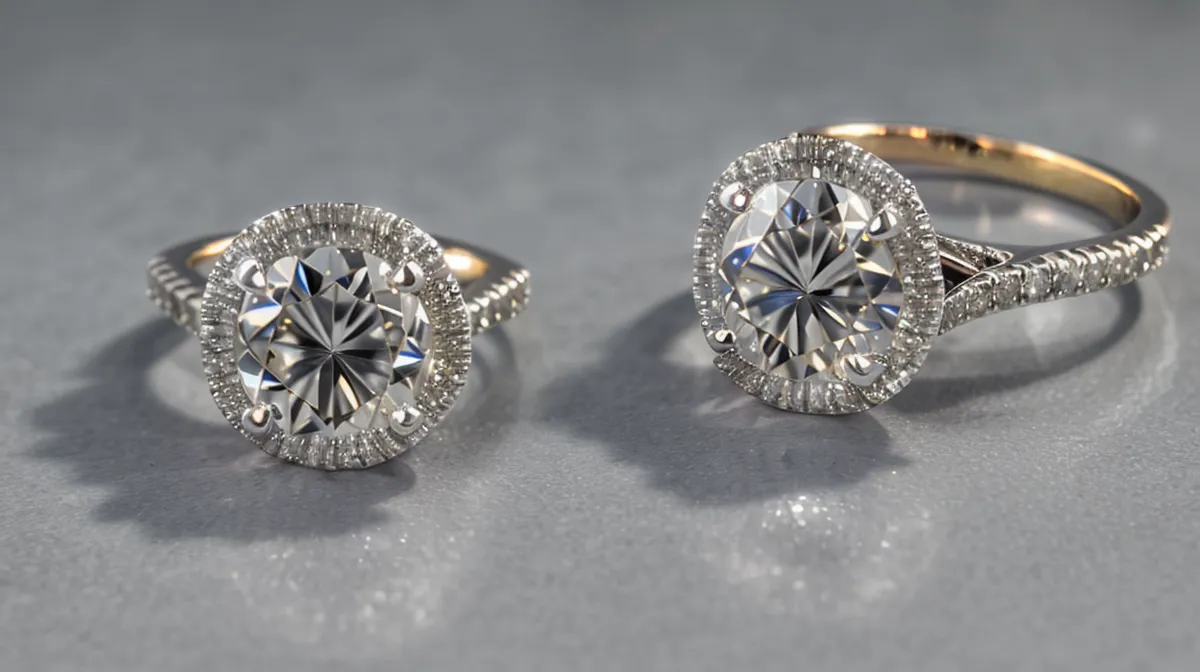
Loupe already in my hand, and the salesperson at a King Street store reaches past me for the dimmer switch before I've asked a single question. That's the tell I check for now on every jewelry shopping trip I get dragged into as the unofficial engagement ring review friend. Dim the room and even a mediocre stone reads better than it should. Otis Burroughs, a neighbor a few doors down, messaged wanting to know if that was paranoia on my part or something real. It's real, and it's the first thing I tell anyone asking whether a lab-grown diamond is worth it over what the mall chains push under that flattering light, sustainable luxury marketing aside — the lighting trick works on natural and lab-grown stones exactly the same.
Quick disclosure before we get into it: some of the links here are affiliate links, and I earn a commission if you buy through them, but it doesn't change what you pay. I only link to jewelers I've actually researched, visited, or vetted for a friend. I'm not a gemologist. I treat a big-ticket ring decision the same way I'd treat negotiating a used car or fighting an apartment lease renewal — line by line, with someone required to justify every number on the page.
Mall Chains vs. the Direct-to-Consumer Guys: What Otis Actually Wanted to Know
Otis is saving up to propose, and his first question was blunt: why does the exact same-looking ring cost so differently depending on which door you walk through? I pulled up my old notes on the 'big three' mall chains I toured during my own search — Kay Jewelers, Jared, and Zales. All three run the same formula: stadium-bright lighting, a salesperson who pivots to financing within five minutes, and a showroom built to make you feel underdressed. Whether that financing math actually works out is its own rabbit hole worth checking before you sign anything. I walked out of a Zales once specifically because the associate wouldn't stop steering us toward a payment plan every time we asked about the stone itself — that's the brand I've bailed on, and I'd do it again.
Compare that to GOODSTONE, a lab-grown specialist that skips the mall overhead entirely. You're not paying for a thousand storefronts or a 'lifetime' warranty that requires a checkup every six months at Zales or you lose the coverage. GOODSTONE doesn't have the storefronts. It has the spec sheet, and for a lot of the people who message me, that trade is worth making.
Is a Lab-Grown Diamond Actually a Real Diamond?
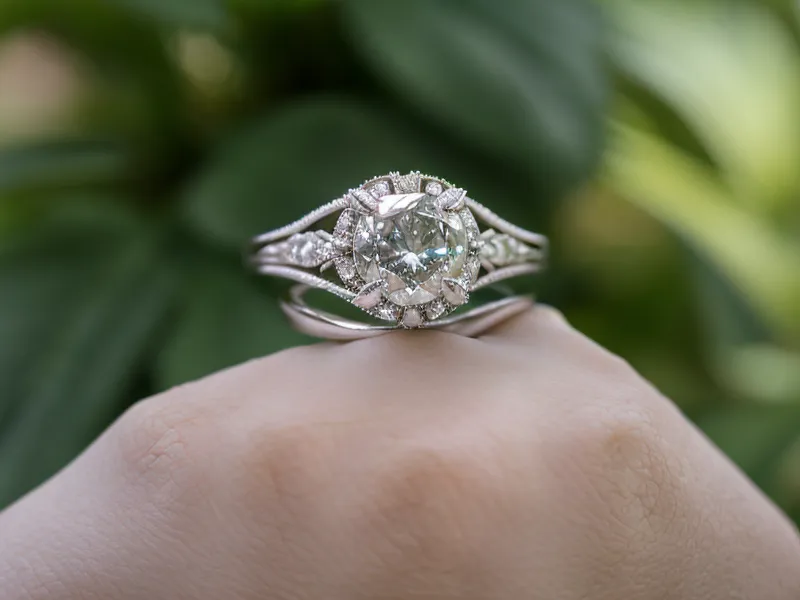
Chemically, there's no real argument left to have. Lab-grown and mined diamonds are built from the same element, arranged the same way, and they land on the identical spot for hardness and for how light moves through them — Carbon doesn't know whether it crystallized underground or inside a lab. Regulators folded lab-grown stones into the same legal definition as mined ones a few years back, which quietly ended most of the argument. The Mohs scale of mineral hardness and the refractive index don't budge between the two, whatever a mall associate implies with a raised eyebrow.
When I compared a lab-grown stone from GOODSTONE against the mined stones on the case at Jared, the optical performance read identical side by side. I tried getting clever once with a basic loupe in a dim coffee shop, hunting for a laser inscription I was sure I'd spot, and came up empty. To an untrained eye, and even a semi-trained one, there's nothing to see. None of that matters much if you don't have the 4Cs straight in your head before you compare two stones side by side; that's step zero, not this post. What actually separates a good purchase from a bad one isn't the real-or-not question, it's whether you can read the report sitting in front of you, which is its own skill nobody teaches you before you need it (I've broken down how to actually read a GIA report elsewhere, worth doing before you set foot in any showroom). The grading gets murkier once you're comparing labs against each other — I wrote a separate piece on IGI vs GIA lab grown diamond certification differences because the two don't grade identically, and that gap showed up more than once while we compared GOODSTONE listings.
Why Did the Salesperson Get Weird When I Asked for the GIA Report?
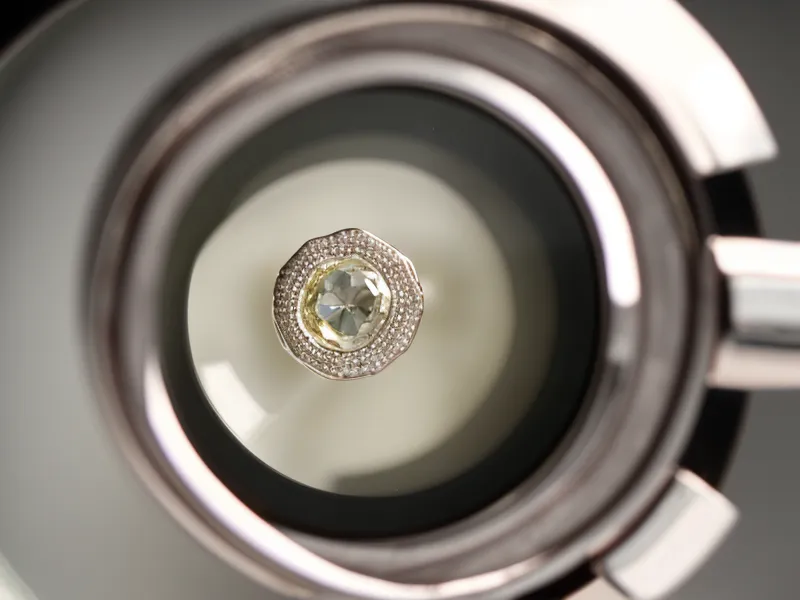
Ask to see the actual grading report on a mounted stone and watch what happens to a mall associate's posture. One afternoon at a different store, the stiffening was almost funny. They tried steering us toward their 'in-house diamond specialist' credential instead of the report itself. I made that mistake myself, early on: I trusted that kind of title at face value, never asked what it actually certified or who issued it, and it turned out to be an internal training badge, not an independent grading qualification. Lesson learned the annoying way: a title on a name tag isn't a substitute for paperwork you can verify yourself. If a store won't produce a real report, the return policy becomes your next leverage point, and it's worth reading before you've fallen for the pitch, not after. You can read more about a showroom that pulled exactly this move in my Jared showroom review.
GOODSTONE felt like a relief by comparison, because the data just sits there; you're not fighting anyone for a certificate, you're filtering for it on a laptop. Deep in a mall jewelry store, the air near the back wall goes thick and close, like the case lighting is eating the oxygen along with the actual light; GOODSTONE's site doesn't have that problem, obviously, since there's no back wall to stand near. Keturah Mobley, my neighbor from the floor below, came with me to one of these visits and noticed the store's presentation before I did: the box, the paper insert, the little card explaining a warranty nobody reads. She catches that stuff faster than I do. Still, I felt a genuine pang of buyer's remorse for my own mined stone the day I saw the carat size a friend's budget stretched to elsewhere: a well-cut oval a full size up from mine, for less money. Cut proportions matter more on a fancy shape like an oval than they do on a round stone, which is its own conversation I won't get into here.
The Resale Question Nobody Mentions Until You Ask
Here's where I get quiet at brunch, because there's a real tradeoff and it's not the one salespeople warn you about. Lab-grown diamonds are dramatically more affordable up front, but the resale market for them barely exists yet. A mined stone from somewhere like Kay Jewelers often comes with a trade-in program: spend roughly double later and they credit the original value toward an upgrade. Whether that math actually favors you once you factor in what you paid the first time is worth running yourself before you count on it. Traditional jewelers lean hard on the resale argument to steer people away from lab-grown, and it's not wrong, exactly, just incomplete. The broader lab-grown-versus-mined tradeoff goes deeper than resale alone, and that's a fuller comparison than I can fit into one section here.
My take, for what it's worth: only go lab-grown if you plan to keep the ring rather than trade up later. If you already know you'll want a bigger stone for an anniversary down the line, a mined diamond might genuinely be the better financial hedge. But if the goal is the biggest, best-cut stone your current budget can stretch to, and resale in twenty years isn't the deciding factor, GOODSTONE wins that comparison outright. Ring insurance is worth adding regardless of which one you pick; that's a separate decision from resale, and people conflate the two more than they should.
GOODSTONE, Theo Grace, or a Mall Chain — Which One Actually Fits You?
Otis ended up weighing exactly these three lanes, and the deciding factor wasn't price, it was how much hand-holding he wanted during the process. If you're seriously comparing brands, I put together a longer breakdown on choosing between Theo Grace and Goodstone that goes further than I can here. A ready-made setting from a catalog moves faster than a custom build, and most first-time buyers underestimate how long a custom order actually takes. Worth asking about turnaround before falling for a specific design. The setting itself should match how the person actually lives day to day, not just how it photographs sitting in a case.
For the shopper who wants an actual human on the phone through every step, Theo Grace makes more sense as the boutique alternative: smaller catalog, more personal service. A few people have also asked me about moissanite as a cheaper stand-in for either option, and it's a legitimate path if how the stone looks matters more to you than the word 'diamond' on the receipt, though it's different enough that it deserves its own comparison rather than a footnote here. Buying entirely online instead of in a showroom changes the calculus too: no lighting tricks to worry about, but no chance to hold the ring either, and that trade-off is worth thinking through before committing to a channel.
The Small Questions People Ask Me After All This
Ring sizing at home without giving anything away comes up constantly, and yes, there's a way to do it that doesn't involve borrowing a ring off someone's hand while they sleep (I've written up the method in more detail elsewhere). Whether IGI or GIA grading matters more for a specific stone depends on what you're comparing, which is why that gets its own full post rather than a paragraph here. People also ask if the setting or the stone should eat more of the budget. Stone first, always. A great setting on a mediocre stone still photographs like a mediocre stone.
Final Verdict: GOODSTONE Is the Right Move for This Kind of Buyer
After sitting through mall kiosks, boutique sites, and more showroom pitches than I can count, my take hasn't moved: GOODSTONE is for the shopper who values spec sheets and size over resale mythology. It offers a level of transparency on stone quality that the mall chains can't touch at the same price point, full stop. Check out the current GOODSTONE lab-grown inventory here if you want to see what that looks like in practice.
If a boutique experience with a real person on the phone matters more to you than either of those, Theo Grace already covers that lane. For Otis, GOODSTONE ended up being the answer, and he called me the day it shipped instead of texting, which tracks. Some news he wants a voice on the other end of.
GOODSTONE
Pros
- ▸ Significant savings compared to mall markups
- ▸ Direct-to-consumer transparency with stone certificates
- ▸ High-quality settings that feel much sturdier than mall chains
- ▸ Massive selection of high-carat lab-grown options
Cons
- ○ Very limited resale value compared to mined diamonds
- ○ No physical showrooms for in-person try-ons
- ○ Limited brand recognition for those who care about names