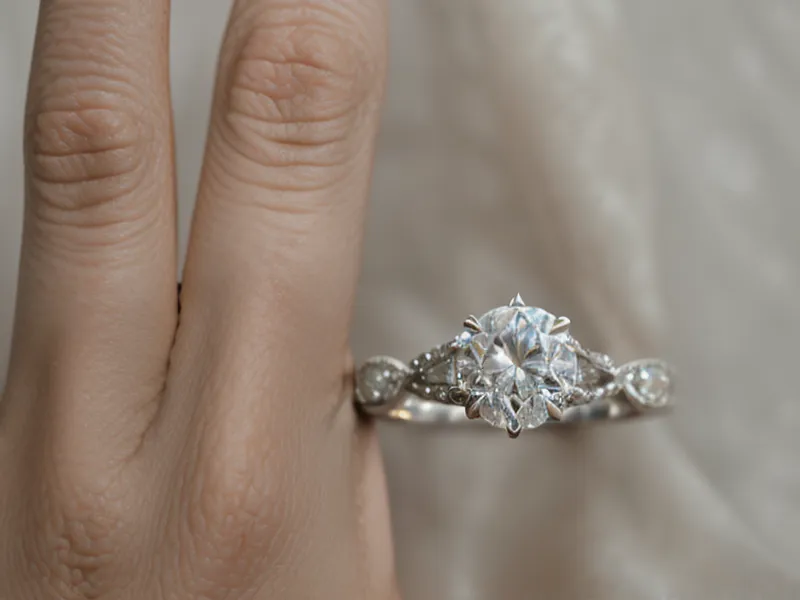
Six binders. One per jeweler, spec sheets printed and stacked next to my monitor, because apparently that's what happens once people find out you went through engagement ring shopping the hard way and now they want the shortcut. My desk sits under the window that gets real light in the afternoon, in my apartment in North Central, and there's usually a velvet tray sitting on it — borrowed from a jeweler on King Street who got tired of my questions — holding one loose stone I hold up against whatever glossy photo a website's using to sell lab-grown diamonds this week. Budget jewelry research, real version: a wall of Post-its next to the tray, yellow for what I still need answered, pink for what made me walk out of a showroom, and a running mental list of jewelry store reviews nobody asked me to write. My fiancé calls it the war room. He's not entirely joking.
Quick disclosure before we go further: some of the links below are affiliate links. Click through and buy something, I get a small commission, you pay the same price either way. I only link to jewelers I've walked into myself or picked apart online until my eyes hurt. Full breakdown's on the about page if you want it.
A cubicle neighbor of mine, Sunita, got engaged about six months back and immediately wanted my notes — three years of commiserating over vendor lunches together meant she knew exactly who to ask. She's the reason I ended up back in showrooms this spring, reading Yelp reviews out loud in that flat, skeptical voice she does, the two of us picking apart which jewelers were worth the drive and which ones were just going to hand us a payment plan.
Before the binders, I tried the shortcut everyone tries first: a price-comparison spreadsheet somebody had posted on Reddit, rows and rows of jewelers and specs. Turned out nobody had touched it in two years — half the listings were for rings that didn't exist anymore, the rest were just wrong. Printed spec sheets and my own notes turned out to be the only method that didn't waste a weekend.
Engagement Ring Shopping Inside the Big Three
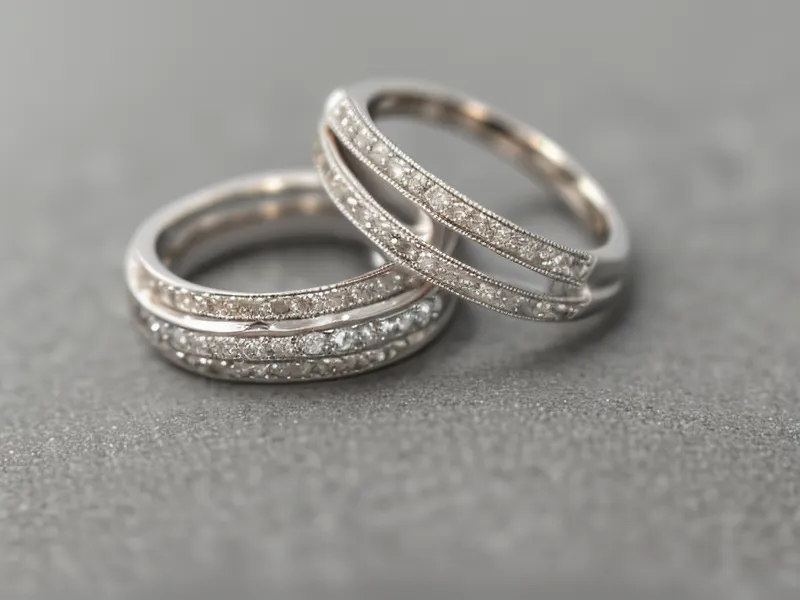
We hit Kay Jewelers, Jared, and Zales across a few different weekends, not all in one trip — spacing it out kept us from going numb to the sales floor by the third stop. Every one of those showrooms runs the lights the same way: bright enough to make a mid-grade stone look expensive. I noticed it for real at the second store, watching a salesperson's hand drift toward a dimmer switch the second Sunita pulled a loupe out of her bag, like the room itself needed a softer setting before anyone looked too closely. The glass counter was cold under both our forearms while we leaned in for a better look, and that's when the markup conversation clicked for me: mall chains aren't really pricing the stone, they're pricing the real estate and the sales script that comes bundled with it.
Kay's got a massive national store count — past a thousand locations — and the under-$3,000 selection there is genuinely solid. But the second we said our budget out loud, the conversation moved off diamond clarity and onto financing terms, monthly payment math instead of stone math. Store financing is its own math problem — I've picked that one apart elsewhere, what it actually costs once the interest kicks in. Cut, color, clarity, carat, the whole framework everybody assumes they understand, barely came up until we asked for it. Neither did how to actually read the grading report those four numbers come from, which nobody hands you a cheat sheet for at the counter.
I wrote up the whole two-visit deep dive into Kay Jewelers after Sunita and I went back a second time, and the short version hasn't changed: read the return window and the warranty terms before you sign anything. The return policy is your real leverage if a stone looks different once it's home, and the warranty paperwork spells out what the store's actually on the hook for, which tends to be narrower than the pitch makes it sound. If you're set on a physical store, the best value at Kay sits in their pre-set collections — stick to those and skip whatever financing pitch follows.
Why Skip the Mall for a Lab-Grown Specialist?
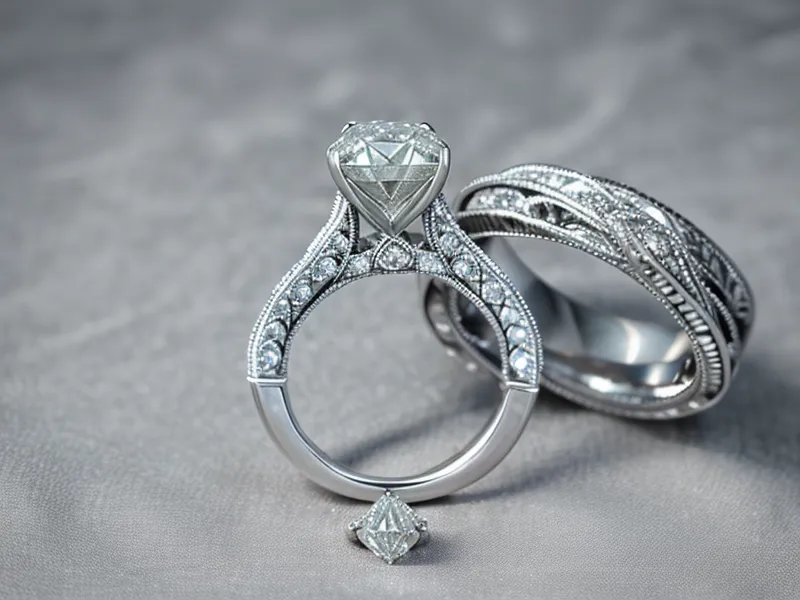
By early summer we'd shifted to the direct-to-consumer side of things — GOODSTONE and Theo Grace, neither with a showroom you can walk into in most cities. That's the trade: no lease overhead baked into the price, but also no chance to hold the ring under your own kitchen light before it ships.
For Sunita, the tactile part still mattered — she wanted to see how a stone read against her own hand, not a stock photo lit for a catalog. A guy I grew up with, Shelby, ran into the same wall recently: he's quietly shopping for a proposal ring, keeping it off the radar of our mutual friends until he's ready, and he won't buy online without seeing a stone in person first, full stop. He's also been working out her ring size without tipping her off, which turns into its own small puzzle when you can't just ask outright. That in-person instinct is a real cost, not just stubbornness — you're trusting a company's sourcing claims and a sizing chart instead of your own eyes, and I don't fully trust an "ethically sourced" label until I've asked a jeweler what documentation actually backs it up.
At GOODSTONE, the lab-grown specialist, $3,000 buys a stone that would look like it cost ten grand at a traditional boutique counter — same chemical makeup as a mined stone, same Mohs scale hardness, grown instead of pulled out of the ground. The trade-off nobody mentions upfront: lab-grown resale sits lower than mined if you're ever thinking about a future trade-in or upgrade, and grading isn't perfectly uniform between labs either — a stone graded by one lab can read stricter or looser than the same stone graded by another, so the certificate matters almost as much as the stone itself. Moissanite comes up in this conversation too, as a cheaper stand-in with its own look and hardness profile, though it's different enough from a diamond that Sunita ruled it out fast. I broke down the lab-grown-versus-mined math in more detail in my GOODSTONE vs. the Mall Chains notes, if you want the longer version.
Weighing the Contenders Like Any Big Purchase
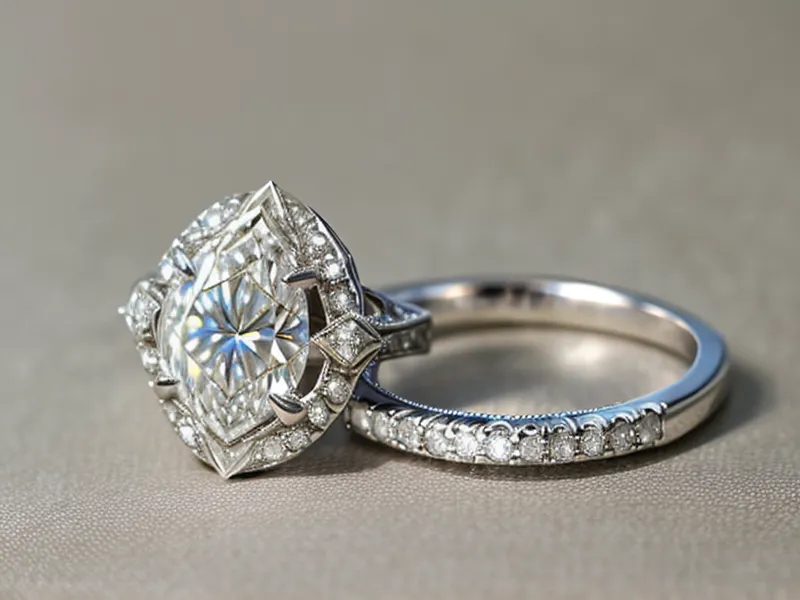
One evening about five weeks into helping Sunita, we sat down with the shortlist: the big-box reliability of Jared or Kay against the boutique feel of Theo Grace. I framed it for her the way I'd frame a car purchase or a lease renewal — what are you actually getting for the money, not just what the ad promises. Shape mattered more to her than I expected; she'd narrowed to a cushion cut over anything fancier, and cut proportions change how forgiving a stone looks at a given clarity grade, which nobody at the mall walked her through. Setting choice came up too, whether the band sits low enough for her to keep working with her hands all day, which is really a lifestyle question dressed up as a design one.
Traditional chains still offer something real: a 90-day return window in most cases, and an actual desk to sit at if something's wrong with the ring later. Zales ran the most aggressive promotions of the three we visited, but their lower-priced stones had visible flaws under a loupe more often than I liked, and their online listings didn't always match what was actually sitting in the case at our local store, so it's worth checking in person before you drive out for something specific.
Theo Grace felt less like a sale and more like a conversation, all minimalist designs, nothing that screamed mall counter. It's ready-made, not custom — a fully custom build is a longer process with a different price tier entirely, and that's not what either of us was after this time. I did a full review of Theo Grace after our order came in, because the customer service actually held up post-purchase, which isn't always true once a company has your money.
We also talked metal. I steer people toward 14k over 18k for an everyday ring — more alloy mixed in means it shrugs off scratches and holds up better against tarnish over years of dishes and gym bags and grocery runs, where an 18k band shows wear faster. Most rings under $3,000 land at 14k anyway, so it's rarely even a real trade-off at this budget.
A Budget Ring Doesn't Need a Monthly Bill
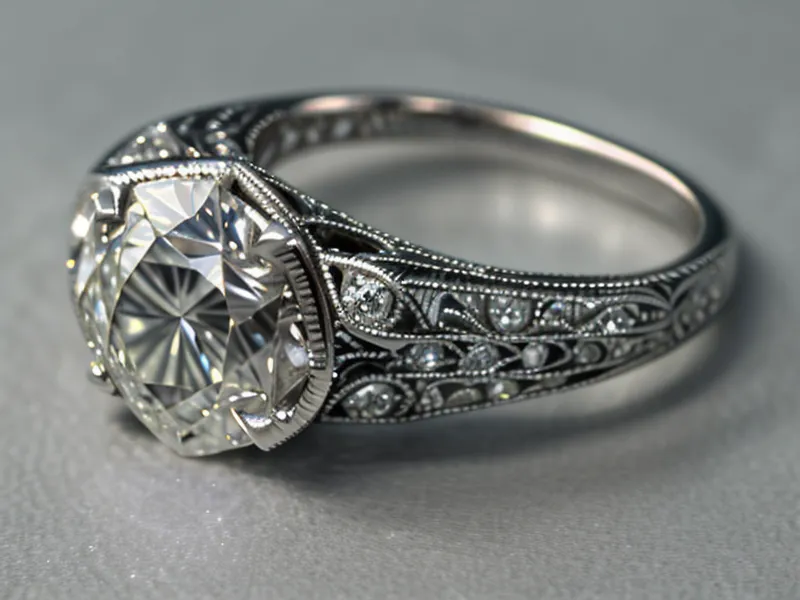
Sunita ended up buying outright, no financing, knowing exactly where every dollar went before she signed anything. The lesson that stuck with me, the one I hand every friend who calls now: price the ring against what you're willing to owe afterward, not against what the showroom lighting makes it look worth in the moment. A ring that comes with a monthly bill you resent isn't a better ring just because it has more carats attached.
If you want the security of a physical store and don't want to get lost in custom options, Kay Jewelers is still the straightforward pick for staying under budget. They've got the logistics down. If you want the most stone for your $3,000, the lab-grown route at GOODSTONE gets you there faster. Either way, insure the thing once it's on a finger. A standalone jewelry policy runs separately from whatever your renters or homeowners coverage claims to include, and most people find that out the hard way after it's too late.
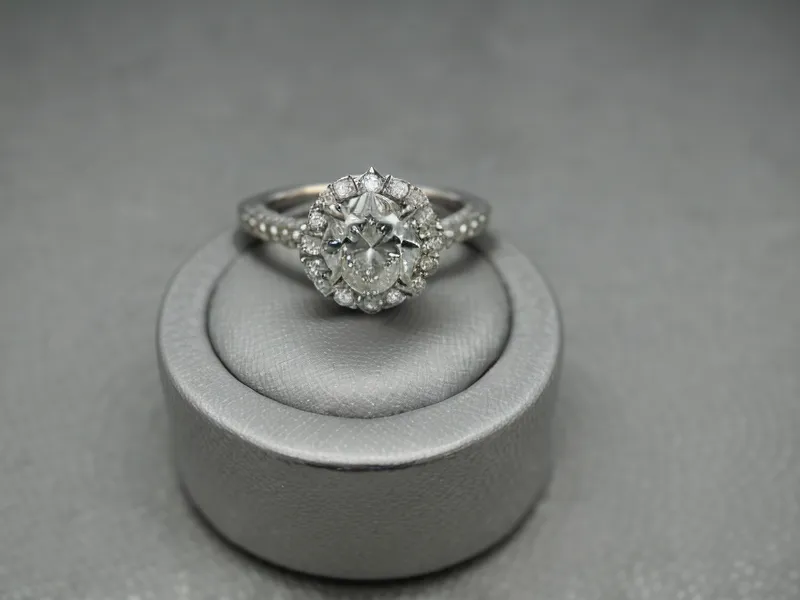
Don't let the showroom lighting or the payment-plan pitch do the deciding for you. A diamond, lab-grown or mined, is a mineral you're choosing to spend real money on, not a financial product with a monthly minimum attached. Skip the debt, keep the difference for the honeymoon, or a decent bottle of something for the porch.
Start looking without a credit check hanging over it. Begin with the selection at Kay Jewelers for a solid baseline, then compare it against the lab-grown values at GOODSTONE and see how much more stone your budget actually buys.
| Product | Rating | |
|---|---|---|
| Kay Jewelers Editor's Pick | 8.9 | Read More → |
| GOODSTONE | 8.7 | Read More → |
| Theo Grace | 8.5 | Read More → |
| Jared | 8.3 | Read More → |
| Zales | 8.1 | Read More → |
Kay Jewelers
Pros
- ▸ Massive selection of classic styles under $3,000
- ▸ 1,000+ locations for easy in-person resizing and cleaning
- ▸ Rock-solid return and warranty policies
Cons
- ○ Heavy sales push for high-interest financing plans
- ○ Showroom lighting can hide lower-grade stone flaws