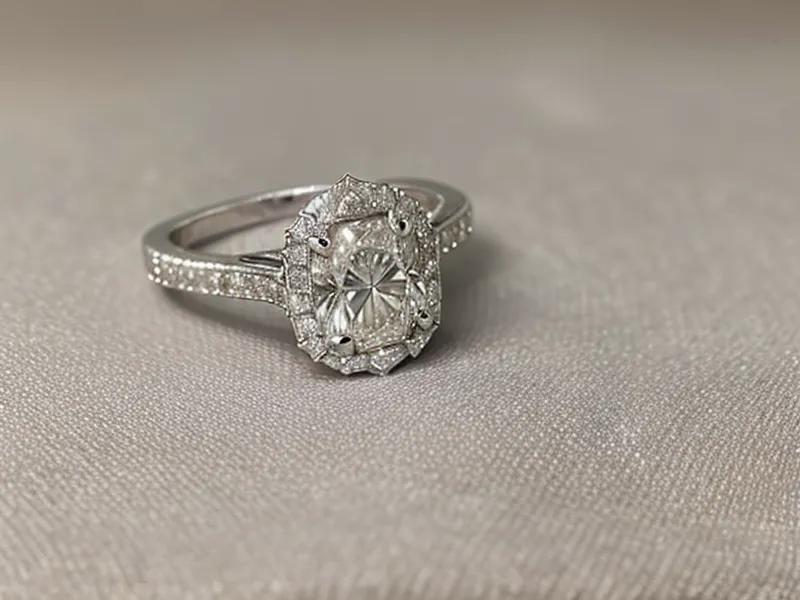
My phone buzzes before I've finished my coffee, a text from a friend, the one who does improv most nights at Theatre 99, asking whether Kay Jewelers' lifetime warranty on an engagement ring is worth anything, or just a script a salesperson uses to close a diamond sale before anyone can compare it to buying online. I've been the friend people call for engagement ring shopping advice for about two years now, ever since my own ring search turned into a research project nobody asked for. My old answer to the warranty question was one word: no.
For a long time my advice was simple: skip the mall entirely. I'd point people toward boutique online shops like Theo Grace or send them straight to my lab-grown diamond shortlist and tell them the big blue mall signs were a tax on convenience, nothing more. Then a friend came to me with a problem that didn't fit that script — a strict budget, zero interest in diamond specs, no patience for a Mohs scale lecture nobody asked for. They wanted a ring they could get cleaned on a lunch break and resized without shipping it across the country. A safety net, not a research project.
The Warranty Myth I Used to Repeat
The idea that mall chains just mark up mediocre stones and dress it up with a lifetime promise is the myth almost everyone starts with, and I repeated it for longer than I should have. Kay Jewelers alone runs more than a thousand stores nationwide, and for someone who isn't a "jewelry person," that number isn't a red flag — it's closer to an insurance policy. If you're vetting this the way you'd vet a used car, Kay Jewelers is the Toyota Camry of the bunch: not flashy, but there's a service counter on every corner and it's built to actually run.
Financing is where the upsell really lives — the ring price and the financing plan are two separate conversations, and mall stores are good at blurring them into one. That's the real fork in the road: buying somewhere you can walk into a showroom versus buying from a specialist that only exists online, which trade convenience for price in opposite directions.
Early on, before I trusted my own read on any of this, I asked a friend-of-a-friend who worked in fine jewelry to weigh in. I figured an insider's opinion would cut through the sales talk. Found out afterward she was in sales herself, not appraisal, and her "objective" take was a pitch wearing a different outfit. I almost repeated her advice to three other people before I caught it.
Where the Showroom Pressure Actually Lives
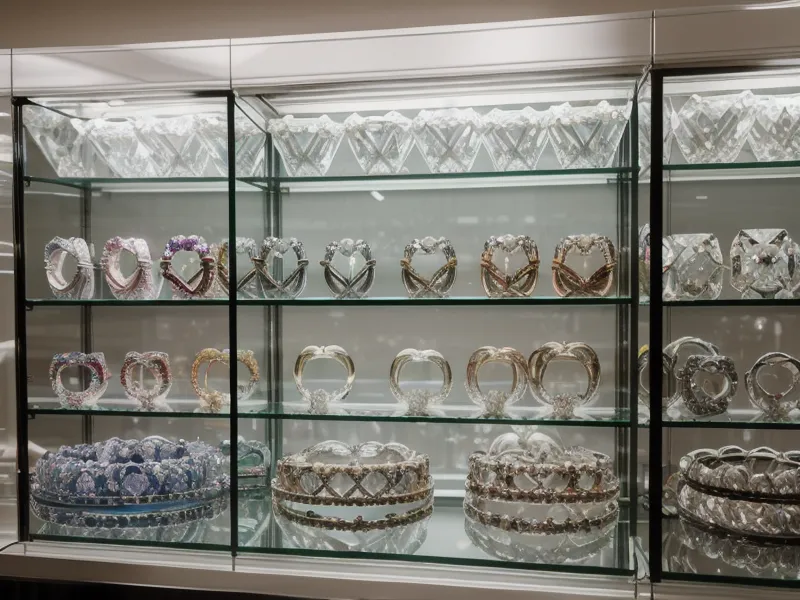
Walk into any of these showrooms and the lighting is doing real work. Cool-white LEDs sit close overhead, tuned to make every stone read brighter than it would under a window, and it's not an accident — it's designed to overwhelm a first-time buyer before they start asking hard questions. The air gets thick and a little stale toward the back wall, past the register, which is exactly where the financing conversation tends to start.
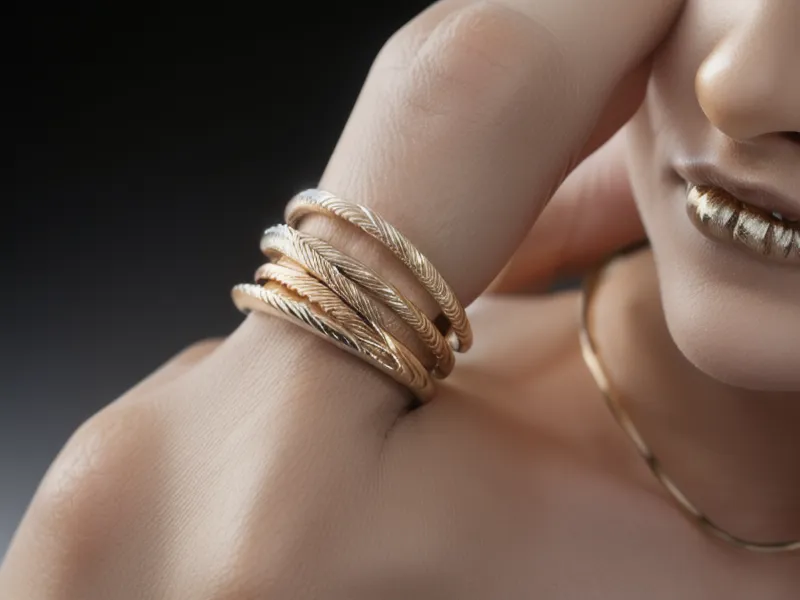
Most people hear "14k gold" and assume it's close to pure. It isn't — it's alloyed with other metals so it can survive being worn every day, and that trade-off toward durability is usually left out of the sales pitch entirely. I've written before about Kay Jewelers custom engagement rings, and watching a couple move through the process again reminded me that a budget-conscious buyer with low risk tolerance gets something from a physical counter that a website genuinely can't replicate: someone standing in front of you, answering the question you didn't know to ask.
What a Six-Month Warranty Inspection Actually Requires
Here's the part of the myth that actually needed correcting, not the markup. I spent real time comparing that lifetime warranty against the looser, more distant policies of an online-only specialist like GOODSTONE — great value, but you're your own project manager start to finish. Most mall chain warranties, including the ones at Zales and Jared, require a documented inspection roughly every six months to stay valid. Miss the window and the warranty lapses, full stop.
I used to call that a gotcha in my marketing brain. It isn't. It's a maintenance schedule with a deadline attached, the same way a car warranty wants to see your oil change receipts. A store warranty and a separate ring insurance policy aren't solving the same problem, either — one wants you walking back through their door periodically, the other doesn't care where you got the ring as long as you're paying premiums. And the return policy printed at the register is worth more leverage than most people use it for — most buyers never read past the first line of it.
Reading the Fine Print Out Loud
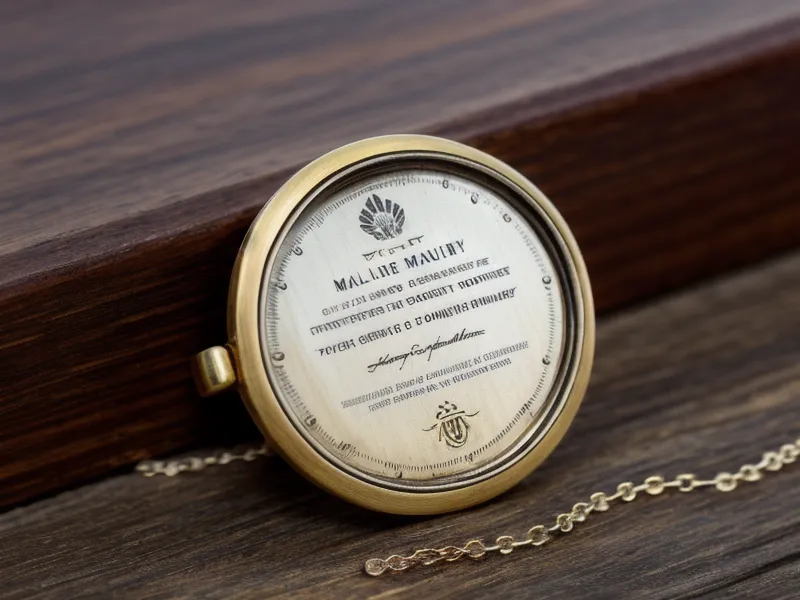
I tested this theory on a showroom floor once. Pulled the printed return policy off the card by the register and read it back to the salesperson, line by line, in the middle of his pitch (a habit that makes me exactly the friend everyone expects at this point). He stopped talking. Just stopped, like nobody had actually done that to him before, out loud, in real time. That pause told me more than the pitch did.
None of this replaces the basics. A GIA report is still worth learning to read past the headline grade, the 4Cs still matter more than any showroom lighting rig, and lab-grown stones still trade differently than mined ones on price and on resale — that trade-off doesn't disappear just because a chain store has a nice warranty. Moissanite gets dismissed too fast as the budget option when it's really a legitimate alternative stone for the right buyer. I still love the specs on a lab-grown stone from somewhere like GOODSTONE — the value math is real. But for a ring that's going to get worn washing dishes and hiking and living an actual life, not sitting in a box, the setting has to fit the lifestyle before any of that other stuff matters.

Is the Mall Chain Actually the Safer Bet?
Depends entirely on what you're optimizing for. If resale value and investment liquidity are the priority, skip this whole conversation — you're not buying gold bars, you're buying something to wear every day for years. If a ready-made setting doesn't fit what you had in mind, that's a different conversation than the warranty one, and worth having separately before you fall for whichever counter you happen to be standing at. But if what you actually want is a ring you can walk in and get a loose prong fixed on a Saturday morning, without a shipping box or a project timeline, the calculus shifts hard toward the mall chain.
Check my notes on finding a solid ring without the financing pressure before you commit to anything. And if you land on the national chain route, set a recurring calendar reminder for that six-month inspection now, before you forget it exists.
If the deciding factor is having a real storefront and staff who'll actually see you again, Kay Jewelers isn't the only option out there, but it's the one with the infrastructure to actually back up that lifetime promise — as long as you're willing to play by the fine print.