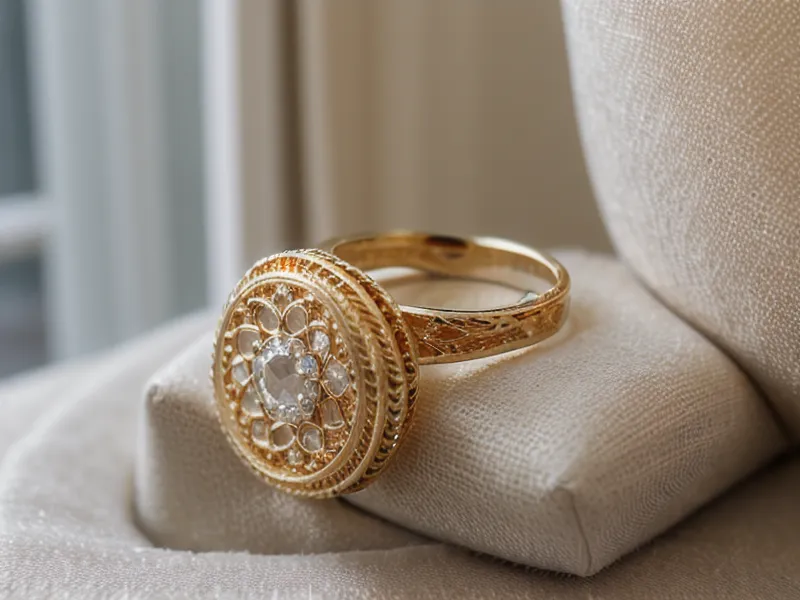
Late one evening last winter, my phone buzzed with an ungodly macro photo. A close friend had taken her diamond band to a quick-turnaround mall kiosk to go down half a size. In the photo, the shank looked oval, the metal had thinned to foil at the base, and two tiny pavé prongs had visibly flared outward.
Her stone was loose. The kiosk employee had shrugged, handed it back in a plastic baggie, and told her that was just what happens when metal moves. I stared at the photo on my kitchen counter, furious on her behalf.
Resizing seems like a trivial errand. You drop off a piece of jewelry on lunch break, pay fifty bucks, and pick it up fitted. But altering the circumference of a cast circle under structural tension is precision metalwork. If you take it to the wrong bench, you do not just get a bad fit—you get warped galleries, crushed hallmarks, and cracked solder joints that fail while you are unloading the dishwasher.
The Geometry Problem: Why Fast Resizing Destroys Settings
To understand why rings get mangled, you have to look at the geometry. In the standard North American sizing scale, the difference between one full ring size and the next is an inner diameter shift of exactly 0.81 mm. It sounds microscopic. On your finger, it is the difference between a band that spins into your palm and one that cuts off circulation before breakfast.
The trouble starts with how shops achieve that 0.81 mm change. Quick-fix jewelers love mechanical stretchers. A stretcher is essentially a stepped steel cone that expands mechanically from the inside out. For a plain, solid yellow gold wedding band with no stones and uniform thickness, stretching up a quarter size is usually harmless. But when an inexperienced tech slaps an intricate engagement ring onto a mandrel and pulls the lever, physics takes over.
Gold and platinum do not stretch evenly. Metal stretches wherever it is thinnest. If your ring has a diamond head or delicate shoulder accents, the base of the shank stretches while the top stays rigid. The circle distorts into an egg. Worse, any pavé seats micro-warp, opening the prongs and releasing diamonds onto the floor weeks down the line.
Going down in size requires cutting a segment of metal out of the bottom of the band and bringing the two ends back together. If the bench jeweler simply bends the sides inward to close the gap without properly reshaping the bridge, the crown pinches inward. That subtle inward torque stresses the main center prongs. You walk out thinking your ring fits snugly; three months later, you notice your center stone rattling in its basket.
The Torch vs. Laser Divide (The Mall Kiosk Trap)
A Saturday morning in early spring, I went with that same friend to get an honest evaluation from a local repair bench. The jeweler took one look through his loupe and pointed out something that made my stomach turn.
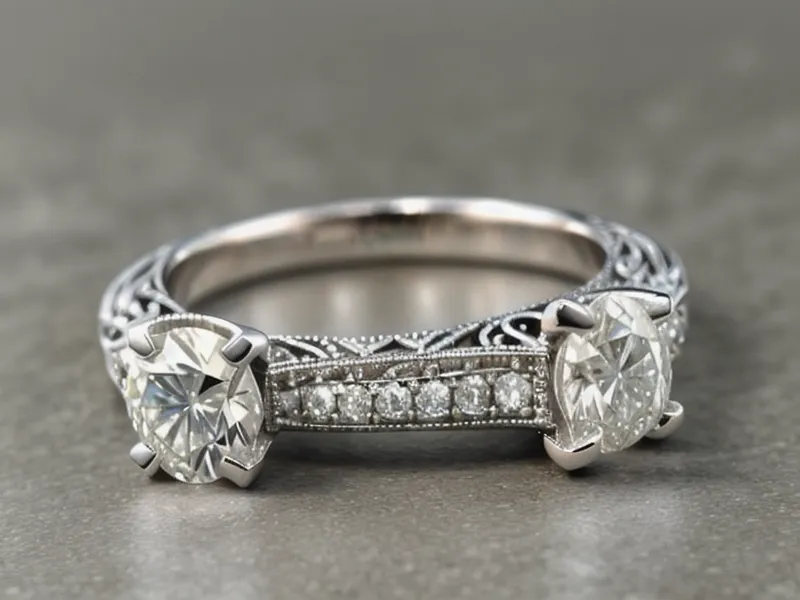
Running my thumb across the underside of my friend's white gold band, I caught the rough, unpolished ridge of an amateur solder joint. It felt like a tiny speed bump against my skin. Even to my untrained eye, the metal there looked gray and dull compared to the bright rhodium finish on the rest of the setting. The kiosk bench had used a low-temperature plumb solder with an open flame torch, leaving porosity and an uneven seam.
This is the contrarian reality most corporate retailers will never explain: you should avoid local mall jewelers for complex resizing because their reliance on traditional torch soldering frequently damages modern, delicate settings. Most high-volume mall counters and strip-mall chains do not invest in benchtop laser welders. They rely on traditional butane or oxy-gas torches.
A jeweler's torch creates a broad heat plume. Metal conducts heat rapidly. To melt solder at the base of a ring, the entire lower half of the band must reach temperatures exceeding 1,200 degrees Fahrenheit. If your ring has heat-sensitive gemstones—like emeralds, opals, or even diamonds with micro-inclusions—that heat plume threatens the stone's structural integrity. Jewelers using torches have to pack your ring in protective thermal paste or unseat the stones entirely, which multiplies labor and human error.
Laser welders, by contrast, concentrate energy into a pinpoint fraction of a millimeter for milliseconds. The heat dissipates before it travels two millimeters up the shank. A skilled master jeweler using a laser can weld right next to a pavé diamond without damaging the stone or loosening its seat. They can add metal that matches your exact alloy without using weak, discolored soldering fillers.
When you take a 14-karat gold ring—which, by Federal Trade Commission guidelines, must maintain at least 58.3% gold content (583 parts per thousand)—to a torch bench, they often use a softer, lower-melting-point solder alloy to bridge the seam. Over time, that patch oxidizes at a different rate than the rest of your ring. You end up with a dark, visible line at six o'clock on your band. With a laser, the jeweler fuses the exact same 14k alloy directly into the cut. No seam. No weak link.
The Best Places to Get Your Ring Resized Safely
About three weeks later, once we had unraveled the damage on my friend's setting, I started cataloging the safest avenues for band adjustments. When friends ask me where to go, I steer them into three distinct categories based on their ring's design and warranty status.
1. The Original Designer or Brand Atelier
If you purchased your ring from a reputable bridal designer or high-end independent house, your first stop must always be the company that built it. Not because they are inherently faster—they are almost always slower—but because of warranty preservation and tooling familiarity.
Most luxury and designer brands void their lifetime manufacturing warranties the second an outside jeweler touches the metal. Furthermore, the original manufacturer holds the original CAD files or molds. If your ring has an intricate hand-engraved wheat pattern or milgrain detailing, the original studio can resize the band and re-engrave the section to match the original motif seamlessly.
The tradeoff is turnaround time and bureaucratic friction. I have seen readers wait six to eight weeks for an authorized brand service center to size a band down half a step. If you bought from a commercial chain, make sure you understand the nuances first; I previously broke down the fine print when examining the Kay Jewelers ring resizing process, where contract bench work and shipping hubs can turn a simple adjustment into an exercise in logistics.
2. An Independent Master Bench Jeweler with In-House Laser Capabilities
If your ring was custom-made, inherited, or purchased from an online specialist without a local footprint, your best bet is an independent local jeweler who employs a full-time, on-site bench jeweler. Notice the emphasis: on-site.
You do not want a retail jewelry store that takes your piece, slips it into an envelope, and couriers it across town to a third-party trade shop. You want the shop where the person holding the calipers is standing behind the counter or visible through a glass window in the back room.
When you visit, ask directly: "Do you perform your sizings in-house with a laser welder, or do you use torch solder?" A shop proud of its bench technology will answer immediately. They will show you their equipment or explain their process without hedging. Master bench jewelers take pride in matching metal alloys. If you bring them a platinum ring—which requires an alloy meeting the standard fine jewelry platinum benchmark of 950 parts per thousand (95%)—they will use dedicated platinum laser wire rather than cheap white-gold solder that degrades the value and finish of the mount.
3. Specialized Fine Jewelry Mail-In Restoration Houses
For people living in smaller towns without access to an advanced independent bench, national mail-in restoration ateliers are far safer than the regional shopping mall. These operations survive entirely on their technical repair reputation. Unlike retail stores that view repairs as a low-margin nuisance, restoration houses invest heavily in pulse-arc welders, laser workbenches, and micro-pave setting microscopes.
The vetting process here requires reading insurance declarations. A reputable mail-in atelier provides fully insured, prepaid overnight shipping labels and logs high-resolution photographic intake records the hour your package arrives. If a company asks you to mail fine jewelry via standard priority post without serialized tracking and declared value coverage, close the tab.
Rings That Require Extreme Caution
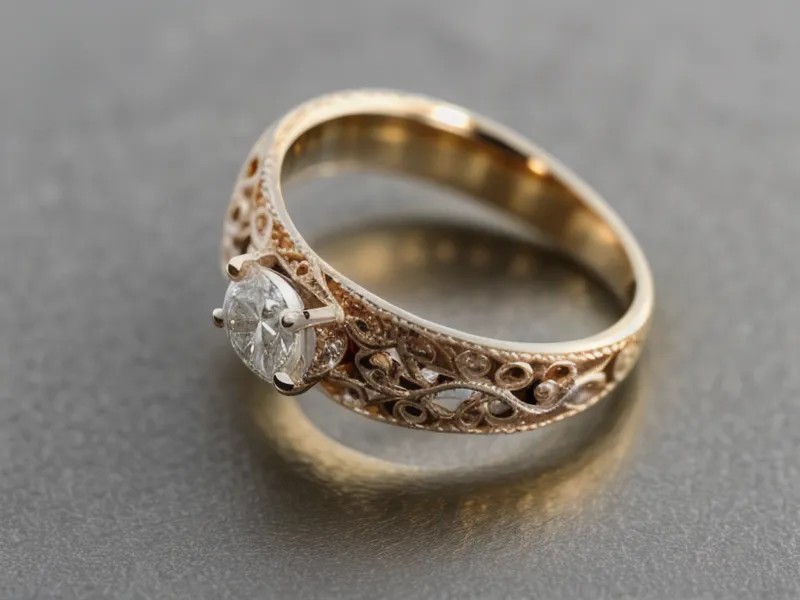
Not every ring can be resized by standard methods, no matter how skilled the bench jeweler is. During my own rabbit hole when shopping for rings, I nearly fell in love with designs that would have been absolute nightmares to service later on. I talked about this kind of structural oversight when writing about the engagement ring mistakes I nearly made before saying yes, and setting architecture remains one of the easiest things to overlook when you are blinded by showroom lighting.
Here are the structural red flags that require a specialist rather than a standard resize:
- Full Eternity Bands: Stones encircling the entire circumference leave zero plain metal to cut or stretch. Resizing a full eternity band almost always requires resetting every stone into a newly cast ring blank, or adding internal sizing beads if the ring is only slightly too large.
- Channel and Pavé Settings: When metal is bent inward to size a ring down, channel walls compress and push stones together, causing girdles to chip. Sizing up pulls the walls apart, leaving stones loose. These rings must be resized by a jeweler who inspects and tightens every individual prong under a microscope before returning the piece.
- Tension Settings: In true tension settings, the stone is suspended by the spring-pressure of the band itself. Breaking the band to resize it eliminates the tensile strength. These rings generally must be sent back to the original fabricator for complete remounting.
- Alternative Metals: Titanium, tungsten carbide, and cobalt chrome cannot be resized using traditional bench techniques. Most jewelers cannot cut and solder them at all; they must be swapped out for a new size under a manufacturer replacement policy.
The Vetting Checklist Before You Hand Over Your Band
By late summer, I had put together a simple mental checklist that I now force every engaged friend to run through before they let anyone alter their ring. Think of it like taking a car to an independent mechanic—you ask the diagnostic questions before handing over the keys.
First, verify the sizing method. Ask whether they plan to stretch the ring or cut and splice metal. If the change is more than a quarter size, stretching is out of the question for anything other than a plain, thick comfort-fit band.
Second, ask how they protect interior hallmarks and personal inscriptions. A careless bench will slice right through your karat stamp or custom engraving because it happens to be at dead center bottom. A conscientious jeweler cuts slightly off-center to preserve legible hallmarks or charges a nominal fee to re-stamp the assay purity after finishing.
Third, demand an intake inspection under magnification. Before you walk out the door, the jeweler should inspect your ring with you, note any existing loose stones or scratches on the receipt, and document the exact carat weight and dimensions. When you pick the ring up, inspect it under their showroom loupe before paying. Roll your thumb along the inner shank. Look for pitting, seams, or thinning. The inside should feel as smooth and unbroken as glass.
Resizing should be invisible. If you can feel where the jeweler worked, or if your setting feels slightly different against your finger, the job was rushed. Take your time, bypass the mall counters, find an artisan who treats bench metallurgy as a craft, and preserve your ring for the long haul.