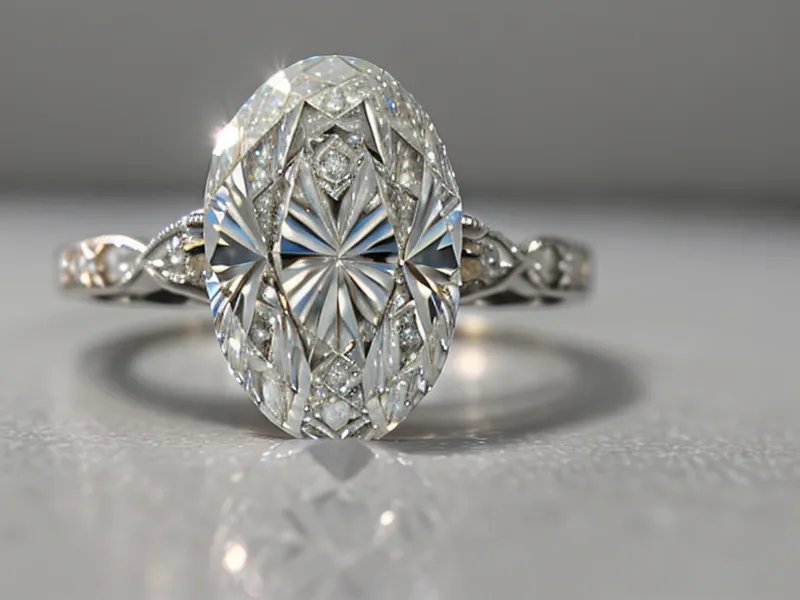
Two oval diamonds on the windowsill of my apartment, both graded the same color on paper, and one of them reads noticeably warmer than the other the second afternoon light hits them. That gap is exactly why picking an oval cut diamond takes more work than picking a round one. There's no single number on a certificate that tells you whether a stone will look alive in your hand or flat in the case.
Rounds get an actual GIA Cut Grade — Excellent, Very Good, and so on, printed right on the report. Ovals don't get that. There's no equivalent scale for the shape, which means a retailer can hand you a stone with a fine polish and symmetry score that still looks dull the second you pick it up, and nothing on the paper will flag it. Closing that gap between what's graded and what's actually cut well is most of what I end up doing when a friend asks for help.
Why Ovals Don't Get an Official Cut Grade
This isn't a knock on the basic 4Cs — carat, color, clarity, and cut are still the foundation, and it's worth sitting down with what each one actually measures before you start shape-shopping at all. But for a fancy shape like an oval, the cut column on the report goes quiet, and everything shifts onto three numbers you have to check yourself.
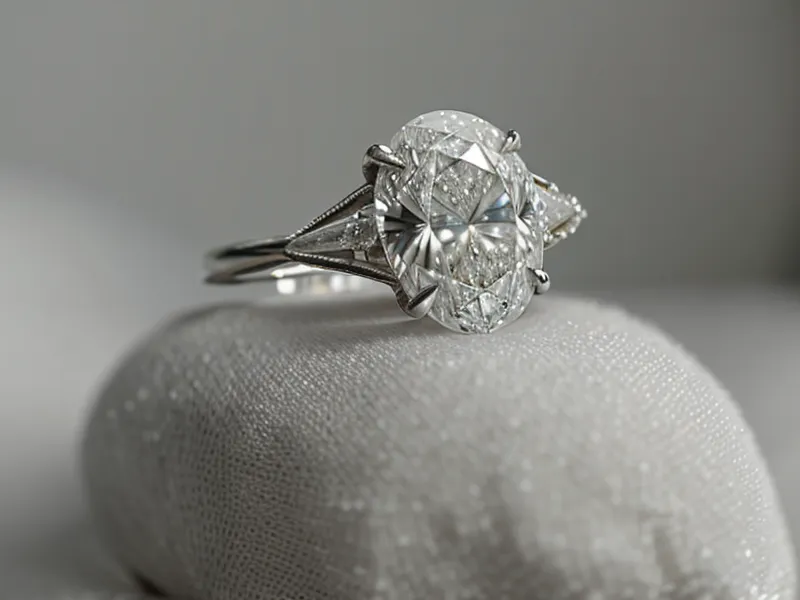
An oval's face-up surface area runs bigger than a round of the same carat weight, which is exactly why people gravitate toward the shape — more visual size for the same weight on the hand. Retailers know it too. During a two-visit deep dive into Kay Jewelers with a friend, I watched the sales pitch lean hard on carat weight and barely touch depth, which is exactly the number that decides whether that size actually reads big or ends up buried in the bottom of the stone where nobody sees it.
The Three Numbers That Actually Matter in an Oval Cut Diamond
When I pull up a report — GIA or IGI, and the IGI vs GIA lab grown diamond certification differences matter more once you're comparing a lab-grown stone against a natural one — I read the numbers the way I'd read a lease before signing it, hunting for the line that tells me whether a stone sits flat or runs too deep.
Length-to-width ratio is the first stop: 1.33 to 1.50 covers the classic oval look, and 1.40 tends to be the sweet spot. Drop below that range and the stone starts reading as a 'moval' — half marquise, half oval — push past it and you're closer to a surfboard than a gemstone. Table percentage comes next, the flat top of the stone: 53 to 63 percent is the workable band, and outside it the stone either looks flat or starts resembling a small pyramid. Depth percentage rounds it out at 58 to 62 percent — shallower than that and light leaks straight out the bottom, deeper than that and you're paying for carat weight hidden where no one will ever see it.
Is a Bow-Tie a Dealbreaker?
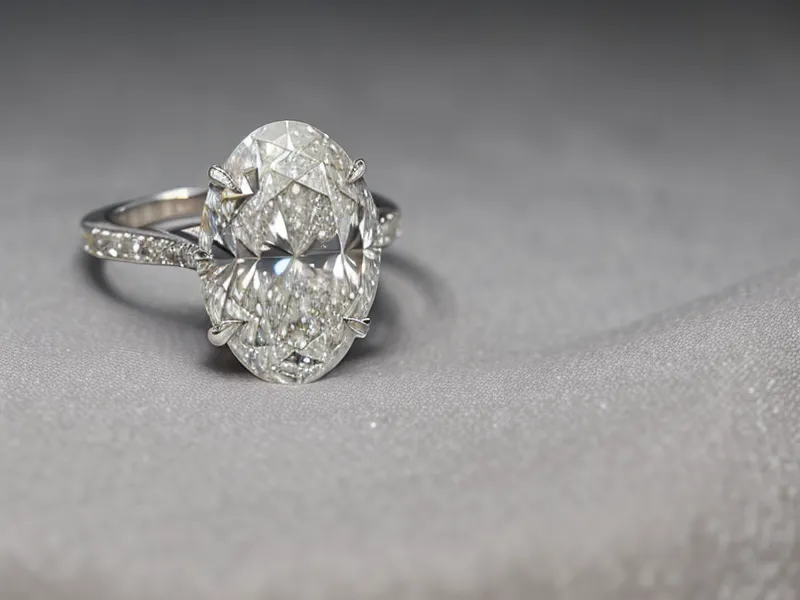
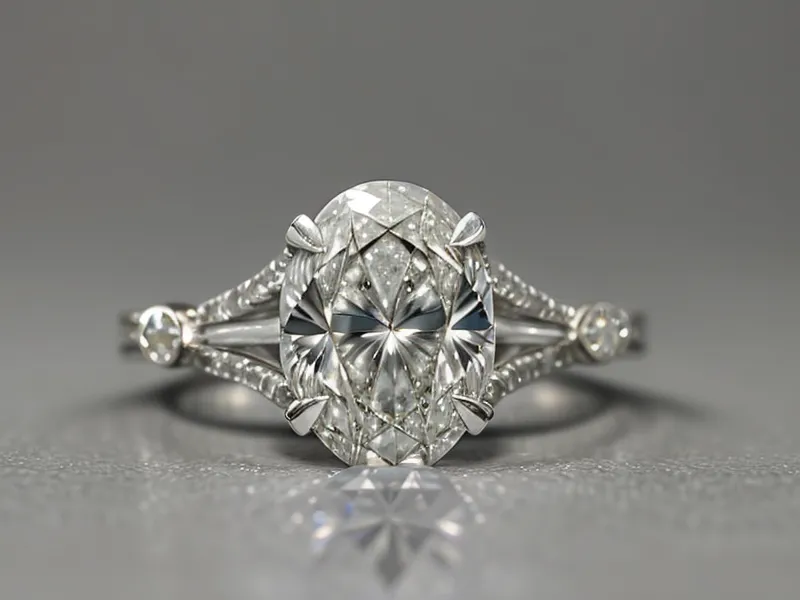
Every oval carries a bow-tie — a darker band across the center caused by the shadow of your own head and shoulders blocking light as you look down at it, built into how the 57 or 58 facets on an oval are arranged. It isn't something you eliminate. It's something you evaluate. The shadow should shift from charcoal to a brighter gray as you tilt the stone; one that stays flat and solid no matter the angle is a dead zone in the center of the ring, not a shadow with any life in it.
Most advice pushes toward the longest, most elongated ratio you can find, on the theory that it makes your hand look longer. Push past 1.50, though, and that stretch usually makes the bow-tie worse, not better — the facets are being pulled across more distance than they're built to handle, and the light performance thins out along with them. A slightly wider oval, one that stays inside that 1.33 to 1.50 window, tends to spread light more evenly across the whole stone because the facets aren't straining to cover so much ground.
Trusting Natural Light Over a Studio Video
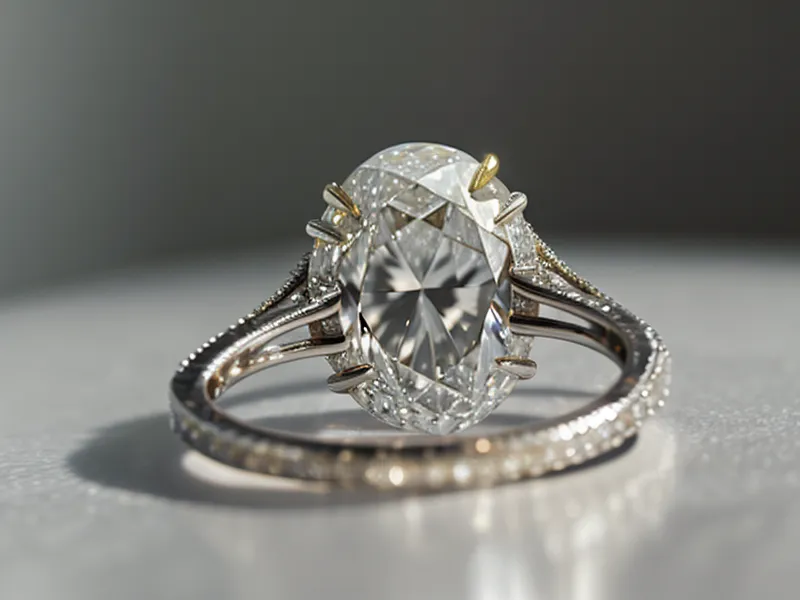
Jewelry websites shoot their 360-degree videos under multiple studio lights specifically to fill in shadows a stone would otherwise show, which means the bow-tie you're worried about can vanish on screen and reappear the moment you're standing at your own kitchen table. The only light that told the truth, in my experience, was the light on the drive out to Sullivan's Island — a stone held up against open sky instead of a ring light looked like a different stone entirely, more than once.
Shelby, a friend from back home who came to me once they got serious about ring shopping, wouldn't buy anything without seeing a stone in person first, no matter how good the video looked. That instinct turned out to be right more than once. A store brochure comparing three stones side by side, printed and handed across the counter, told us almost nothing useful — the ratios that actually decide an oval's light performance weren't anywhere on it, so we ended up doing the comparison ourselves with a loupe and a window.
There's a specific quiet that settles in once a salesperson closes the door on a private consultation room, the kind of silence that makes you want to say yes just to fill it. That's exactly the moment to slow down instead of speeding up. A stone that only looks good under one specific lighting setup isn't proving anything about how it'll look at your own kitchen table six months from now.
Setting Choices That Protect an Oval's Tips
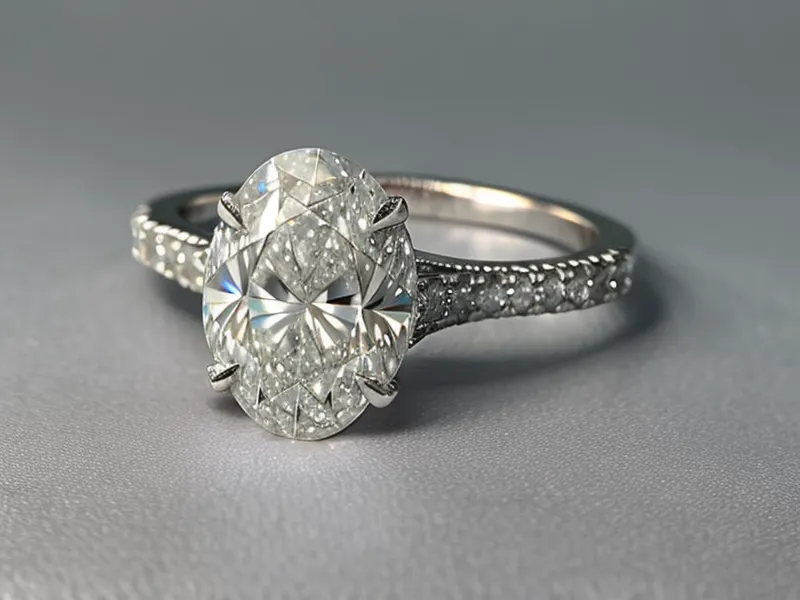
Choosing the stone only solves half the problem. Ovals are prone to bowing over time if the setting doesn't support the girdle correctly, and the two pointed ends are the most vulnerable part of the stone if you work with your hands all day. Think about how you actually live before committing to a delicate four-prong setting. It's closer to picking a wedding venue than picking a pretty picture, and a mount that can't handle a gym bag or a bag of groceries is going to cost you a repair bill eventually. It's worth reading how to choose an engagement ring setting based on lifestyle before you land on a mount, especially for a shape with tips this exposed.
Where This Fits Into the Bigger Ring Decision
None of this proportion math happens in a vacuum. Get the return window in writing before you decide on a stone. That's leverage if the natural-light test looks different once the ring is actually home. If the ratio chase sounds like more homework than you signed up for, some people skip the whole bow-tie debate and look at moissanite instead, which handles light in a completely different way. A custom setting from a bench jeweler gives you more control over how these proportions sit than picking a mount off a case, though it's rarely the faster option. Financing offered to make a pricier stone fit your budget is worth running the real numbers on before you sign anything. Insurance is a separate decision, and one worth making before the ring leaves the store, not after. Some retailers will also let you trade up in carat weight down the line if your taste changes, though the terms on that vary more than the sales pitch usually lets on. Buying through a screen versus over a countertop changes how much of this you can actually verify yourself, which is most of why Shelby held out for seeing a stone in person. And if you're this deep into proportions, you've probably still got to figure out sizing without tipping off the person you're buying for — a separate rabbit hole entirely.
The math holds no matter which store you're standing in: 1.33 to 1.50 for the ratio, 53 to 63 for the table, 58 to 62 for the depth. Everything past that is deciding how much you trust your own eyes over the paper in front of you.