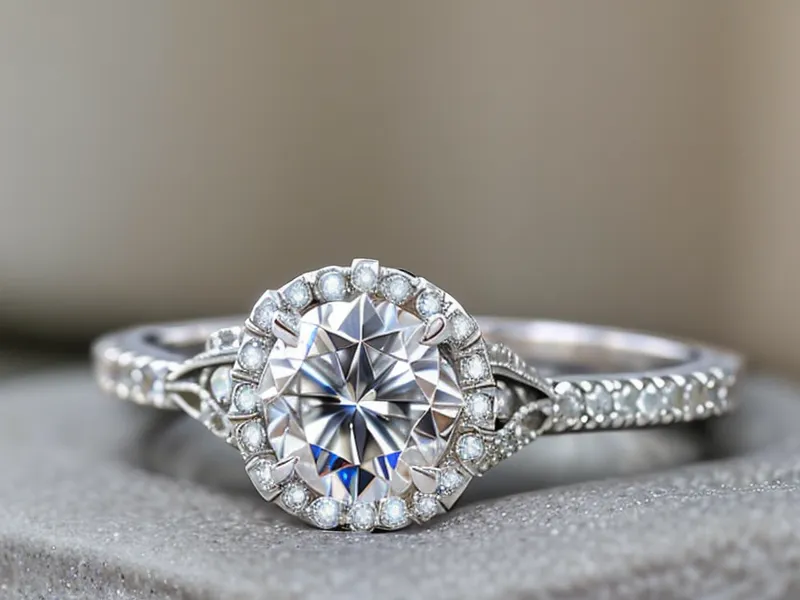
Halogen showroom lighting can make a diamond look a full clarity grade better than what's printed on its GIA report. That's the first thing worth knowing before any engagement ring shopping trip to a mall jewelry store, and it's the reason I spent an afternoon inside a Kay Jewelers — not to buy, but to see if months of spreadsheet work comparing mall vs online jewelry actually held up once I was standing under real light instead of reading spec sheets at my kitchen table.
Quick disclosure before anything else: some of the links below are affiliate links, and I earn a small commission if you click through and buy, at no extra cost to you. I only link to jewelers I've actually researched or walked into myself. Being the friend who reads fine print out loud at brunch isn't a bit anymore — it's just what I do now.
By the time anyone loops me into a ring conversation, they already expect the interrogation. I'm the one who asks about the GIA clarity grade the second someone posts a blurry engagement photo, and lately it's been Sunita — the woman who sat in the cubicle next to mine for three years — texting me screenshots from three different stores in one afternoon. Looking at glossy product photos of GOODSTONE lab-grown diamonds on a laptop is one exercise. Standing under mall lighting with someone hovering at my elbow is a completely different one, and that gap is what sent me back into a showroom myself.
What the Halogen Lights Actually Hide
The choreography starts within about ninety seconds of stepping onto the carpet at Kay. First it's "what brings you in today," then it pivots toward financing before you've even settled on a round brilliant cut versus anything else. I've negotiated apartment leases and gone back and forth with used car dealers, and the energy in that showroom tracked closer to a dealership than to a jewelry store review.
A jeweler pulled three cushion-cut rings from the case on a velvet tray that felt like it had already made the rounds that week. Small detail, but it knocked some of the shine off the whole performance. Every stone under that lighting looks like it's auditioning for something — high-intensity bulbs built to flatter a lower-grade stone, not reveal it. The four Cs get tossed around like they're one interchangeable pitch in that moment, when carat, cut, color and clarity are each answering a completely different question.
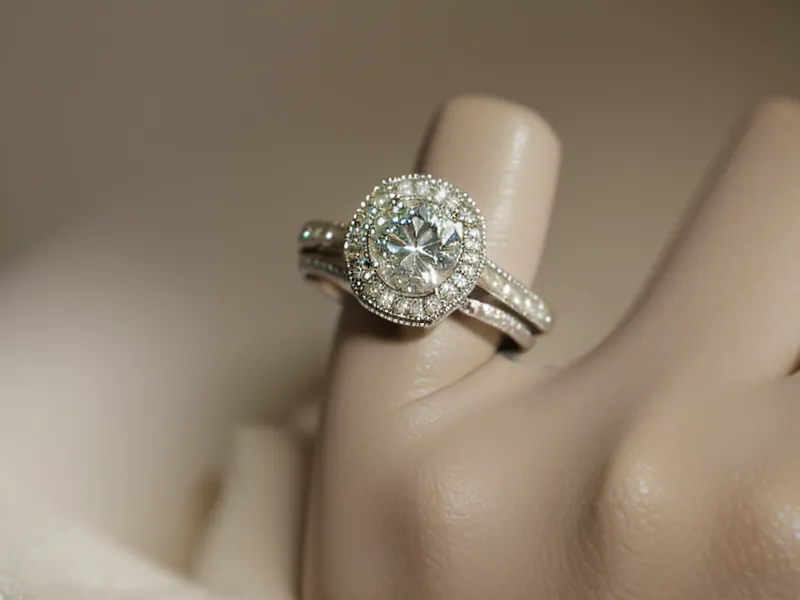
Standard practice is ten-times magnification with a loupe, and if a store hesitates before handing one over, that tells you plenty before you've asked a single other question. She passed it over without blinking. But the script kept running underneath it — her financing pitch came out smoother than anything she said about fluorescence, and that's the actual tell. When the math of the loan gets more rehearsal than the math of the stone, you're standing in a bank that happens to sell rings.
Why Mall Financing Scripts Move Faster Than the Facts
Carat weight came up too, or it tried to. Every time I steered the conversation toward a stone's carat weight against its actual dimensions, it got redirected back to "how it looks under the lights." That's not an accident. Flickering spotlights and heavy perfume in the air make a five-figure decision harder to think through clearly, and a showroom built to overstimulate isn't exactly inviting you to browse leisurely.
None of that stopped the store from handing me a printed brochure on my way out — their own comparison sheet, laid out like it would save me the trouble of doing my own math. It didn't. Back at my desk that night, the categories on it didn't line up with a single column in my own spreadsheet, and the "savings" it highlighted only worked if you ignored two of the three stores I'd actually visited. Brochures printed by the store you're standing in are marketing collateral, not research. A clear return window, on the other hand, is more leverage at the register than most people ever use it for.
Financing plans get quoted with far more confidence than markup ever does. What a plan actually costs over its full term almost never comes up unless you ask directly, twice. Kay and Jared share a parent company, but the markup between the two isn't identical, and that's a conversation worth having on its own before you assume "sister brand" means "same deal."
Is 14k Gold the Same Everywhere You Shop?
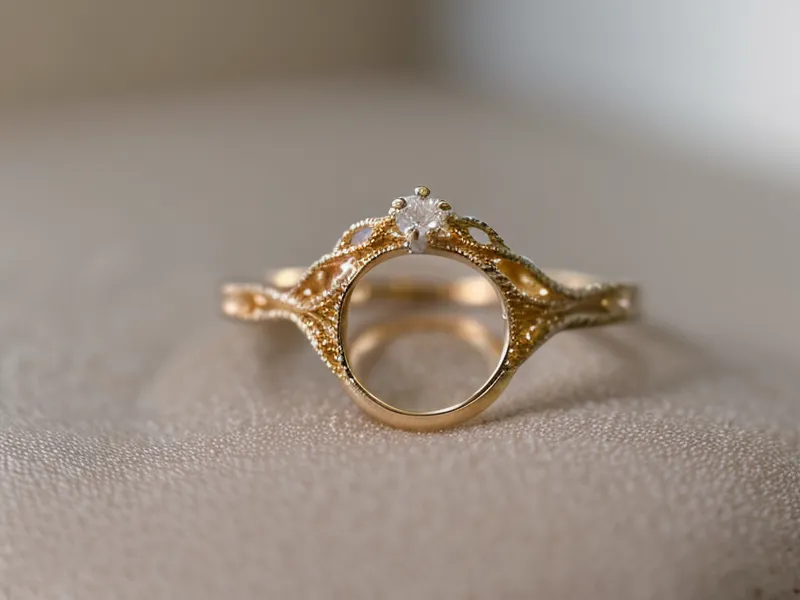
Fourteen karat means roughly fifty-eight percent pure gold by weight, alloy for the rest, and that number doesn't change depending on which mall you're standing in. At Zales and Jared, you'll see plenty of 14k tagged pieces, but some of the promotional settings run thin enough to worry about catching one on a sweater. Set a mall setting next to something from a boutique online shop like Theo Grace, and the weight difference is obvious in your hand. Not all 14k behaves the same once it's actually on a finger every day.
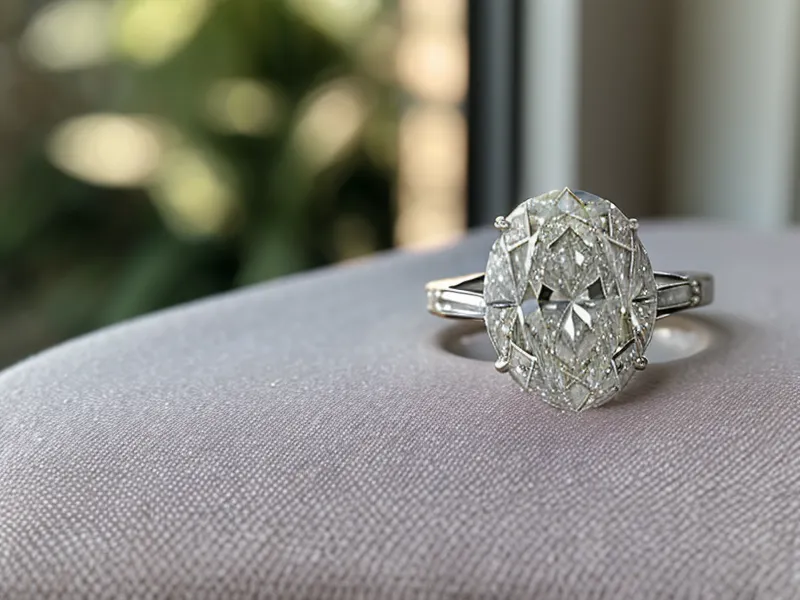
Purity percentage and how well a setting resists tarnish are two separate questions, even though the tag makes them sound like one. Whether a setting can take daily wear matters more, honestly, if you're rough on your hands than the purity math ever will. Some friends skip the display case altogether and go custom instead of picking from what's already sized and set on a tray, which is its own trade-off in time and cost. Anyone chasing an oval instead of a round brilliant is solving a completely different proportions problem than the one I dealt with — and none of it matters until you've actually nailed down a ring size, ideally at home, before you're standing at a counter guessing out loud.
The Six-Month Catch Inside a Lifetime Warranty
The lifetime warranty looked like the safety net, right up until the fine print explained what it actually required. I didn't catch the six-month clause in the showroom — it surfaced later that night, printed terms spread across the kitchen table next to my own notes. To keep the warranty active at a chain with 1,000-plus stores, you bring the ring back for inspection every six months, and missing even one visit voids it. Less a service, more a foot-traffic strategy dressed up as a safety net.
Insurance is a separate line item from any store warranty, and mixing the two up is an easy way to end up covered for the wrong thing entirely. If you want less of that particular pressure baked into the shopping process, I got into it more in The Quiet Alternative to the Sales Pitch: Finding the Best Engagement Rings Under $3,000.
Mall Jewelry Store vs. Online: The Real Price Gap
Mall stores make sense for exactly one kind of shopper: the one who needs a box in hand today. Everyone else is paying for the mall rent, the halogen bulbs, and the financing department, whether they finance anything or not — and that's before you've even weighed an online-only buying channel against walking into a physical store in the first place.
Set a mall diamond next to a lab-grown stone from a specialist like GOODSTONE and the price gap gets uncomfortable fast, given the two are chemically and optically the same story with a different origin. That trade-off isn't the only branch in the decision tree, either — some people skip it entirely and land on moissanite instead, which is its own stone making its own case. If you are comparing lab-grown stones specifically, IGI and GIA don't grade with quite the same strictness, so the lab on the report ends up mattering almost as much as the stone itself. Trade-in and upgrade terms are worth reading closely wherever you buy, too, not just at a mall counter, and any claim about how a stone was sourced deserves a second look rather than a nod.
Theo Grace comes up a lot when friends want that boutique, personalized feel without the used-car-salesman energy. No thousand-plus locations, but no flickering spotlights giving me a headache either. I wrote up more of that comparison in My Engagement Ring Deep Dive: 5 Mistakes I Nearly Made Before Saying Yes.
Flagging the Same Warning Signs for Sunita's Next Visit
Kay works fine if accessibility and budget tiers matter more to you than anything else, but keep an eye on that six-month warranty rule — their current styles are here if you want to look. Jared is a step up in selection with the same financing scripts running underneath, so their higher-carat options are worth a look with your guard still up. Zales leans hardest into promotions and has a genuinely deep everyday gold selection, but the stone quality under a loupe varies more than the display case suggests, and their current promotions are where that variance shows up first.
Sunita is the type who'll go back to a store twice before deciding anything, which is more patience than I had by my own third visit, and it's exactly the instinct I'd tell anyone shopping the mall circuit to borrow. Shelby — a friend from way back who's keeping his own proposal plans quiet from our mutual friends — still carries the spreadsheet I sent him printed and folded in his wallet, which tells you something about how little any of this changes store to store.
Lessons the Spreadsheet Didn't Teach Me
My desk at home is an IKEA setup pushed against a south-facing window, buried under ring binders of printed spec sheets from six different jewelers stacked above the monitor, plus a velvet tray a local jeweler let me borrow holding one comparison stone. A two-color Post-it system runs along the wall next to it — yellow for follow-up questions, pink for anything that reads as a red flag. Six weeks into building that spreadsheet, I caught myself doing something I couldn't have done a month earlier: pulling up a stranger's GIA report in a forum thread and going straight to the clarity plot, instead of skimming the whole page hoping something looked familiar.
I took a walk through Hampton Park afterward just to get some air and let the whole visit settle before I wrote anything down. The transferable part of all this isn't a single store verdict — it's that the environment in a mall is built to make you forget your own homework, and the fix is boring: bring the list, ask for the loupe first, and read anything with your signature on it somewhere quieter than a showroom. That last one is exactly why I started looking past the mall altogether, which I got into more in The Late-Night Marketing Email from a Mall Jeweler That Changed My Wedding Ring Advice.
If you're ready to skip the halogen headache entirely, most of my friends get pointed toward My Lab-Grown Diamond Shortlist next. It's where the actual value shows up once you're out from under the showroom lights.