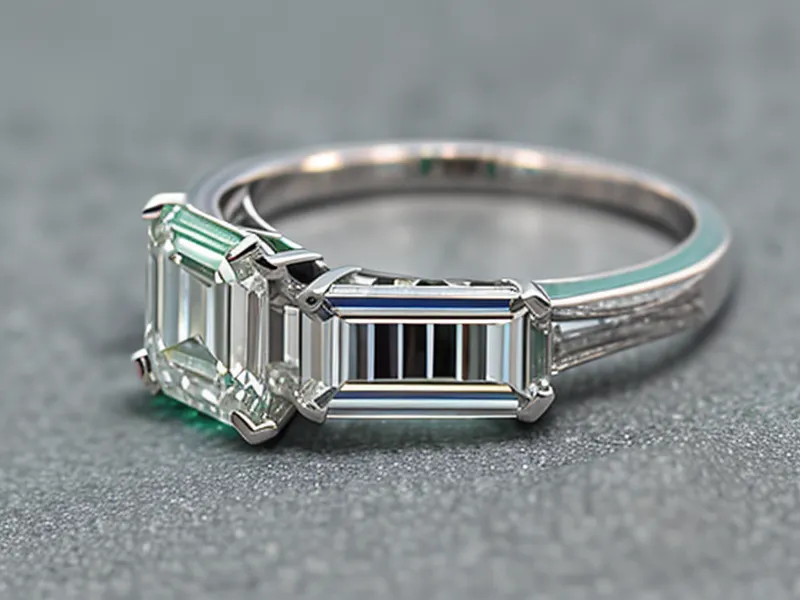
A mall-chain emerald cut and a lab-grown emerald cut from Goodstone can carry the exact same clarity grade on a lab report and still look nothing alike once they're set on a shank thinner than a shoelace tip. That's the gap that keeps people texting me about thin-band engagement rings specifically — the 1.5mm to 2.0mm range where the metal all but disappears and the stone has to carry the whole look by itself.
Quick disclosure before anything else: some of the links below are affiliate links, and if you buy through one I get a small commission at no extra cost to you. I only send people toward jewelers I've actually dug into myself — showrooms, return desks, the whole circuit.
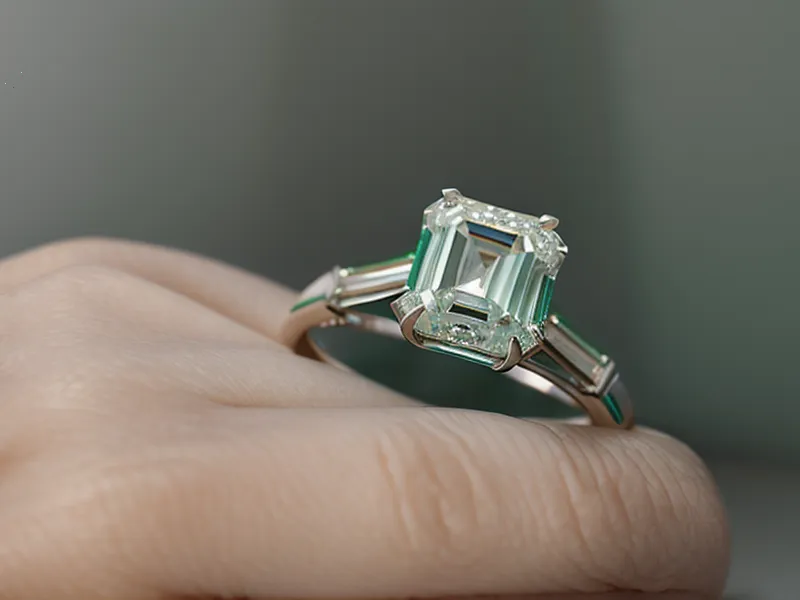
Here's the part nobody explains at the counter: an emerald cut doesn't hide anything the way a round or a cushion does. Long step facets sit like a row of mirrors lined up edge to edge, so a flaw that a brilliant cut would scatter into a hundred small reflections sits right out in the open on a step cut. Pair that with a whisper-thin band and there's nowhere left for the ring to distract you — the stone has to be right.
The Geometry Problem With Step Cuts
Most everyday cuts are forgiving. Round and cushion shapes are 'brilliant cuts' — hundreds of tiny facets breaking light into pieces, which is exactly why they're so good at masking small inclusions. Step cuts don't do that trick. It's why thin-band engagement rings built around an emerald cut live or die on the clarity of that one stone, not the setting around it.
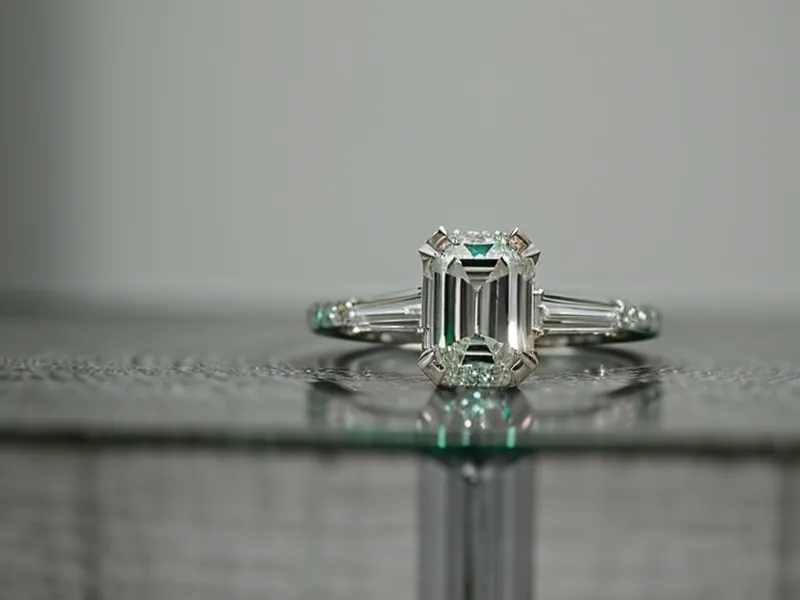
The certification behind the stone is worth checking too — GIA and IGI don't always land in the same place grading the same stone, and I've learned to ask which lab issued the report before I compare two grading tags that look identical on paper. Chains like Kay Jewelers and Zales carry plenty of emerald cuts at clarity grades that would read fine in a round cut and genuinely risky in a step cut, and the overhead of running that many physical stores has to come from somewhere. It's usually the stone.
I sat through a pitch at Jared once where every question about proportions got steered back to a financing plan, like the two topics were interchangeable. I wrote the details down after walking that showroom, and the short version still holds: financing terms are a separate conversation from whether the stone's geometry earns its price, and mixing the two is how people end up paying for a bad stone and a bad payment plan at the same time.
Goodstone Changed What I Recommend
By week twelve of pointing friend after friend toward the same answer, I stopped hedging: for the thin-band, emerald-cut combination specifically, GOODSTONE is who I send people to. Most of this comparison work happens at a desk in my apartment in North Central, spec sheets from half a dozen jewelers stacked next to the monitor and two colors of sticky notes going — one for questions I still need answered, one for anything that reads like a red flag. They specialize in lab-grown stones, which are chemically and optically the same material as mined diamonds, hard enough to sit at the very top of the Mohs hardness scale right alongside them.
The trade lab-grown stones make is straightforward: they cost less to produce, so the same budget buys a noticeably cleaner stone. In the world of thin bands, that difference in clarity is the whole difference between a ring that reads high-fashion and one that reads like a compromise. A stone that's clean even under close inspection is exactly what a bare 1.5mm band demands, because there's nothing else on the ring to look at.
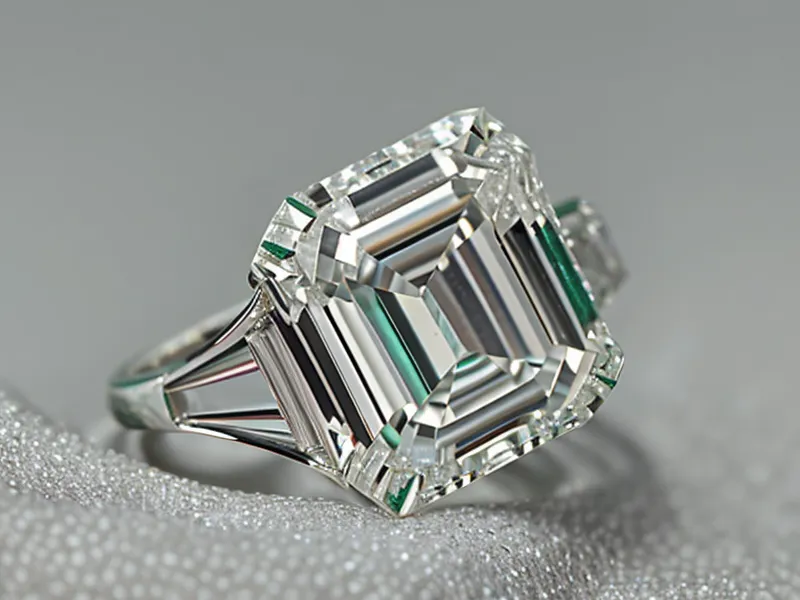
There's a size range that works and one that doesn't — anything under about 1.5mm starts fighting the weight of a bigger stone, and a heavy stone on too thin a band will tip and ride sideways on your finger all day. I still do a quick check with any platinum band before I trust it: a sharp click of a fingernail against the metal, listening for something dense and solid rather than something thin and hollow-sounding. My friend Sunita went back to the counter twice on her own ring before she'd sign off on anything, and I think that's the right amount of caution for something you'll wear every day, not overkill.
Where the Mall Markup Actually Goes
Walk into a mall chain and part of what you're paying for is the rent, the security guard, and the lit glass cases — none of which has anything to do with the stone itself. An emerald cut at that price point is often just whatever's in stock. Go the direct-to-consumer route with somewhere like GOODSTONE and the same budget buys a noticeably higher-spec stone, because there's no storefront overhead eating into it first.
If you're nervous about the thin band alone carrying that much responsibility, some of my friends have looked at hidden halo engagement rings for a bit of structural backup — it's a reasonable move, and the setting choice matters as much for how the ring survives your actual daily life as for how it looks under a jeweler's light. Whatever setting you land on, read the return window before you sign anything. I've walked more than one friend through backing out of a purchase inside that window, and it's saved more ring decisions than any spec sheet I've ever handed someone.
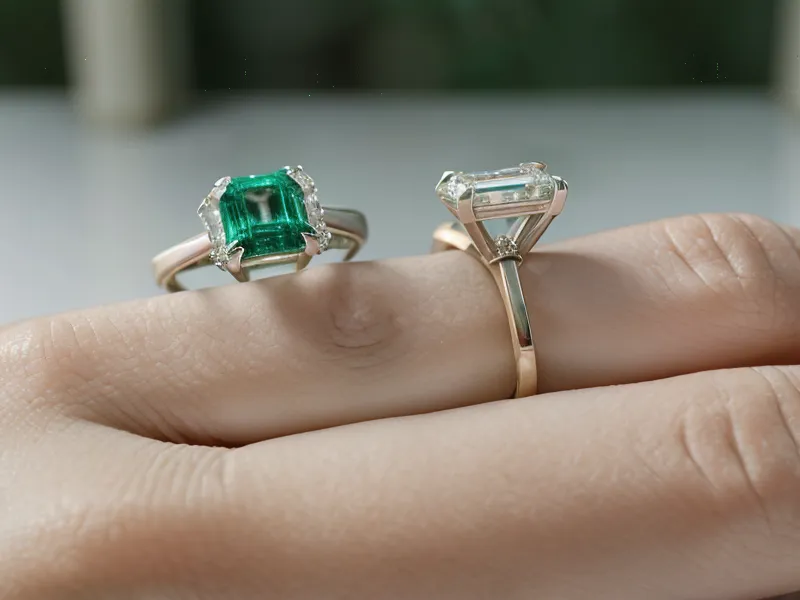
I helped a coworker compare a stone from Theo Grace a while back — beautiful minimalist settings, but their selection of emerald cuts at the ratio we wanted was thinner than Goodstone's at the time. That's the recurring issue with the boutique route: finding the exact proportions you want takes patience, and you need to know the return terms cold before you commit, because a boutique's policy won't necessarily match what a big chain offers.
So, Is a Lab-Grown Emerald Cut Worth It?
Precision is the real reason GOODSTONE keeps coming up for this specific combination. Mount a stone on a 1.5mm band and the setting work has to be exact — a prong that's even slightly off makes the rectangular shape of an emerald cut look crooked immediately, in a way a rounder cut would never show. There's no forgiving cut hiding a careless setting here.
People assume I've got some system for this, and for a while I tried to build one — I put together a spreadsheet off a Reddit thread that everyone swore by, and it turned out nobody had touched the numbers on it in something like two years. Half of it was quietly wrong by the time I leaned on it. What actually works is boring: read the reviews, ask about the return policy out loud even when it makes the salesperson visibly recalculate their pitch (a skill I'm weirdly proud of), and don't let anyone rush the clarity conversation. My friend Shelby, who's been ring shopping on the quiet without telling our usual group, still keeps the version I eventually sent him folded up in his wallet.
The clearest sign I'd finally internalized all this: walking out of a showroom empty-handed one afternoon and waiting for the familiar guilt to hit — the one that always followed me out after a visit that didn't end in a purchase — and it just never showed up. If you're weighing resale down the road, know that lab-grown stones trade in for less than mined ones almost everywhere, and if you think you'll want to upgrade the stone later, check what a store's trade-in terms actually require before the lower price tag talks you into anything.
If the look you're after is delicate and precise rather than showy, GOODSTONE is where that combination actually holds up under close inspection, not just under showroom lighting. Insuring the ring afterward is its own separate rabbit hole and worth doing, but that's a different conversation for a different day. The rule I keep coming back to, the one I hand every friend now: spend your money on whatever the cut can't hide, not on whatever the store wants to upsell you into instead. For an emerald cut on a thin band, that means clarity first, every time.
GOODSTONE
Pros
- ▸ Exceptional VVS clarity options for step-cuts
- ▸ Direct-to-consumer pricing beats mall markups
- ▸ Precision settings ideal for delicate 1.5mm bands
- ▸ Transparent sourcing for lab-grown stones
Cons
- ○ No physical showrooms for in-person viewing
- ○ Lab-grown resale value is lower than mined