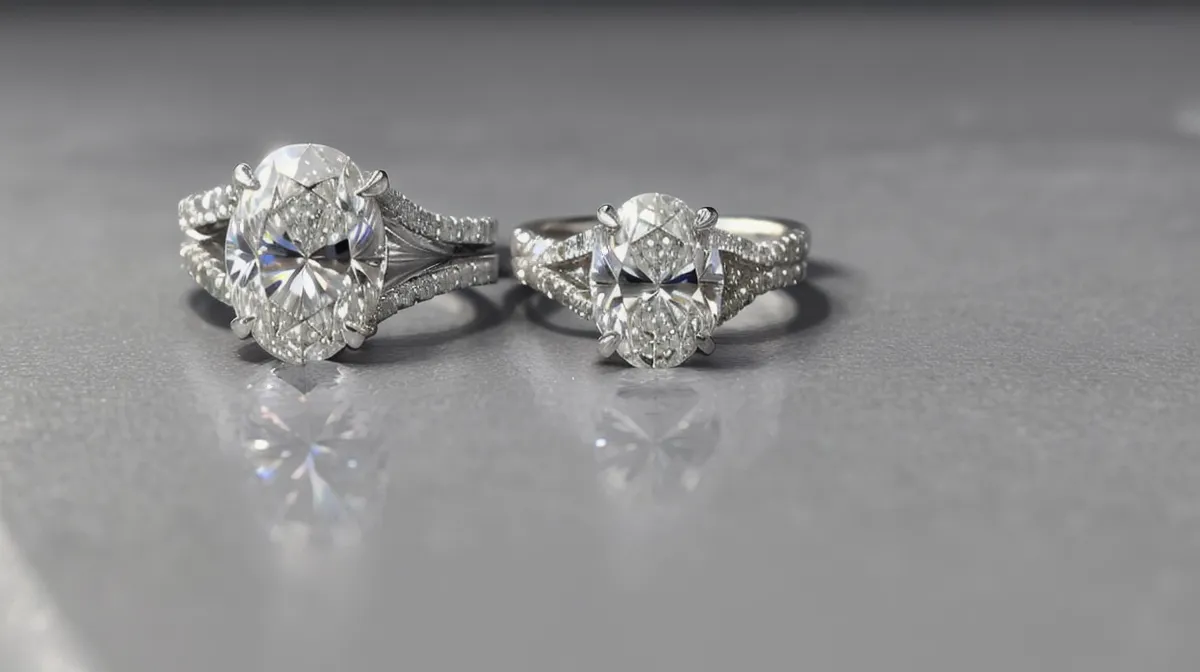
A GIA report for an oval diamond never lists an overall cut grade. Round brilliants get one, stamped right on the page — Excellent, Very Good, Good, like a grade on a report card. Fancy shapes don't get that line, full stop, and that single gap is the reason two oval diamonds can carry almost identical paperwork from the Gemological Institute of America and still look nothing alike once they're out of the envelope. I learned that comparing two actual reports side by side for two actual stones, and it's stuck with me every time a friend buying an engagement ring sends me a diamond grading report asking what she's even looking at.
The last one of these texts came from a bar in Avondale, on a night that was supposed to be about something else entirely. The friend across the table does improv most weeks at Theatre 99 downtown — someone who thinks fast in front of strangers for a living — and she still went quiet staring at her own phone screen. Before she called me in, she'd already tried the obvious move: a friend-of-a-friend who supposedly worked in fine jewelry. Turned out the job was sales, not grading, and the advice leaned hard toward the one store that friend-of-a-friend happened to work for. This wasn't even her first SOS. A while back she'd sent me a photo of a price tag and asked me to walk her through every line printed on it, like I had some decoder ring for receipts.
Two Certificates, Same Oval Shape, Totally Different Stones
Here's the part that got her that night. Two oval stones, two GIA reports, and on paper they read almost like siblings. Length and width measurements that convert to a ratio in the same general neighborhood once you divide one by the other — hers came out near 1.41, close enough to a stone I'd once seen for a friend's cousin that landed around 1.42. Color a letter or two apart.
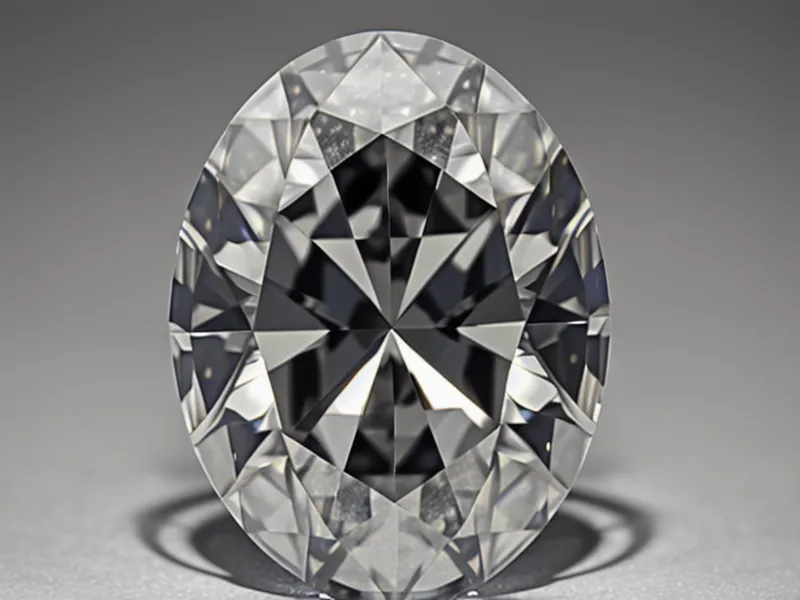
Clarity on both called eye-clean, one of them graded SI1, invisible to the naked eye despite sounding worse on paper than it looked in person. Treat the report like a Carfax. It lists the ingredients. It won't tell you how the car drives. A stone measuring something like 9.12 by 6.45 by 4.02 millimeters divides out to a ratio around 1.41, and that number alone rules out the obvious disasters: anything under roughly 1.30 reads chubby, anything past 1.50 starts looking like a stretched-out needle. That's genuinely useful. It's also the entire extent of what the ratio line can promise you.
The Paper Promised More Than the Stone Delivered
One of the two stones that night had the better-looking report by almost every measure on the page. Better color. Better clarity. A ratio that checked out fine on the math. It was also, I later realized comparing notes against that same cousin's stone, sitting on a shallow cut, the kind of depth percentage that reads completely reasonable in print and still lets light leak straight out the bottom instead of bouncing back up toward your eye.
Flat. No life to it. The kind of stone that photographs beautifully for an online listing and does almost nothing under a restaurant's dim lighting, which is exactly where most people actually wear their ring.
Meanwhile the "worse" report, lower color letter, that SI1 clarity grade people assume means visible flaws, sat at a ratio close to 1.42 with proportions that actually let it move. Side by side, it won, and not by a little. This is the whole case for reading a report as a filter instead of a scoreboard. The highest letters and the cleanest clarity don't automatically outrank proportions that let a stone come alive. They're different categories of information sitting on the same page with equal visual weight, and they don't actually carry equal weight at all.
Why Did the "Perfect" Stone Still Look Flat?
Symmetry and polish get graded on every oval report, and plenty of people assume those two lines are standing in for the cut grade that ovals don't get. They're not. Symmetry and polish describe the surface finish and how well the facets line up with each other, not whether the proportions make the stone lively. A stone can carry "Excellent" on both and still go dull if the depth or table percentage is off, which is exactly what happened with the flatter of the two stones that night.
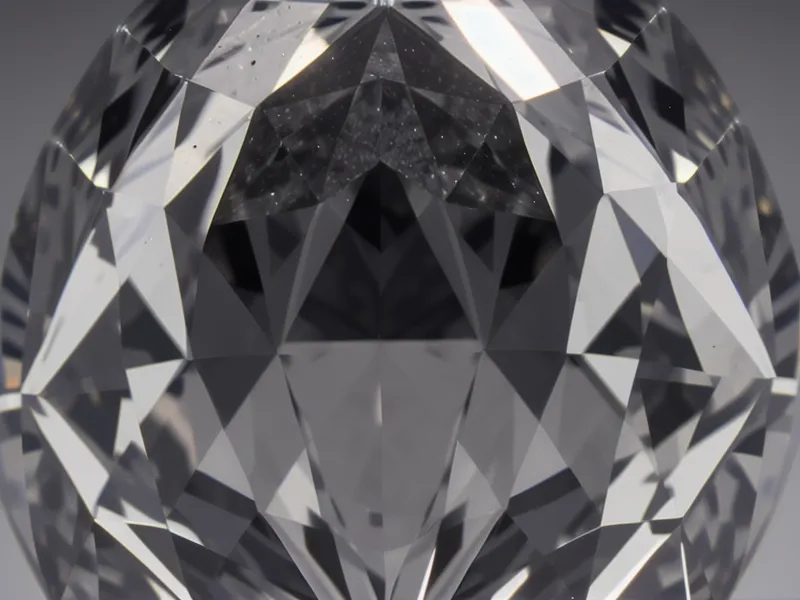
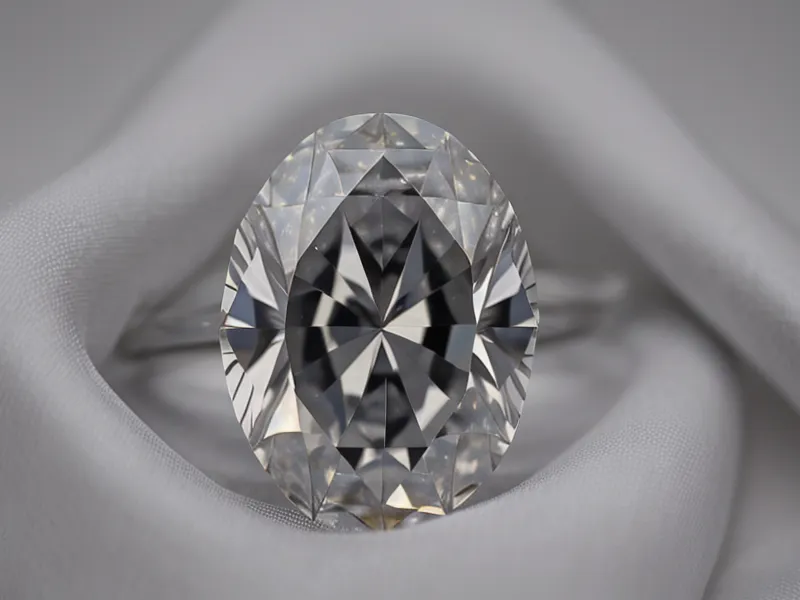
Then there's the thing neither report mentions by name at all: the bow-tie. It shows up on ovals, pears, and marquise cuts as a dark band running across the middle of the stone, where light passes through instead of bouncing back toward the eye. No GIA line calls it out. No grade predicts it. You see it in person, on a good video, or you don't see it coming at all.
Reading the Lines a GIA Report Leaves Out
Fluorescence sits on its own scale on the same page, running from None up through Very Strong, and the odd part is the exact same rating can land two different ways depending on the stone underneath it. On one, a little fluorescence makes the color look whiter. On another, enough of it turns the stone faintly hazy once you're standing outside in direct sun. The report hands you the rating and nothing about which effect you're actually going to get.
For what it's worth, I only trust GIA paperwork for this kind of side-by-side. IGI grades fancy shapes on its own curve, and mixing reports from two different labs into one comparison is how people end up arguing about numbers that were never built to line up with each other in the first place.
I always point people toward my Hard-Earned Checklist for Buying an Engagement Ring Online for the visual stuff no report will ever show you — bow-tie, fluorescence, how a stone actually behaves once it's out from under a showroom's lights.
So, Report or Eyes: Which Do You Trust?
Trust the report to rule stones out. A ratio outside the normal range, a diamond color grade past where you actually want to pay for it, clarity with inclusions sitting dead center in the table instead of tucked off toward the edge — the paper catches all of that before you ever lay eyes on the stone, and it's the one genuinely objective thing in an otherwise emotional purchase.
Don't trust it to rule one in. The report that reads better on every single line isn't automatically the better stone, not once depth, bow-tie, and fluorescence are in play, and none of those three show up as a clean number you can compare at a glance. Comparing my notes from a Kay Jewelers custom design against my own Kay Jewelers custom engagement rings online vs in-store shopping visit taught me the same lesson from a different angle. The paperwork keeps you from getting scammed on the basics. Your own eyes are still the only thing that tells you whether the stone you're about to buy has any life in it at all.