You might have held two pieces of jewelry side by side without knowing which one was actually silver. Emmeline handed me her Brighton charm bracelet outside a shop on King Street not long ago, convinced it was starting to tarnish — she just couldn't say what was actually happening to the metal. That's usually where I end up. Not a gemologist, not in the jewelry trade, nothing official — just the person my own ring search turned into the friend everyone texts with fashion jewelry care questions like this one.
Before we get into what's actually going on with Brighton, the standard disclosure: this site runs on affiliate links, including ones for jewelers like Kay Jewelers and GOODSTONE. Click through and buy something, I earn a small commission, you don't pay extra. I only link to places I've actually researched or walked into — the same list I built during my own ring hunt.
My partner calls it the war room. There's a running spreadsheet for exactly this kind of comparison on the desk in my apartment — hand-me-down IKEA, catches the afternoon sun, buried under spec sheets from half a dozen jewelers and a velvet tray a jeweler friend let me keep, holding the one stone I measure everything else against. Post-its everywhere: one color for questions I still need answered, another for outright red flags.
Plated Silver vs. Solid Silver: What Brighton Jewelry Actually Is
Most people assume anything heavy and silver-colored is bound to tarnish the way a sterling spoon does. Brighton doesn't quite work that way. Their pieces are silver-plated over a base metal called Zamak — a sturdy, inexpensive alloy, not a precious metal, and not something you'd find inside a solid sterling piece.
Sterling silver carries an actual purity standard behind it — plated pieces don't try to meet that bar, and they're not pretending to. What keeps Brighton's silver finish from reacting with the air around it is a protective lacquer coating the whole piece, similar to a clear coat on a car. Keep that lacquer intact and the metal underneath stays shielded from whatever eventually causes tarnish. I think about this the same way I think about showroom lighting. I once pulled a loupe out of my bag at a mall counter and watched the salesperson's hand drift straight for the dimmer switch before I'd even lifted it to my eye. Good lighting hides a lot. So does good lacquer.
So Does Brighton Actually Tarnish, Or Is Something Else Going On?
Here's the part that trips people up: silver, plated or solid, is a soft metal — softer than most people assume, and it scratches or rubs down over time, especially if you stack several pieces on one wrist. That friction between pieces matters more for tarnish prevention than most jewelry-care advice lets on.
What actually happens to Brighton over months of wear isn't quite tarnish — it's the lacquer wearing thin in specific spots, usually wherever a piece rubs against skin or clothing, until the silver underneath finally meets open air. Tarnish, technically, is a reaction; what you're watching with Brighton is closer to a coating failing. Older estate pieces make the difference obvious — I noticed the same slow fade poking around buying Ross Simons estate jewelry, where decades of wear show up as real metal changes, not a coating problem. My own worst habit during the ring search was judging a diamond by how it looked under the case lights instead of asking to step over toward a window. It's the same blind spot, different jewelry. You have to get a piece out of flattering light before you trust what you're looking at.
Chlorine, Not Salt Water, Is the Real Threat at the Pool
Most jewelry-care advice stops at "don't shower in it" and calls it a day. If you're a regular at the pool or you do water aerobics, that's not nearly enough. Chlorine breaks down protective coatings faster than almost anything else these pieces come into contact with — faster than salt water, faster than sweat, faster than perfume.
Emmeline swims laps a couple of times a week, and her Brighton pieces dulled noticeably faster than mine did wearing the same styles. Once that coating breaks down, the metal underneath stays exposed for good — rinsing in fresh water and drying pieces immediately helps, but it's damage control, not prevention. For anyone in the pool that often, I usually point toward something built for more than topical wear, like the pieces at Theo Grace, where the materials aren't just surface-deep.
Brighton's Lacquer vs. Rhodium Plating at the Mall Chains
Compare Brighton to the plating you'll find at mall chains like Jared or Zales, and the difference comes down to method. Those stores mostly rely on rhodium plating over white gold or silver, and rhodium doesn't need a lacquer topcoat to stay bright the way Brighton's finish does. It holds up on its own. Mall chains mark up their big-ticket pieces hard, something I learned the expensive way during my own ring search, but for a small charm or a mid-tier bracelet, that markup math doesn't apply quite the same way.
Brighton's lacquer works well for what it's designed to do, but it was never built as a permanent seal. The first place it usually gives out is right at the clasp — the friction zone, where metal constantly rubs against skin and fabric. Unlike solid gold, or a piece from somewhere like GOODSTONE, you can't hand a Brighton piece to a jeweler for a buff and expect it to come back looking new. Polish it too hard and you take the lacquer, and the plating underneath, right off with it.
Cleaning Fashion Jewelry Without Stripping the Finish
Treat a plated piece like it's solid sterling and you'll ruin it fast. Skip the silver dips. Skip the abrasive polishing cloths that come in the little blue tubs — those exist to strip oxidation off solid metal, and on a plated piece they'll strip the finish right along with it. A lot of the gentler, soap-and-water methods I covered in how to clean your Ross Simons jewelry at home apply just as well here.
A soft, dry microfiber cloth is really all a piece like this needs — a gentle buff lifts skin oils without touching the lacquer. Put jewelry on after perfume and hairspray have fully dried, since the alcohol in most beauty products eats through a lacquer finish fast. And skip the bathroom counter as storage — steam from a shower does slow, steady damage over time, so a felt-lined box or even a small zip-top bag does more good than people expect.
Brighton vs. Fine Jewelry: Which One Should You Actually Buy?
Valentina, a coworker's girlfriend who found her way to me after hearing I keep a running comparison of every jeweler I've dealt with, asked me this exact question not long ago about a bracelet she'd been gifted. My answer hasn't changed since I started tracking these pieces: it depends entirely on what you need the piece to survive.
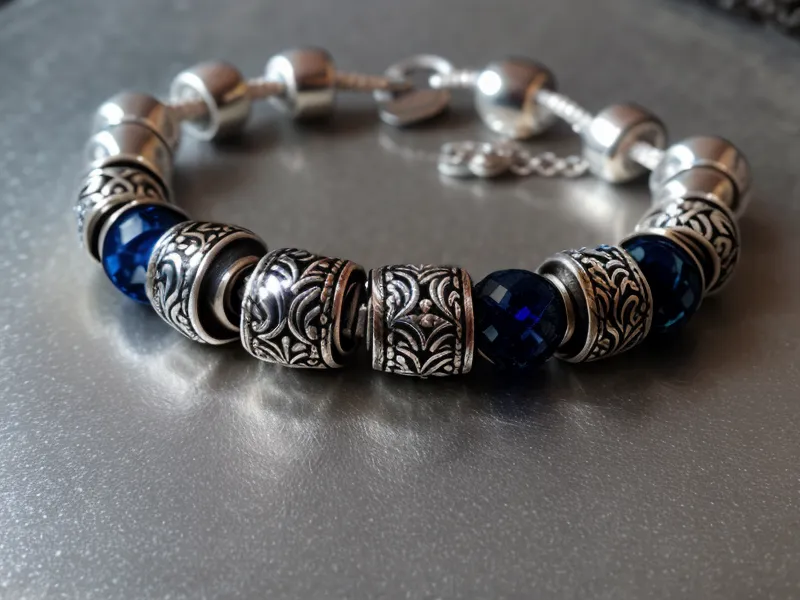
Choose Brighton if you want something stylish for a season or two, or a gift that doesn't need to survive decades of daily wear — it looks good, it does its job, and the price reflects that trade-off. Choose solid metal or real plating if you need something to hold up under years of everyday use, the kind of piece you don't want falling apart once the coating finally wears through. For that category, I still send people toward Kay Jewelers for the warranty coverage or GOODSTONE for the metal quality. Keep a Brighton bracelet out of the pool, keep it away from the polishing cloths, and it'll do exactly what it promised. Just don't buy it expecting it to hold up the way solid metal would.