A custom engagement ring and a modified stock setting are not the same purchase, even though both quotes get the word "custom" stamped across the top. One means a jeweler builds the ring around your design, starting from nothing. The other means someone moved an existing prong two millimeters and billed you for the privilege. Most of the hidden fees in custom jewelry design live in that gap, in the space where nobody tells you which one you're actually paying for.
Valentina Forde, my coworker's girlfriend, messaged me the same afternoon my comparison system came up at work. She'd already spent a Saturday hitting three different mall chain showrooms and came out of the third one more confused than she went into the first. Three stores. Same pitch, a different salesperson saying it each time — "it's an investment," like that explains the invoice. She told me afterward she'd rather skip the ring than sit through a fourth pitch, and to this day she won't set foot in a mall jeweler. That conversation is roughly why I now keep a running file at the desk in my apartment, binders of other jewelers' spec sheets stacked higher than my monitor (my partner calls it a cry for help, and he's not entirely wrong), so the next person who asks gets an actual comparison instead of a gut feeling.
The Difference Between a Custom Engagement Ring and a Modified Stock Setting
Most people assume custom means starting from a blank page. It usually doesn't. A boutique will quote a stock setting they're "modifying," and the modification fee rarely reflects real design work — it's closer to a convenience charge for telling a factory to nudge a prong. Separating actual design labor from a markup dressed up as craftsmanship starts with understanding Computer-Aided Design, the software that turns your sketch into the digital file a wax mold eventually gets cast from. Whether custom beats buying something already finished is its own question, one I'm not relitigating here, but once you've decided yes, the fee structure is what tells you whether you got what you paid for.
Comparing quotes across three kinds of jewelers — a boutique, a direct-to-consumer brand, and a traditional bench jeweler — makes the pattern obvious fast. Some shops advertise a free design consultation, then ask for a non-refundable deposit before showing you so much as a wireframe. Others fold the render into the labor and itemize it later. Neither is automatically the villain, but if a jeweler can't tell you, in plain terms, what the render costs versus what the metal costs versus what the stone costs, that's the quote to slow down on.
What Should a CAD Fee Actually Cover?
Ask how many design revisions are included before an "iteration fee" kicks in. That single question weeds out more bad quotes than anything else on this list, because a fair design fee covers a reasonable back-and-forth — not unlimited redesigns, but enough rounds to get the proportions right before you're charged extra to fix what should've been right the first time. Ask, too, whether you keep the digital file once it's approved. Some shops treat the CAD model as their own property, which matters if you ever want a second opinion or a different jeweler to execute the build.
The setting itself should hold up to how you actually live, not just look clean in a render. Matching a setting to daily life is a longer conversation than one paragraph can cover, but it's worth having before you approve anything. And whichever of those three jeweler types produced that render, accountability travels with them: a boutique, a direct-to-consumer brand, and a bench jeweler each answer to different incentives if the fee breakdown turns out wrong later.
Where a Cheap Design Fee Gets Recovered
Plenty of independent custom jewelers advertise a flat design fee low enough to sound like a steal. Sometimes it is. More often, that shop is making the margin back by marking up the stone you end up choosing. It's a shell game. You feel like the creative part was free, while twenty percent gets quietly folded into a diamond you could've sourced for less elsewhere. Watch the price relative to cut, color, clarity, and carat together, not just the sticker number, because that's usually where a recovered margin hides.
Whether the stone is lab-grown or natural changes that math too, and that comparison deserves its own breakdown rather than a paragraph here. If it comes with a lab report, know that GIA and IGI don't grade with identical strictness, which matters more than most shoppers realize before they've seen two reports side by side. Ask where the stone was actually sourced from, and whether that claim is backed by anything more than a nice sentence on a website — "ethically sourced" without documentation is marketing, not information.
Reading the Casting Fee Before You Approve the Wax
Watch for the casting fee that shows up after you've already approved the CAD render. A jeweler quotes the design, you sign off on the model, and then a separate charge appears to actually cast the metal — which is a bit like a car dealer adding a steering-wheel installation fee after you've agreed on the price of the car. Push back on that sequencing. A complete custom quote includes the design, the casting, the stone setting, and the final polish as one package, not a design fee followed by a string of surprises.
Most reputable jewelers, even on custom work, offer at least a window to return the stone itself, separate from the non-refundable setting labor. If a jeweler tells you all custom sales are final before you've even seen a wax model, that's them asking you to absorb all the risk while they absorb none of it. I've put together a longer list of hard-earned lessons in my checklist for buying an engagement ring online that goes deeper on return windows specifically, because "final sale" might be the most expensive phrase in this entire industry. Ask, too, what the warranty actually requires you to do to keep it valid — most people never read that part until something's already gone wrong. A transparent quote also breaks the gold band's cost out by weight and purity stamp, separate from labor and separate from the stone, instead of burying it all inside one "custom ring package" line.
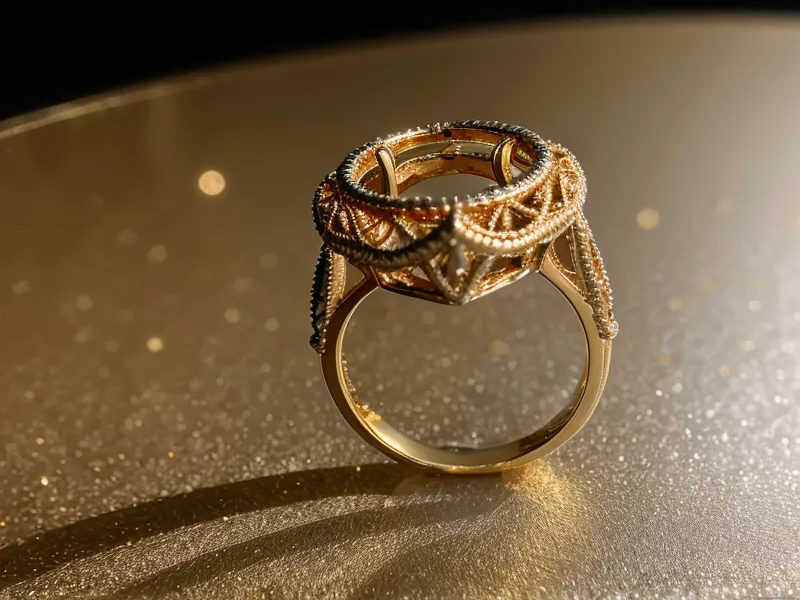
Appraisals Measure Insurance Value, Not Resale Value
An appraisal that comes back at twice what you paid is not a receipt for a good deal. Jewelers issue those numbers for insurance replacement purposes, which is a completely different calculation than resale value, and if you tried to sell that ring the next day you would not get anywhere near the appraisal figure. Treat the appraisal as the document you hand to an insurance company, not a trophy. Getting the ring insured properly, separate from the appraisal itself, is worth its own conversation, but don't skip it just because the number on the page looks impressive.
Mall kiosks complicate this further. A lot of them don't actually build custom pieces in-house. They route the request to a central hub and charge you a premium for the logistics of someone else doing the work. I've written up tracking notes on mall kiosks, and the pattern holds across most of them: more handoffs, less accountability, and a markup that has nothing to do with design labor.
Questions to Ask Before You Approve Any Render
Think of yourself as the project manager and the jeweler as the contractor. Nobody lets a contractor renovate a kitchen without a line-item estimate, so don't approve a ring build without one either. Ask how many revisions are included. Ask who's actually holding the torch. Is the person you're talking to the bench jeweler, or just the middleman relaying your notes to someone else? Ask for the stone cost, the metal cost, and the labor cost as three separate lines, not one bundled total.
If a jeweler answers all of that without hesitating, you've probably found someone worth paying. If they get vague, or tell you not to worry about the breakdown, that vagueness is the answer. Custom doesn't have to mean an expensive mystery. It just means asking the questions a contractor would expect anyway, before you sign anything, not after.